Francisco Javier Lopez-Flores – författare
Visar alla böcker från författaren Francisco Javier Lopez-Flores. Handla med fri frakt och snabb leverans.
4 produkter
4 produkter
2 563 kr
Läs direkt efter köp
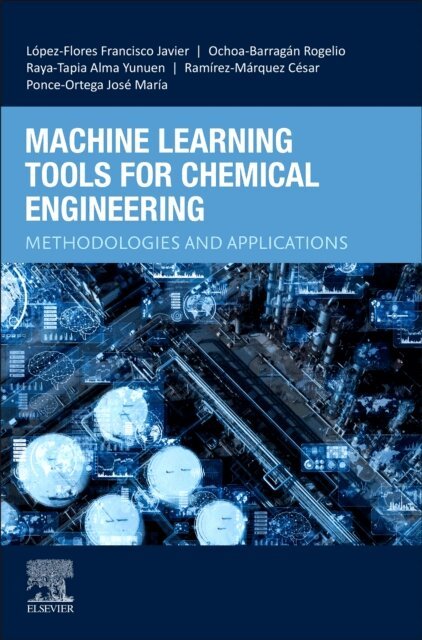
Machine Learning Tools for Chemical Engineering: Methodologies and Applications examines how machine learning (ML) techniques are applied in the field, offering precise, fast, and flexible solutions to address specific challenges.ML techniques and methodologies offer significant advantages (such as accuracy, speed of execution, and flexibility) over traditional modeling and optimization techniques. This book integrates ML techniques to solve problems inherent to chemical engineering, providing practical tools and a theoretical framework combining knowledge modeling, representation, and management, tailored to the chemical engineering field. It provides a precedent for applied Al, but one that goes beyond purely data-centric ML. It is firmly grounded in the philosophies of knowledge modeling, knowledge representation, search and inference, and knowledge extraction and management.Aimed at graduate students, researchers, educators, and industry professionals, this book is an essential resource for those seeking to implement ML in chemical processes, aiming to foster optimization and innovation in the sector.- Outlines the current and potential future contribution of machine learning, the use of data science, and, ultimately, how to correctly use machine learning tools specifically in chemical engineering• Devoted to the correct application and interpretation of the results in various phases of the development of decision support systems: data collection, model development, training, and testing, as well as application in chemical engineering• Examines chemical engineering-specific challenges and problems, including noise, manufacturing equipment, and domain-specific solutions, such as physical knowledge using relevant case study examples
E-bok
Engelska, 20252 489 kr
Läs direkt efter köp
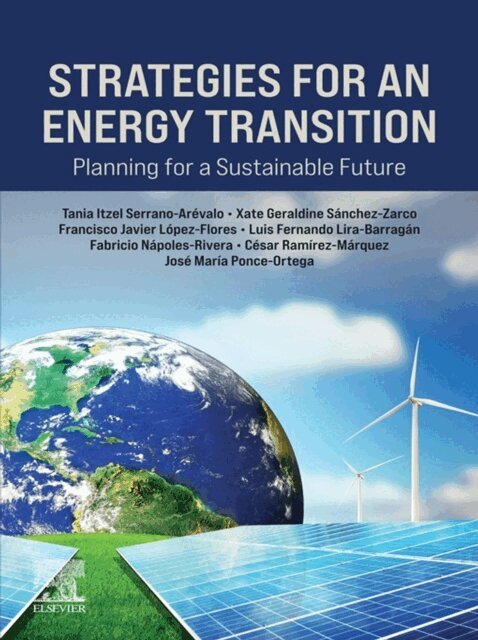
Strategies for an Energy Transition: Planning for a Sustainable Future guides readers through strategic planning for a sustainable energy shift. The book covers optimization of renewable energy systems, sustainable fuel production, and unconventional resources. It also addresses the water-energy nexus, emphasizing an integrated approach that includes technological, economic, environmental, and social sustainability. The book enables a deeper understanding of energy systems interconnections and broader energy decision implications. With insights into modeling, optimization, and strategic planning, it equips academics, engineers, industry professionals, and policymakers with knowledge and tools for navigating energy transition complexities. - Covers the role of the latest renewable energy technologies and sustainability practices- Explains and applies strategic planning and optimization models for sustainable development- Navigates the complexities of policy, regulation, and market dynamics in the energy sector- Includes real-world examples and case studies of sustainable energy implementations
Inbunden, Engelska, 2025
1 956 kr
Skickas inom 10-15 vardagar
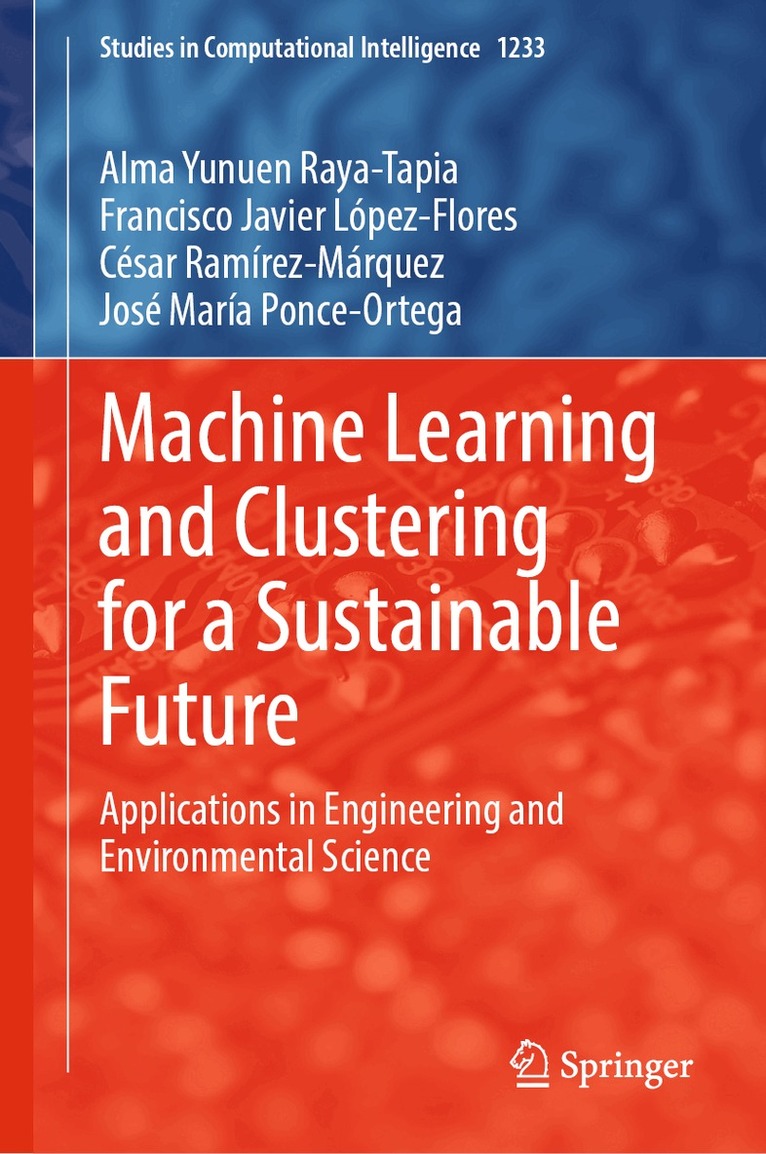
This book explores cutting-edge machine learning and clustering techniques to tackle critical challenges in engineering, environmental science, and sustainability. The book provides an in-depth examination of clustering methodologies, covering unsupervised and supervised techniques, data preprocessing, distance metrics, and cluster validation methods such as the elbow and silhouette techniques.Readers will find practical insights into applying these methods to real-world problems, including clustering greenhouse gas emissions, optimizing energy systems, and analyzing the energy-food nexus in the context of global crises. By integrating theoretical foundations with hands-on applications, this book serves as a valuable resource for researchers, engineers, and professionals seeking data-driven solutions for sustainability challenges.
E-bok
Engelska, 20252 457 kr
Läs direkt efter köp
This book explores cutting-edge machine learning and clustering techniques to tackle critical challenges in engineering, environmental science, and sustainability. The book provides an in-depth examination of clustering methodologies, covering unsupervised and supervised techniques, data preprocessing, distance metrics, and cluster validation methods such as the elbow and silhouette techniques.Readers will find practical insights into applying these methods to real-world problems, including clustering greenhouse gas emissions, optimizing energy systems, and analyzing the energy-food nexus in the context of global crises. By integrating theoretical foundations with hands-on applications, this book serves as a valuable resource for researchers, engineers, and professionals seeking data-driven solutions for sustainability challenges.