Francisco Rodriguez-Valera – författare
Visar alla böcker från författaren Francisco Rodriguez-Valera. Handla med fri frakt och snabb leverans.
4 produkter
4 produkter
Häftad, Engelska, 2012
565 kr
Skickas inom 10-15 vardagar
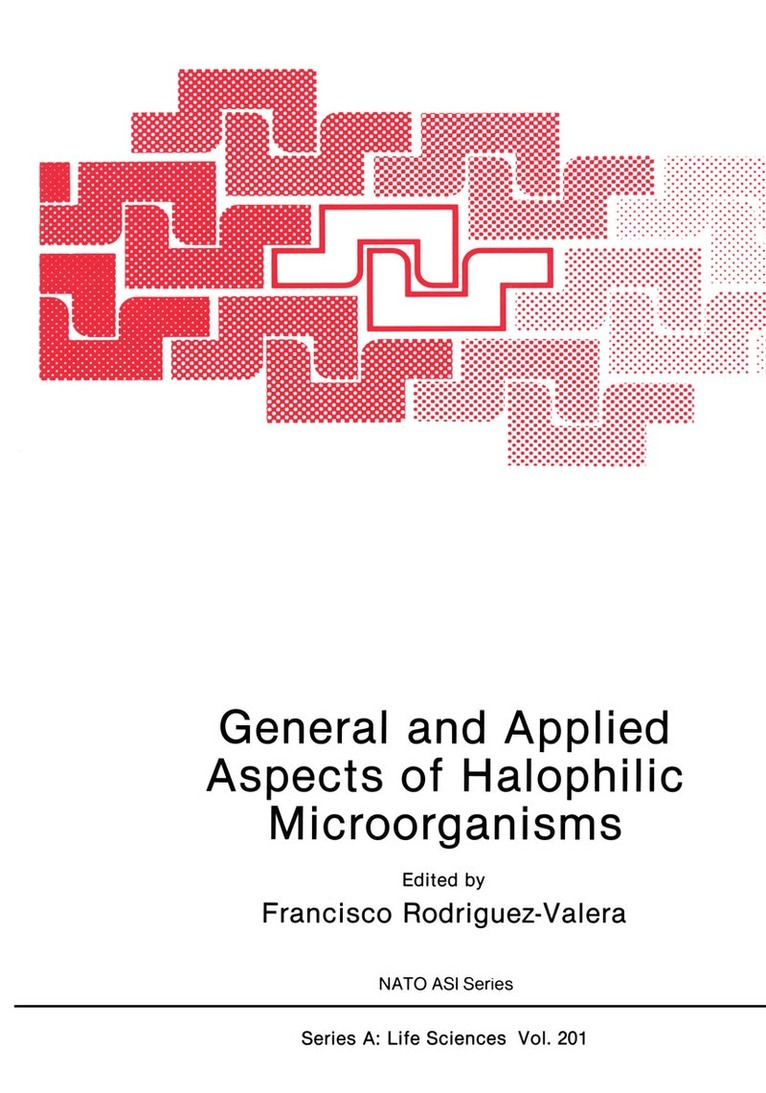
During recent years the subject of extreme environments and extremophiles has become a central topic in modern Biology. The capability of some microorganisms to withstand, and often prefer, the harsh conditions found in such environments is helping to define the physicho-chemicallimits of life and in consequence its essential nature. Halophiles are one of the most representative types of extremophiles, requiring high concentrations of inorganic salts, mostly sodium chloride, to grow and survive. They inhabit hypersaline environments, the distribution and abundance of which dur ing geological eras are attested by the vast amounts of evaporite rocks present in the Earth crust and by their role in the generation of petroleum deposits. The corditions of high osmolarity and ionic strength that are concomitant with concentrated salt solutions challenge the stability of lipid bilayers and the structure of proteins forcing halophilic microbes to develop specialized molecules and physiological me;;hanisms to cope with this environmental stress. Even so, halophilism is a widespread trait in the microbial world. All the major groups of eucaryotic microbes, two groups of archaeobacteria and most phylogenetic branches of eubacteria have halophilic representatives. Therefore, the study of halophilic microorganisms is indeed a highly heterogeneous and extense topic. The present volume contains the contributions to the FEMS-NATO Advanced Research Workshop on "General and Applied Aspects of Halophilic Microorganisms" held at Alicante, Spain, September 17-22, 1989.
E-bok
PDF, Engelska, 2012708 kr
Läs direkt efter köp
During recent years the subject of extreme environments and extremophiles has become a central topic in modern Biology. The capability of some microorganisms to withstand, and often prefer, the harsh conditions found in such environments is helping to define the physicho-chemicallimits of life and in consequence its essential nature. Halophiles are one of the most representative types of extremophiles, requiring high concentrations of inorganic salts, mostly sodium chloride, to grow and survive. They inhabit hypersaline environments, the distribution and abundance of which dur ing geological eras are attested by the vast amounts of evaporite rocks present in the Earth crust and by their role in the generation of petroleum deposits. The corditions of high osmolarity and ionic strength that are concomitant with concentrated salt solutions challenge the stability of lipid bilayers and the structure of proteins forcing halophilic microbes to develop specialized molecules and physiological me;;hanisms to cope with this environmental stress. Even so, halophilism is a widespread trait in the microbial world. All the major groups of eucaryotic microbes, two groups of archaeobacteria and most phylogenetic branches of eubacteria have halophilic representatives. Therefore, the study of halophilic microorganisms is indeed a highly heterogeneous and extense topic. The present volume contains the contributions to the FEMS-NATO Advanced Research Workshop on "General and Applied Aspects of Halophilic Microorganisms" held at Alicante, Spain, September 17-22, 1989.
Inbunden, Engelska, 2015
3 258 kr
Skickas inom 10-15 vardagar
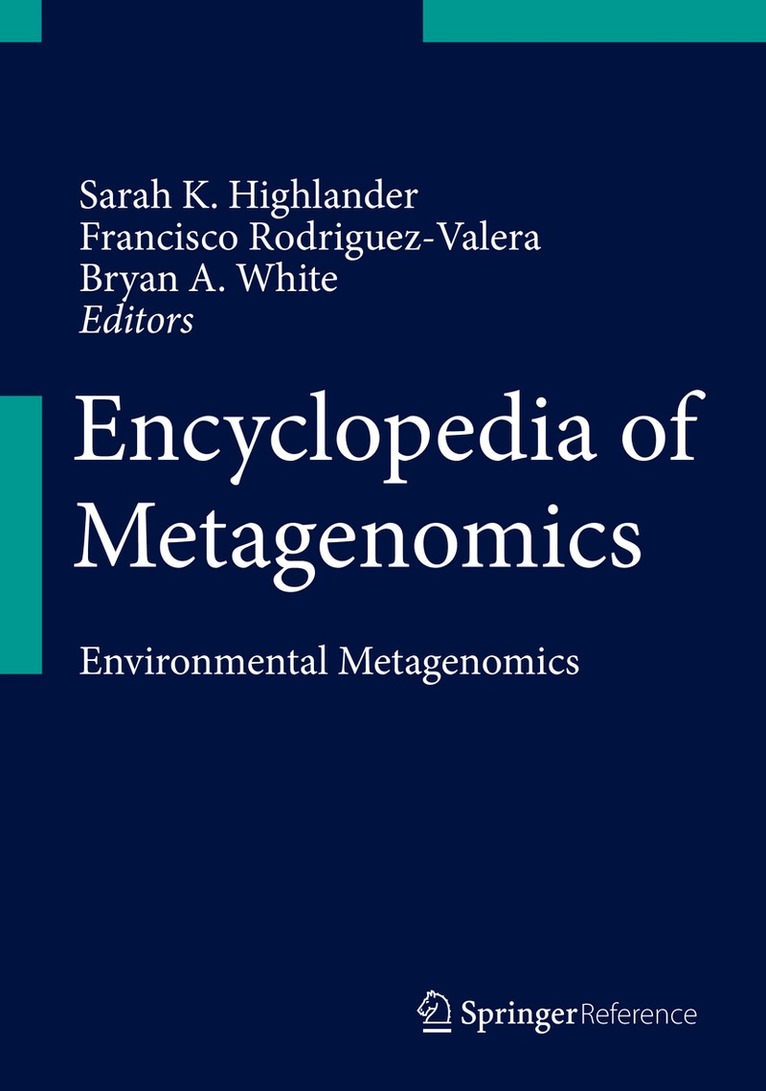
Metagenomics has taken off as one of the major cutting-edge fields of research. The field has broad implications for human health and disease, animal production and environmental health. Metagenomics has opened up a wealth of data, tools, technologies and applications that allow us to access the majority of organisms that we still cannot access in pure culture (an estimated 99% of microbial life). Numerous research groups are developing tools, approaches and applications to deal with this new field, as larger data sets from environments including the human body, the oceans and soils are being generated. See for example the human microbiome initiative (HMP) which has become a world-wide effort and the Global Ocean Sampling (GOS) surveys. The number of publications as measured through PubMed that are focused on metagenomics continues to increase. The field of metagenomics continues to evolve with large common datasets available to the scientific community. A concerted effort is needed tocollate all this information in a centralized place. By having all the information in an Encyclopedia form, we have an opportunity to receive seminal contributions from the leaders in the field and at the same time provide this information to a significant number of junior and senior scientists, via colleges, libraries, and just through online access. This format also allows scientists in the developing world to have continued access to this growing field. It is anticipated that the Encyclopedia will also be used by many other groups including, clinicians, undergraduate and graduate level students, as well as ethical and legal groups associated with or interested in the issues surrounding metagenome science.
E-bok
Engelska, 20154 023 kr
Läs direkt efter köp
Metagenomics has taken off as one of the major cutting-edge fields of research. The field has broad implications for human health and disease, animal production and environmental health. Metagenomics has opened up a wealth of data, tools, technologies and applications that allow us to access the majority of organisms that we still cannot access in pure culture (an estimated 99% of microbial life). Numerous research groups are developing tools, approaches and applications to deal with this new field, as larger data sets from environments including the human body, the oceans and soils are being generated. See for example the human microbiome initiative (HMP) which has become a world-wide effort and the Global Ocean Sampling (GOS) surveys. The number of publications as measured through PubMed that are focused on metagenomics continues to increase. The field of metagenomics continues to evolve with large common datasets available to the scientific community. A concerted effort is needed tocollate all this information in a centralized place. By having all the information in an Encyclopedia form, we have an opportunity to receive seminal contributions from the leaders in the field and at the same time provide this information to a significant number of junior and senior scientists, via colleges, libraries, and just through online access. This format also allows scientists in the developing world to have continued access to this growing field. It is anticipated that the Encyclopedia will also be used by many other groups including, clinicians, undergraduate and graduate level students, as well as ethical and legal groups associated with or interested in the issues surrounding metagenome science.