Franco F. Orsucci – författare
Visar alla böcker från författaren Franco F. Orsucci. Handla med fri frakt och snabb leverans.
7 produkter
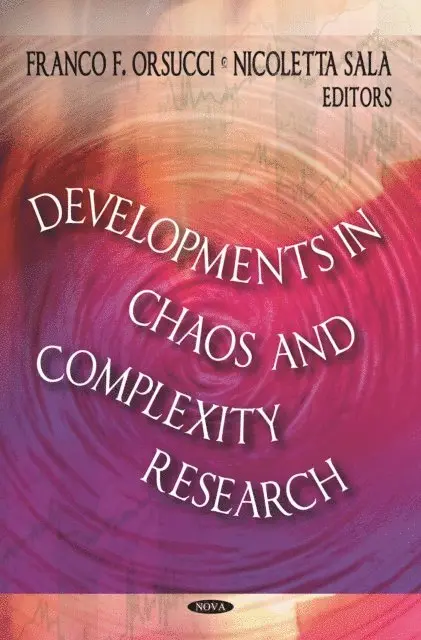
Developments in Chaos and Complexity Research
Av Nicoletta Sala, Franco F. Orsucci
E-bok, 2019
1548 kr
Lägg i varukorg
This book presents the latest leading-edge international research on artificial life, cellular automata, chaos theory, cognition, complexity theory, synchronization, fractals, genetic algorithms, information systems, metaphors, neural networks, non-linear dynamics, parallel computation and …
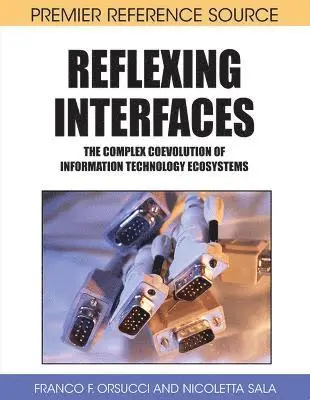
Reflexing Interfaces
The Complex Coevolution of Information Technology Ecosystems
Av Franco F. Orsucci, Nicoletta Sala
Inbunden, 2008
2432 kr
Lägg i varukorg
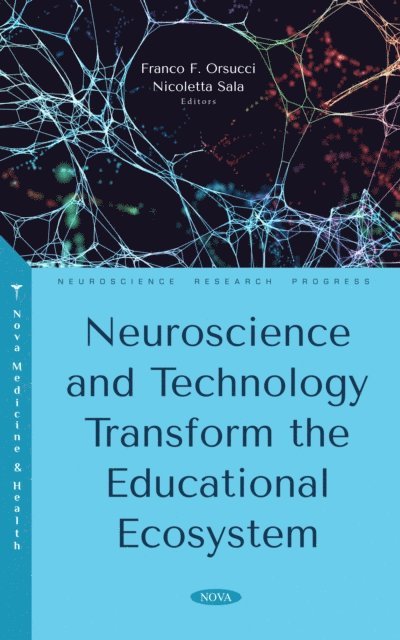
Neuroscience and Technology Transform the Educational Ecosystem
E-bok, 2022
3273 kr
Lägg i varukorg
Scientists, educationalists and policymakers are increasingly recognizing the relevance of neuroscience to education and its potential impact on pedagogy. Our thoughts, perceptions and actions continuously change the strength of connections between neurons in the brain. These physical connections …
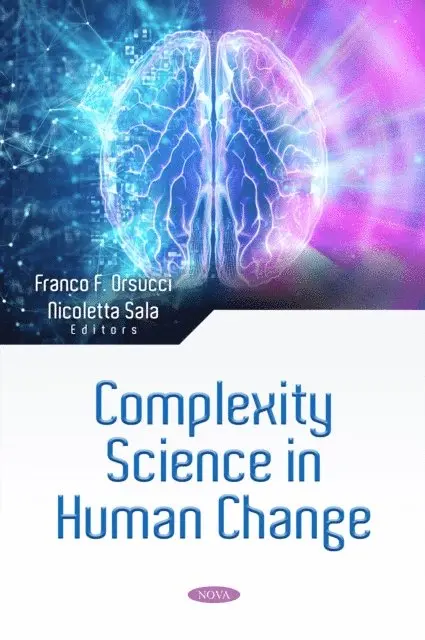
Complexity Science in Human Change
E-bok, 2024
1526 kr
Lägg i varukorg
This book is dedicated to some of the best papers in neuroscience, psychology, and psychiatry appearing in Chaos and Complexity Letters – International Journal of Dynamical Systems Research (CCL), particularly in the last decade of the journal’s life. The structure of CCL added value to …
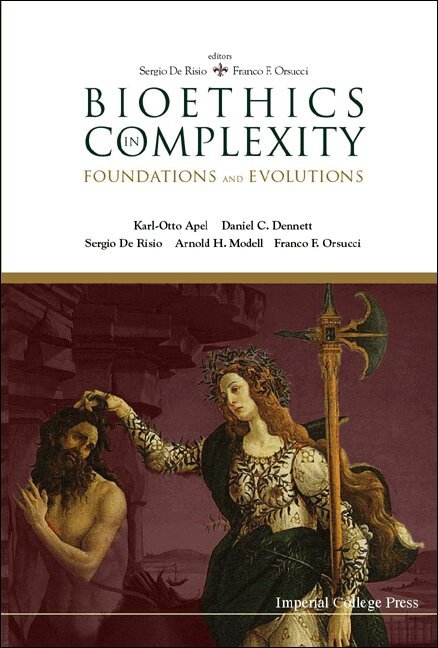
BIOETHICS IN COMPLEXITY: FOUNDATIONS AND EVOLUTIONS
Av RISIO SERGIO DE, Sergio De Risio m. fl.
Inbunden, 2004
1066 kr
Tillfälligt slut
This publication reviews the foundations of ethics in the history of Western thinking. It connects these philosophical matters with evolutionary theory and contemporary bioethics, biology and medicine, posing new questions for the current dialectics between categorical and contextual ethics. Novel …
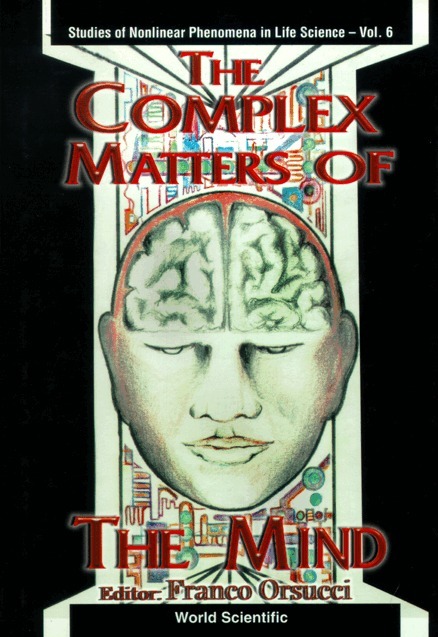
COMPLEX MATTERS OF THE MIND, THE
Av Franco Orsucci, Franco F Orsucci
Inbunden, 1998
1753 kr
Tillfälligt slut
This book focuses on the successes and difficulties of nonlinear studies, particularly in the areas of Mind Sciences. It atttempts to answer the following questions: is an interdisciplinary contamination of complexity studies in different disciplines useful? Does this contamination originate in a …
CHANGING MIND: TRANSITIONS IN NATURAL AND ARTIFICIAL ENVIRONMENTS
Inbunden, 2002
1565 kr
Tillfälligt slut
This book applies complexity theory to cognitive science, and the result is a transformation of this field. It proposes a biophysical theory of human relations, attempting to expand all its implications (for research and theory). It presents the potential clinical applications of this theory in …