Francois Bry – författare
Visar alla böcker från författaren Francois Bry. Handla med fri frakt och snabb leverans.
7 produkter
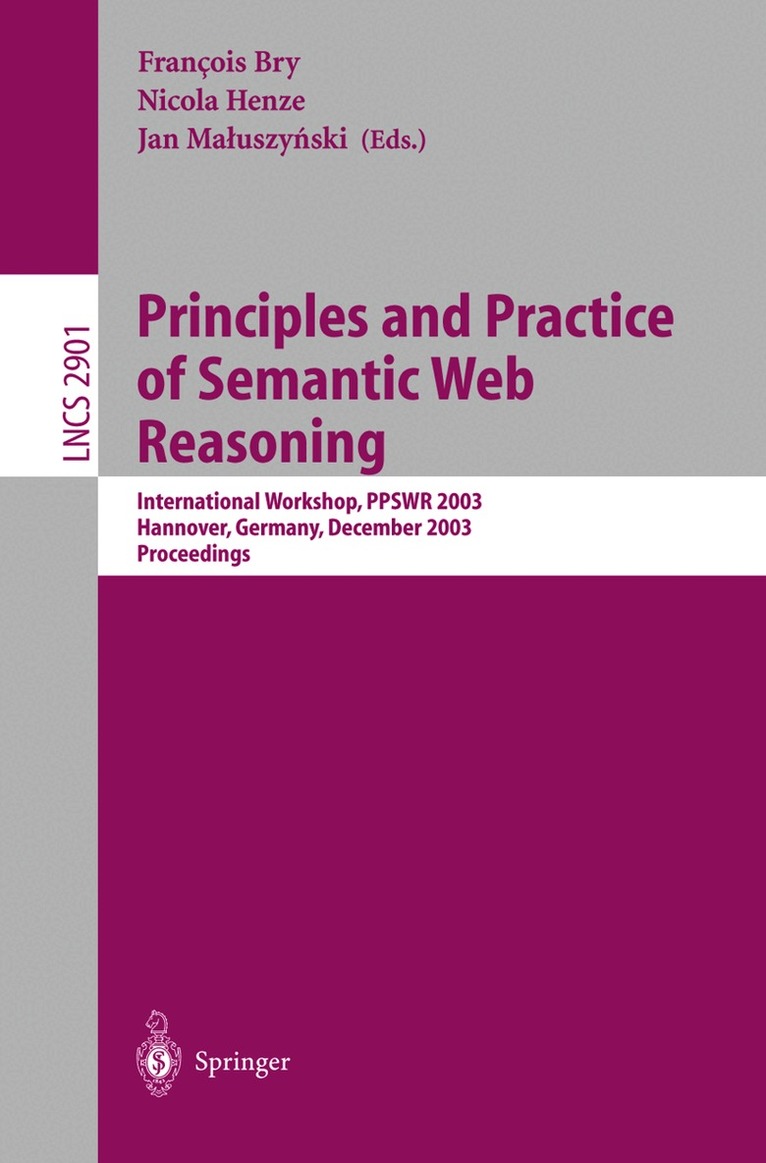
Principles and Practice of Semantic Web Reasoning
International Workshop, PPSWR 2003, Mumbai, India, December 8, 2003, Proceedings
Av Francois Bry, Nicola Henze m. fl.
Häftad, 2003
564 kr
Lägg i varukorg
The Semantic Web is a major endeavor aimed at enriching the existing Web withmetadataandprocessingmethodssoastoprovideWeb-basedsystemswith advanced(so-calledintelligent)capabilities,inparticularwithcontext-awareness and decision support. The advanced capabilities striven for in most Semantic Web …
Principles and Practice of Semantic Web Reasoning
International Workshop, PPSWR 2003, Mumbai, India, December 8, 2003, Proceedings
Av Jan Maluszynski, Nicola Henze m. fl.
E-bok, 2003
755 kr
Lägg i varukorg
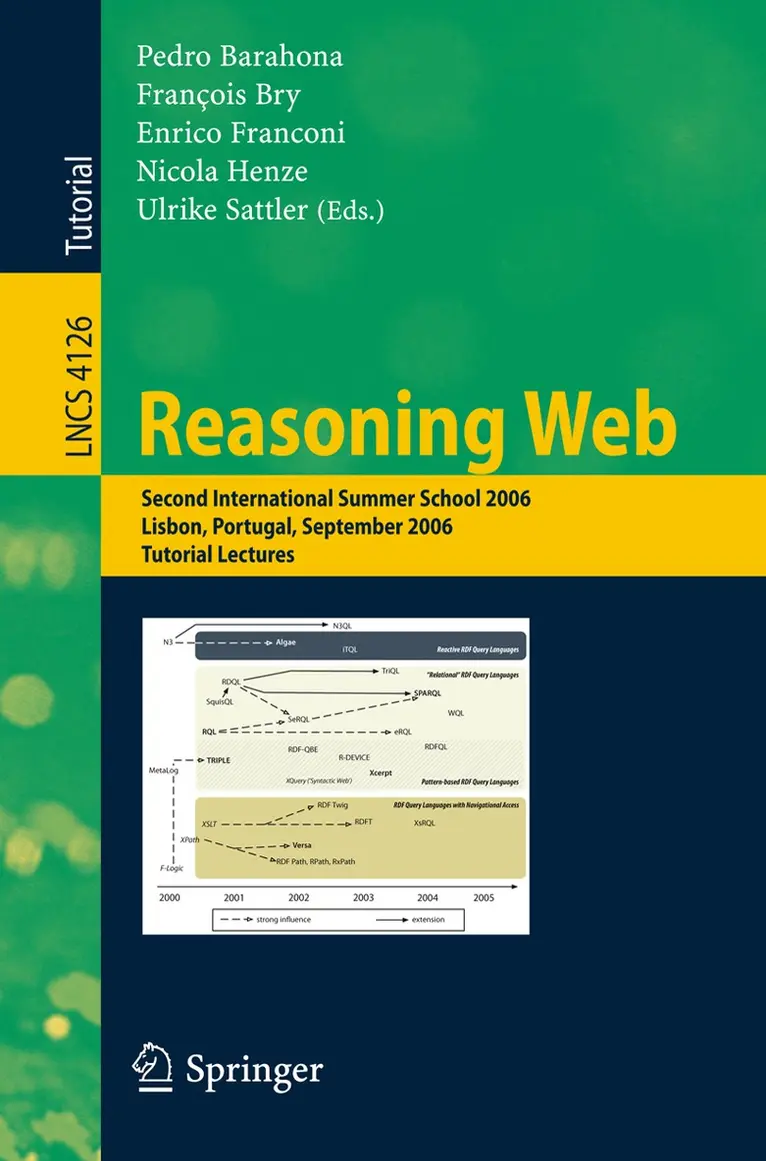
Reasoning Web
Second International Summer School 2006, Lisbon, Portugal, September 4-8, 2006, Tutorial Lectures
Av Pedro Barahona, François Bry m. fl.
Häftad, 2006
509 kr
Lägg i varukorg
This book presents thoroughly arranged tutorial papers corresponding to lectures given by leading researchers at the Second International Summer School on Reasoning Web in Lisbon, Portugal, in September 2006. Building on the predessor school held in 2005 and published as LNCS 3564, the ten tutorial …
Reasoning Web
Second International Summer School 2006, Lisbon, Portugal, September 4-8, 2006, Tutorial Lectures
Av Ulrike Sattler, Nicola Henze m. fl.
E-bok, 2006
587 kr
Lägg i varukorg
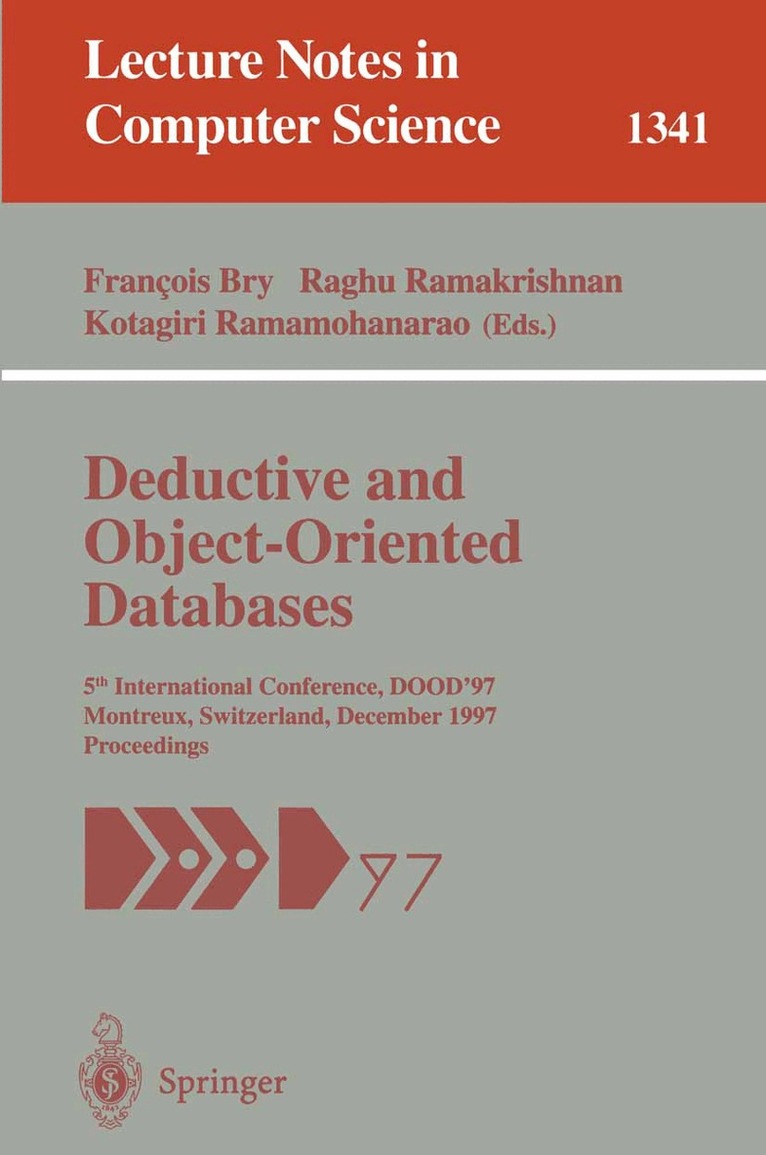
Deductive and Object-Oriented Databases
5th International Conference, DOOD'97, Montreux, Switzerland, December 8-12, 1997. Proceedings
Av Francois Bry, Raghu Ramakrishnan m. fl.
Häftad, 1997
566 kr
Lägg i varukorg
This book constitutes the refereed proceedings of the 5th International Conference on Deductive and Object-Oriented Databases, DOOD'97, held in Montreux, Switzerland, in December 1997. The 22 revised full papers presented in this book were selected from a total of 59 submissions. Also included are …
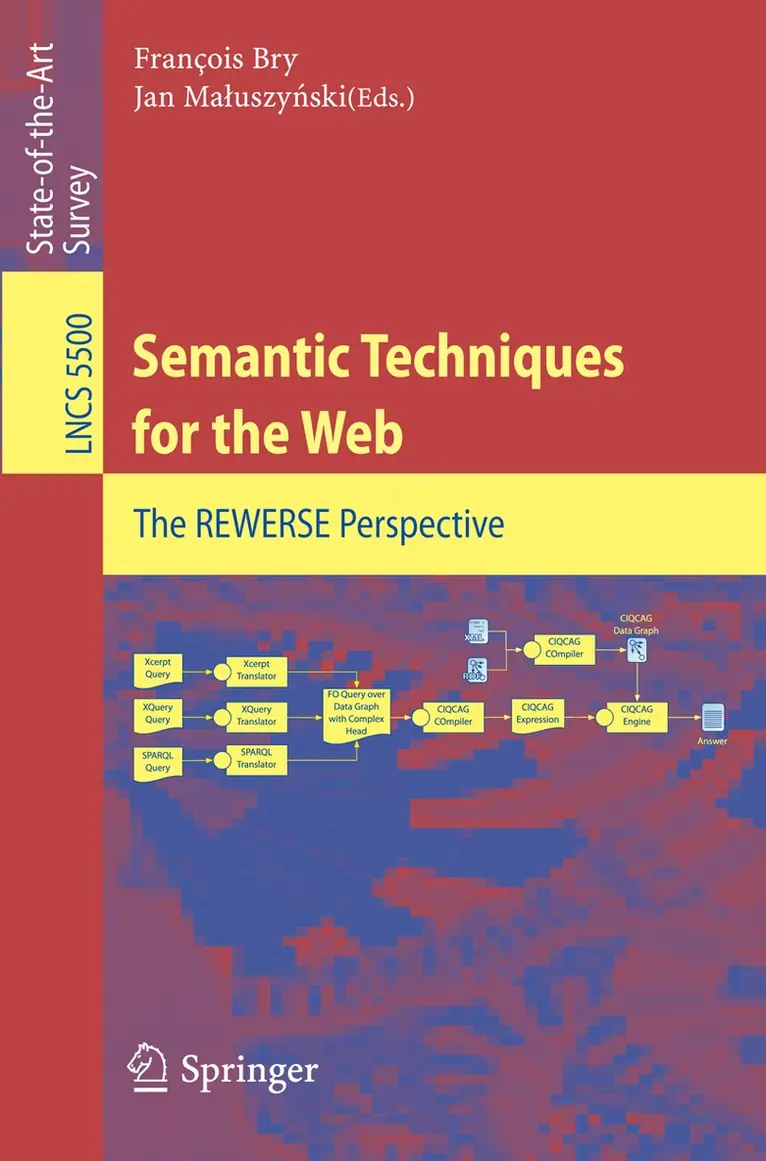
Semantic Techniques for the Web
The REWERSE Perspective
Av Francois Bry, Jan Maluszynski
Häftad, 2009
564 kr
Lägg i varukorg
The objective of this state-of-the-art survey is to give a coherent overview of the main topics and results achieved by the Network of Excellence REWERSE on 'Reasoning on the Web', funded by the European Commission and Switzerland within the '6th Framework Programme' (FP6), from 2004 to 2008. The …
Semantic Techniques for the Web
The REWERSE Perspective
Av Jan Maluszynski, Francois Bry
E-bok, 2009
755 kr
Lägg i varukorg
The objective of this state-of-the-art survey is to give a coherent overview of the main topics and results achieved by the Network of Excellence REWERSE on ''Reasoning on the Web'', funded by the European Commission and Switzerland within the ''6th Framework Programme'' (FP6), from 2004 to 2008. …