François Hartog - Böcker
Visar alla böcker från författaren François Hartog. Handla med fri frakt och snabb leverans.
7 produkter
7 produkter
1 039 kr
Skickas inom 7-10 vardagar
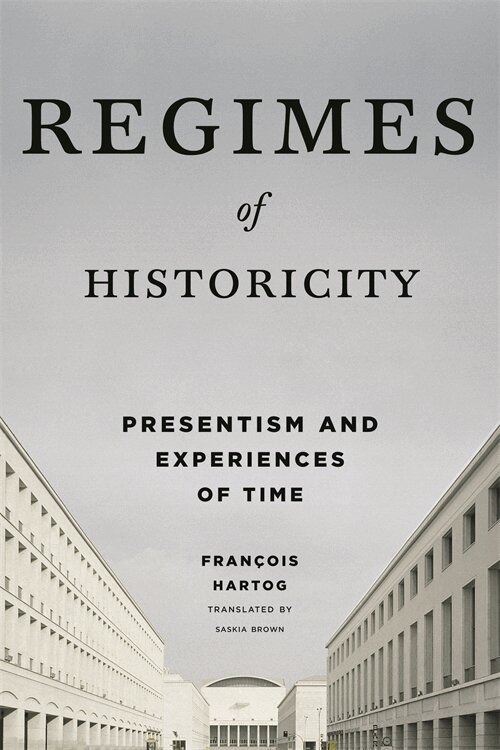
Francois Hartog explores crucial moments of change in society's "regimes of historicity," or its ways of relating to the past, present, and future. Inspired by Hannah Arendt, Reinhart Koselleck, and Paul Ricoeur, Hartog analyzes a broad range of texts, positioning The Odyssey as a work on the threshold of historical consciousness and contrasting it with an investigation of the anthropologist Marshall Sahlins's concept of "heroic history." He tracks changing perspectives on time in Chateaubriand's Historical Essay and Travels in America and sets them alongside other writings from the French Revolution. He revisits the insights of the French Annales School and situates Pierre Nora's Realms of Memory within a history of heritage and today's presentism, from which he addresses Jonas's notion of our responsibility for the future. Our presentist present is by no means uniform or clear-cut, and it is experienced very differently depending on the position we occupy in society.We are caught up in global movement and accelerated flows, or else condemned to the life of casual workers, living from hand to mouth in a stagnant present, with no recognized past, and no real future either (since the temporality of plans and projects is inaccessible). The present is therefore experienced as emancipation or enclosure, and the perspective of the future is no longer reassuring, since it is perceived not as a promise, but as a threat. Hartog's resonant readings show us how the motor of history(-writing) has stalled and help us understand the contradictory qualities of our contemporary presentist relation to time.
261 kr
Skickas inom 7-10 vardagar
Francois Hartog explores crucial moments of change in society's "regimes of historicity," or its ways of relating to the past, present, and future. Inspired by Hannah Arendt, Reinhart Koselleck, and Paul Ricoeur, Hartog analyzes a broad range of texts, positioning The Odyssey as a work on the threshold of historical consciousness and contrasting it with an investigation of the anthropologist Marshall Sahlins's concept of "heroic history." He tracks changing perspectives on time in Chateaubriand's Historical Essay and Travels in America and sets them alongside other writings from the French Revolution. He revisits the insights of the French Annales School and situates Pierre Nora's Realms of Memory within a history of heritage and today's presentism, from which he addresses Jonas's notion of our responsibility for the future. Our presentist present is by no means uniform or clear-cut, and it is experienced very differently depending on the position we occupy in society.We are caught up in global movement and accelerated flows, or else condemned to the life of casual workers, living from hand to mouth in a stagnant present, with no recognized past, and no real future either (since the temporality of plans and projects is inaccessible). The present is therefore experienced as emancipation or enclosure, and the perspective of the future is no longer reassuring, since it is perceived not as a promise, but as a threat. Hartog's resonant readings show us how the motor of history(-writing) has stalled and help us understand the contradictory qualities of our contemporary presentist relation to time.
373 kr
Skickas
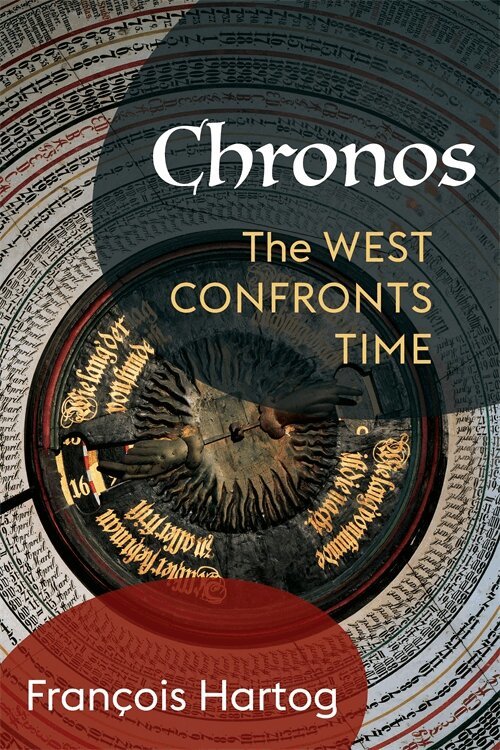
As omnipresent as it is ungraspable, time has always inspired and eluded attempts to comprehend it. For the early Christians, for the twenty-first-century world, how have past and future been woven into the present? In Chronos, a leading French historian ranges from Western antiquity to the Anthropocene, pinpointing the crucial turning points in our relationship to time.François Hartog considers the genealogy of Western temporalities, examining the orders of time and their divisions into epochs. Beginning with how the ancient Greeks understood time, Chronos explores the fashioning of a Christian time in the early centuries of the Catholic Church. Christianity’s hegemony over time reigned over Europe and beyond, only to ebb as modern time—presided over by the notion of relentless progress—set out on its march toward the future. Hartog emphasizes the deep uncertainties the world now faces as we reckon with the arrival and significance of the Anthropocene age. Humanity has become capable of altering the climate, triggering in mere life spans changes that once took place across geological epochs. In this threatening new age, which has challenged all existing temporal constructions, what will become of the old ways of understanding time?Intertwining reflections on intellectual history and historiography with critiques of contemporary presentism and apocalypticism, Chronos brings depth and erudition to debates over the nature of the era we are living through and offers keen insight into the experience of historical time.
285 kr
Skickas inom 7-10 vardagar
As omnipresent as it is ungraspable, time has always inspired and eluded attempts to comprehend it. For the early Christians, for the twenty-first-century world, how have past and future been woven into the present? In Chronos, a leading French historian ranges from Western antiquity to the Anthropocene, pinpointing the crucial turning points in our relationship to time.François Hartog considers the genealogy of Western temporalities, examining the orders of time and their divisions into epochs. Beginning with how the ancient Greeks understood time, Chronos explores the fashioning of a Christian time in the early centuries of the Catholic Church. Christianity’s hegemony over time reigned over Europe and beyond, only to ebb as modern time—presided over by the notion of relentless progress—set out on its march toward the future. Hartog emphasizes the deep uncertainties the world now faces as we reckon with the arrival and significance of the Anthropocene age. Humanity has become capable of altering the climate, triggering in mere life spans changes that once took place across geological epochs. In this threatening new age, which has challenged all existing temporal constructions, what will become of the old ways of understanding time?Intertwining reflections on intellectual history and historiography with critiques of contemporary presentism and apocalypticism, Chronos brings depth and erudition to debates over the nature of the era we are living through and offers keen insight into the experience of historical time.
Del 5 - New Historicism: Studies in Cultural Poetics
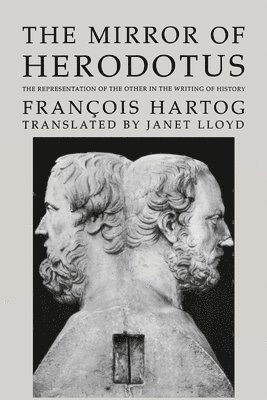
Mirror of Herodotus
The Representation of the Other in the Writing of History
Häftad, Engelska, 2009
334 kr
Skickas inom 7-10 vardagar
Herodotus' great work is not only an account of the momentous historical conflict between the Greeks and the Persians but also the earliest sustained exploration in the West of the problem of cultural difference. Francois Hartog asks fundamental questions about how Herodotus represented this difference. How did he and his readers understand the customs and beliefs of those who were not Greek? How did the historian convince his readers that his account of other peoples was reliable? How is it possible to comprehend a way of life radically different from one's own? What are the linguistic, rhetorical, and philosophical means by which Herodotus fashions his text into a mirror of the marginal and unknown? In answering these questions, Hartog transforms our understanding of the 'father of history'. His Herodotus is less the chronicler of a victorious Greece than a brilliant writer in pursuit of otherness.
726 kr
Skickas inom 3-6 vardagar
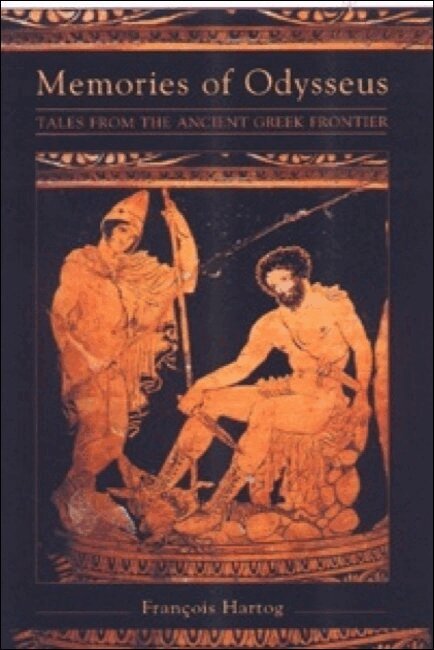
This is a book about identity, about how the ancient Greeks saw themselves and others, and what this tells us in turn about Greek mentality and culture. It looks at voyagers and explorers, at travels in reality and in the mind, and shows what these reveal at key points in Greek history from the creation of Homer’s monumental epic around 700 BC to the high Roman imperial period some eight hundred years later. The author takes us first to the journeyings of Odysseus, considering the returning warrior’s concerns of witness and memory and finding in the epic the themes that will preoccupy the Greeks over the centuries. He then travels to Egypt with Herodotus, to the problematically ‘barbarian’ world of Persia and the Near East with Alexander the Great, to old Greece with the fictional Scythian Anacharsis, to the new Greek world under Roman domination with Polybius, Dionysius of Halicarnassos and Strabo, and finally to the Asia Minor of the first-century AD sage Apollonius of Tyana in the company of Philostratos. He examines both what their representations of these lands meant in their own day and how they were received in later times. He looks in particular at the importance of the invention of the barbarian and the “other”, first in the theoretical process of desribing and accounting for the outside world, and secondly at the justification it gives for the practical reshaping of alien space through conquest and assimilation – themes which have had, as he points out, a more recent resonance. François Hartog draws widely on ancient and modern authors to create a cultural history of ancient Greece that sheds a new and revealing light on the Greeks and the history of humankind more generally.
174 kr
Skickas inom 5-8 vardagar