Francois Olivennes – författare
Visar alla böcker från författaren Francois Olivennes. Handla med fri frakt och snabb leverans.
7 produkter
7 produkter
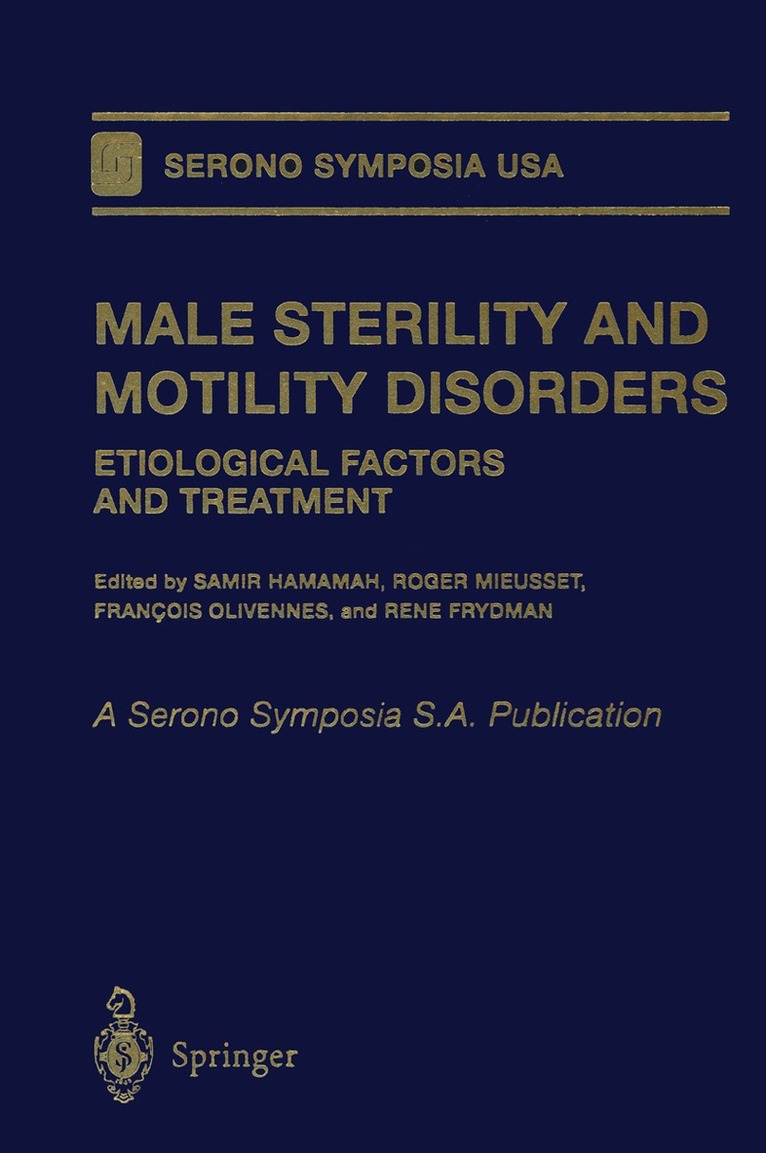
Inbunden, Engelska, 1999
894 kr
Skickas inom 10-15 vardagar
This volume is the proceedings of the International Symposium on Male Sterility for Motility Disorders, held in Paris, January 30-31, 1998. The internationally recognized faculty present the latest research on etiologic factors and treatment of male sterility for motility disorders, including the etiology of immobile sperm; therapeutic possibilities for immotile sperm; ICSI option; testicular sperm, physiological and pathological aspects and retrieval; and conceptus quality in ICSI and ethical problems with ART.
E-bok
Engelska, 2004814 kr
Läs direkt efter köp
Worldwide, approximately 500,000 in vitro fertilization cycles are performed every year. Although the best possible result is a healthy child, the technology carries a number of varying risks and complications leading to a trade-off between the efficacy of these treatments and their quality and safety. Drawing on contributions from international ex
E-bok
PDF, Engelska, 2012734 kr
Läs direkt efter köp
This conference, dedicated to the etiology and treatment of motility disor ders in spermatozoa and male sterility, attracted some of the finest investiga tors in the field. Standards were immensely high throughout, and discussions were meaningful and detailed. Analyses on disorders in sperm motility de mand a broad-based approach, involving cytologists, geneticists, andrologists, and embryologists, because the topic has many clinical and scientific over tones. Human spermatozoa are at the mercy of so many factors as they form and mature in the testis and epididymis. Their survival and fundamental char acteristics are essential for fertilization, and the male genome imposes its influence on the embryo as it becomes active in male pronuclei very soon after sperm entry into the oocyte. All of these fundamental aspects of sperm biology demanded a broad breadth of topics in the symposium. The opening session quickly got down to fundamentals with contributions from J.-L. Gatti, J.G. Alvarez, C. Gagnon, and H. Breitbart. They discussed the mechanism and regulation of motility, the metabolic strategy of human spermatozoa, the effects of exogenous fac tors such as antibodies, infections, and toxins, and finally the role of intracel lular calcium on sperm motility. To these topics, the postcoffee session on the first morning described the genetics of motility disorders and the etiology and management of necrozoospermia. The excellent presentation provided the background detail of the symposium and opened the way for the discus sion of various clinical aspects of the topic.
Häftad, Engelska, 2012
562 kr
Skickas inom 10-15 vardagar
This conference, dedicated to the etiology and treatment of motility disor ders in spermatozoa and male sterility, attracted some of the finest investiga tors in the field. Standards were immensely high throughout, and discussions were meaningful and detailed. Analyses on disorders in sperm motility de mand a broad-based approach, involving cytologists, geneticists, andrologists, and embryologists, because the topic has many clinical and scientific over tones. Human spermatozoa are at the mercy of so many factors as they form and mature in the testis and epididymis. Their survival and fundamental char acteristics are essential for fertilization, and the male genome imposes its influence on the embryo as it becomes active in male pronuclei very soon after sperm entry into the oocyte. All of these fundamental aspects of sperm biology demanded a broad breadth of topics in the symposium. The opening session quickly got down to fundamentals with contributions from J.-L. Gatti, J.G. Alvarez, C. Gagnon, and H. Breitbart. They discussed the mechanism and regulation of motility, the metabolic strategy of human spermatozoa, the effects of exogenous fac tors such as antibodies, infections, and toxins, and finally the role of intracel lular calcium on sperm motility. To these topics, the postcoffee session on the first morning described the genetics of motility disorders and the etiology and management of necrozoospermia. The excellent presentation provided the background detail of the symposium and opened the way for the discus sion of various clinical aspects of the topic.
Häftad, Engelska, 2004
1 078 kr
Skickas inom 5-8 vardagar
Worldwide, approximately 500,000 in vitro fertilization cycles are performed every year. Although the best possible result is a healthy child, the technology carries a number of varying risks and complications leading to a trade-off between the efficacy of these treatments and their quality and safety. Drawing on contributions from international experts with academic and clinical backgrounds, Assisted Reproductive Technologies: Quality and Safety presents an analysis of the medical risks and complications involved in reproductive medicine.Putting the intricacies of reproductive health in the spotlight, the book describes side-effects, risks, and complications related to ART treatments. It discusses ovarian hyperstimulation syndrome, demonstrates the impact of judicious elective single embryo transfer, and focuses heavily on multiple pregnancy as the major risk factor of ART. The editors highlight the relatively less likely, but important risks of oncogenic complications, bleeding at the time of ovum retrieval, and the even smaller but still existing risk for maternal mortality. They include discussions of non-medical factors that can have a major impact on people's lives such as psychological, sexual, financial, moral, ethical, and philosophical dilemmas.In today's litigious climate, modern management of any clinic is all about minimizing risks and complications. Thoroughly addressing quality and safety issues in ART, this book provides succinct, up-to-date information on quality care in reproductive medicine.
Inbunden, Engelska, 2006
808 kr
Skickas inom 10-15 vardagar
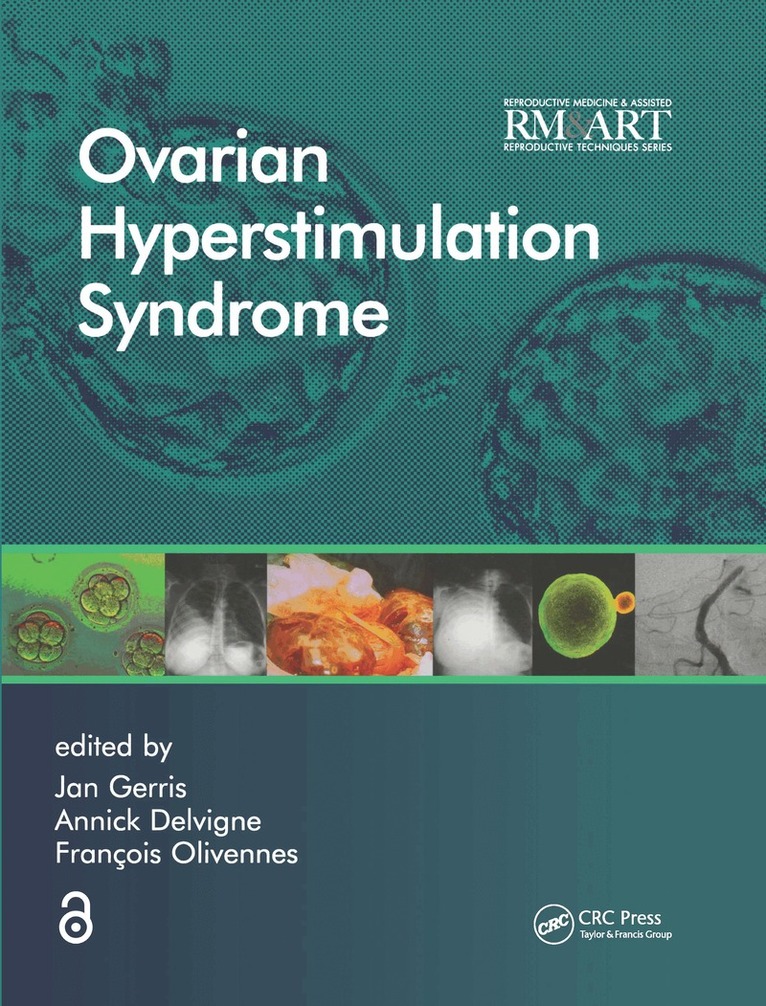
Major advances have recently been made in our understanding of Ovarian Hyperstimulation Syndrome (OHSS). These include improving classification, recognizing primary and secondary risk factors, manipulating and monitoring ovarian stimulation, handling risky situations, and elucidating the underlying pathophysiologic mechanisms of the syndrome. As such, all health care professionals working in reproductive medicine should be acquainted with the theoretical and practical aspects of how to deal with this syndrome, both from a prophylactic point of view and once it has developed.Focusing on the clinically relevant aspects of the syndrome, Ovarian Hyperstimulation Syndrome is well-illustrated with appropriate diagrams showing biologic mechanisms, procedural algorithms, sonographs and radiological images. At the end of each chapter, frequently asked questions with appropriate answers help expand and elaborate difficult practice problems.
E-bok
Franska, 2008178 kr
Läs direkt efter köp
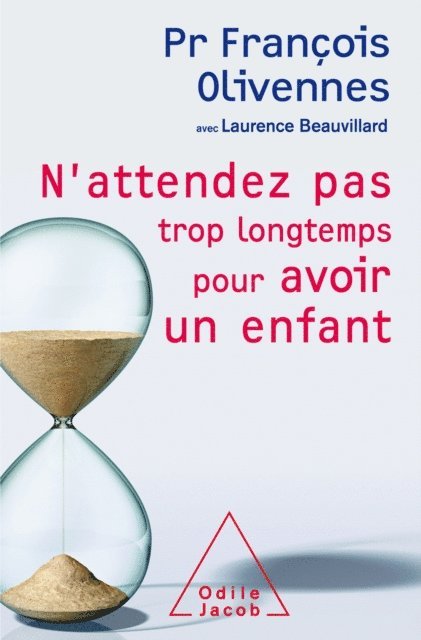
« Par ce livre, je veux m’adresser aux femmes de tous âges, et plus particulièrement à celles, de plus en plus nombreuses, qui, la trentaine passée, ont décidé d’avoir un enfant. Pour certaines, le succès sera au rendez-vous. Pour d’autres, les difficultés les orienteront vers la prise en charge d’une infertilité. Mais l’assistance médicale à la procréation n’est pas la solution universelle et infaillible. La découverte que la maternité rêvée peut être compromise est terrible. Pour éviter les projets inaboutis, les regrets douloureux, je veux expliquer les contraintes de l’âge et toutes ces raisons qu’il faut connaître si l’on veut concevoir avant qu’il ne soit trop tard. Beaucoup de femmes regrettent de ne pas être mieux informées. Je veux leur dire pourquoi il ne faut pas trop attendre et ne pas laisser passer sa chance d’avoir un enfant. » F. O. Une réflexion vivante, étayée par des histoires d’hommes et de femmes, qui fait le point sur la période optimale de fertilité, les réussites et les limites des traitements de l’infertilité, les méthodes pour que plus aucun couple ne passe à côté de son désir d’enfant. Le professeur François Olivennes est gynécologue-obstétricien et professeur des universités, responsable des secteurs d’assistance médicale à la procréation à l’hôpital Béclère à Clamart puis à l’hôpital Cochin à Paris pendant plusieurs années. Spécialiste des traitements de l’infertilité, il aide depuis près de vingt ans de nombreux couples à concrétiser leur désir d’enfant. Laurence Beauvillard est journaliste, spécialiste des problèmes de santé et de société pour la presse écrite, puis pour de grandes émissions de télévision. Elle a reçu le prix de la Fondation pour l’enfance en 1995, et travaille actuellement au service santé de la rédaction de France 2.