François Rocher – författare
Visar alla böcker från författaren François Rocher. Handla med fri frakt och snabb leverans.
8 produkter
8 produkter
Häftad, Engelska, 2018
437 kr
Skickas inom 10-15 vardagar
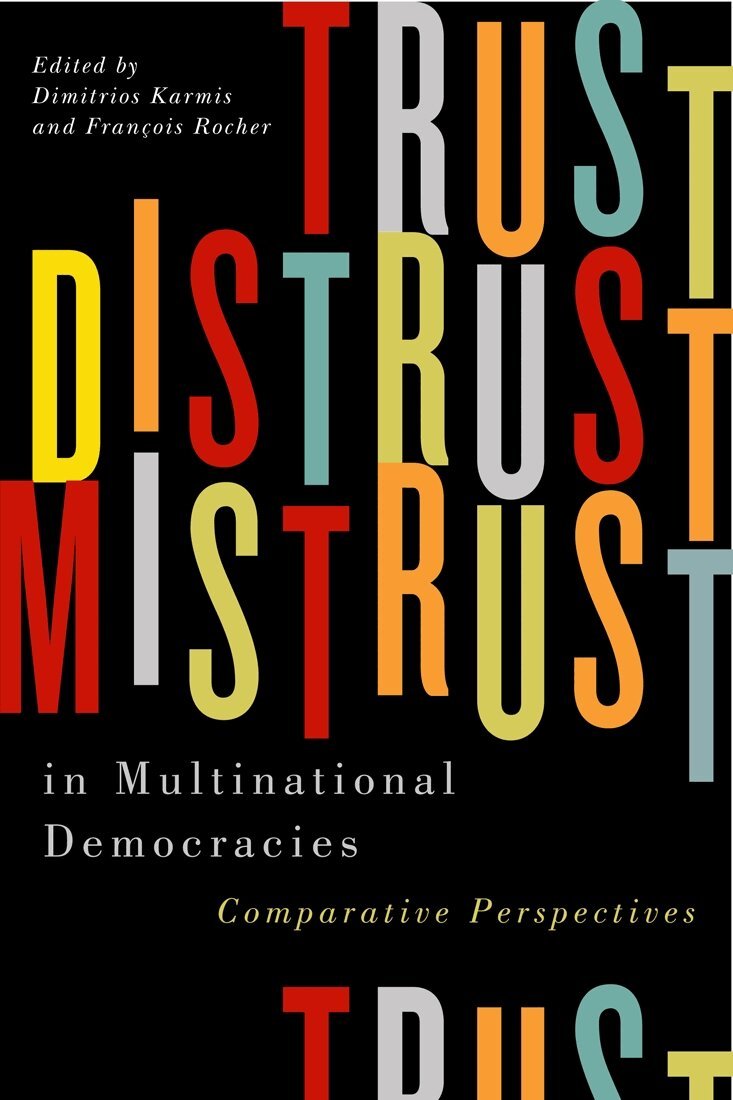
The importance of research on the notion of trust has grown considerably in the social sciences over the last three decades. Much has been said about the decline of political trust in democracies and intense debates have occurred about the nature and complexity of the relationship between trust and democracy. Political trust is usually understood as trust in political institutions (including trust in political actors that inhabit the institutions), trust between citizens, and to a lesser extent, trust between groups. However, the literature on trust has given no special attention to the issue of trust between minority and majority nations in multinational democracies – countries that are not only multicultural but also constitutional associations containing two or more nations or peoples whose members claim to be self-governing and have the right of self-determination. This volume, part of the work of the Groupe de recherche sur les sociétés plurinationales (GRSP), is a comparative study of trust, distrust, and mistrust in multinational democracies, centring on Canada, Belgium, Spain, and the United Kingdom. Beliefs, attitudes, practices, and relations of trust, distrust, and mistrust are studied as situated, interacting, and coexisting phenomena that change over time and space. Contributors include Dario Castiglione (Exeter), Jérôme Couture (INRS-UCS), Kris Deschouwer (Vrije Universiteit Brussel), Jean Leclair (Montréal), Patti Tamara Lenard (Ottawa), Niels Morsink (Antwerp), Geneviève Nootens (Chicoutimi), Darren O'Toole (Ottawa), Alexandre Pelletier (Toronto), Réjean Pelletier (Laval), Philip Resnick (UBC), David Robichaud (Ottawa), Peter Russell (Toronto), Richard Simeon (Toronto), Dave Sinardet (Vrije Universiteit Brussel), and Jeremy Webber (Victoria).
E-bok
PDF, Engelska, 2018374 kr
Läs direkt efter köp
The importance of research on the notion of trust has grown considerably in the social sciences over the last three decades. Much has been said about the decline of political trust in democracies and intense debates have occurred about the nature and complexity of the relationship between trust and democracy. Political trust is usually understood as trust in political institutions (including trust in political actors that inhabit the institutions), trust between citizens, and to a lesser extent, trust between groups. However, the literature on trust has given no special attention to the issue of trust between minority and majority nations in multinational democracies – countries that are not only multicultural but also constitutional associations containing two or more nations or peoples whose members claim to be self-governing and have the right of self-determination. This volume, part of the work of the Groupe de recherche sur les sociétés plurinationales (GRSP), is a comparative study of trust, distrust, and mistrust in multinational democracies, centring on Canada, Belgium, Spain, and the United Kingdom. Beliefs, attitudes, practices, and relations of trust, distrust, and mistrust are studied as situated, interacting, and coexisting phenomena that change over time and space. Contributors include Dario Castiglione (Exeter), Jérôme Couture (INRS-UCS), Kris Deschouwer (Vrije Universiteit Brussel), Jean Leclair (Montréal), Patti Tamara Lenard (Ottawa), Niels Morsink (Antwerp), Geneviève Nootens (Chicoutimi), Darren O’Toole (Ottawa), Alexandre Pelletier (Toronto), Réjean Pelletier (Laval), Philip Resnick (UBC), David Robichaud (Ottawa), Peter Russell (Toronto), Richard Simeon (Toronto), Dave Sinardet (Vrije Universiteit Brussel), and Jeremy Webber (Victoria).
E-bok
Engelska, 2018374 kr
Läs direkt efter köp
The importance of research on the notion of trust has grown considerably in the social sciences over the last three decades. Much has been said about the decline of political trust in democracies and intense debates have occurred about the nature and complexity of the relationship between trust and democracy. Political trust is usually understood as trust in political institutions (including trust in political actors that inhabit the institutions), trust between citizens, and to a lesser extent, trust between groups. However, the literature on trust has given no special attention to the issue of trust between minority and majority nations in multinational democracies – countries that are not only multicultural but also constitutional associations containing two or more nations or peoples whose members claim to be self-governing and have the right of self-determination. This volume, part of the work of the Groupe de recherche sur les sociétés plurinationales (GRSP), is a comparative study of trust, distrust, and mistrust in multinational democracies, centring on Canada, Belgium, Spain, and the United Kingdom. Beliefs, attitudes, practices, and relations of trust, distrust, and mistrust are studied as situated, interacting, and coexisting phenomena that change over time and space. Contributors include Dario Castiglione (Exeter), Jérôme Couture (INRS-UCS), Kris Deschouwer (Vrije Universiteit Brussel), Jean Leclair (Montréal), Patti Tamara Lenard (Ottawa), Niels Morsink (Antwerp), Geneviève Nootens (Chicoutimi), Darren O’Toole (Ottawa), Alexandre Pelletier (Toronto), Réjean Pelletier (Laval), Philip Resnick (UBC), David Robichaud (Ottawa), Peter Russell (Toronto), Richard Simeon (Toronto), Dave Sinardet (Vrije Universiteit Brussel), and Jeremy Webber (Victoria).
Inbunden, Engelska, 2023
1 088 kr
Skickas inom 5-8 vardagar
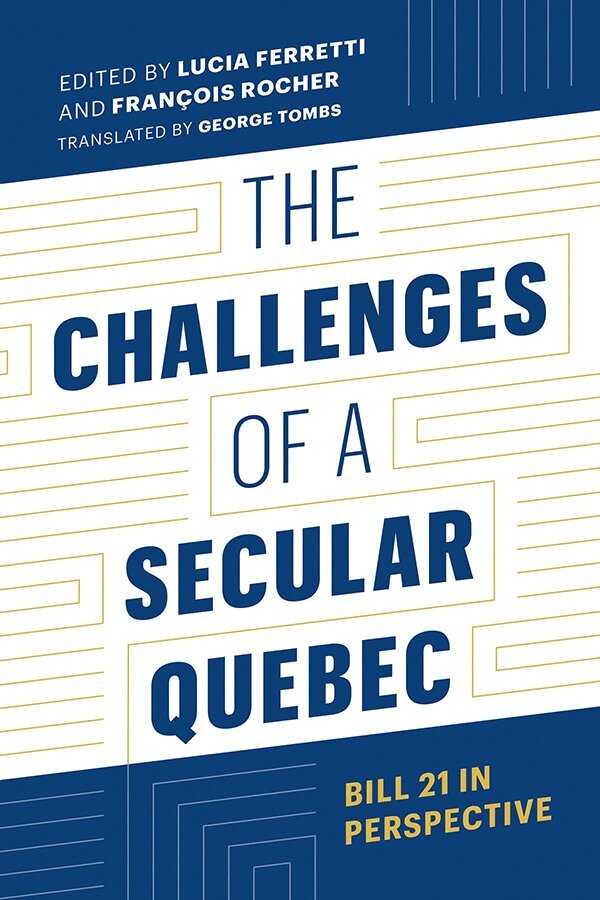
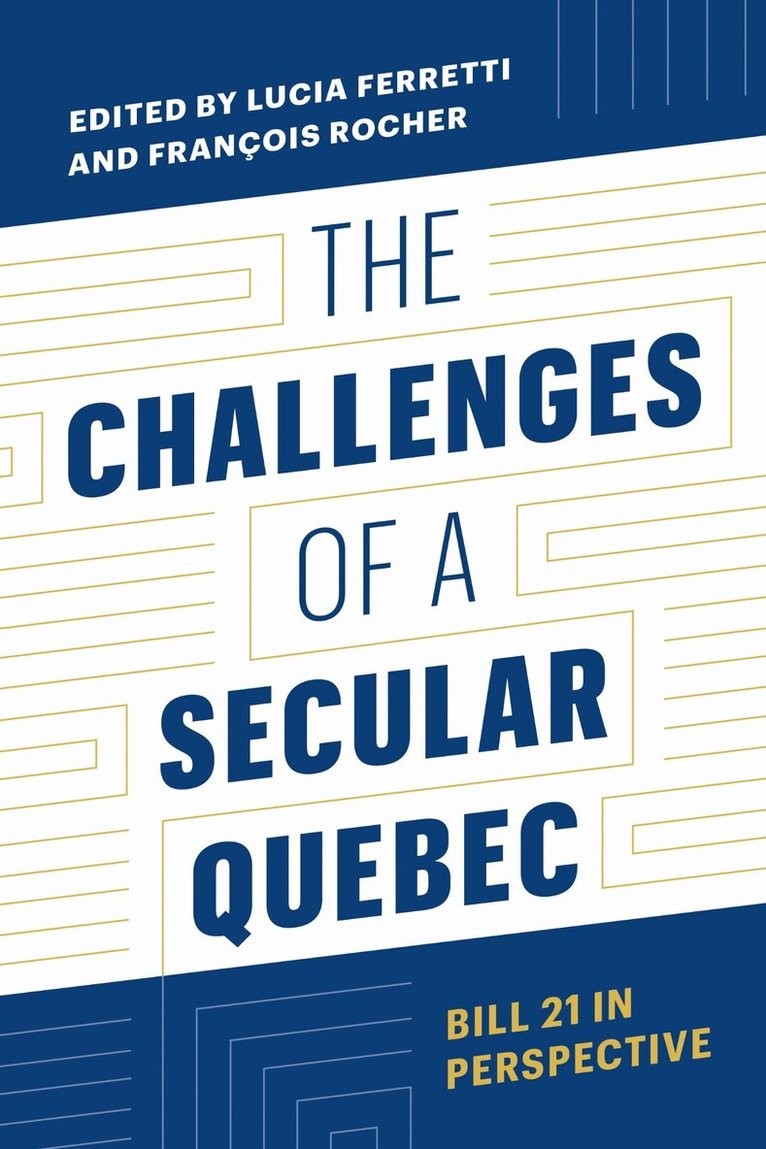
In 2019, the Quebec National Assembly passed Bill 21. It prohibits, among other things, certain state employees in positions of authority (including teachers, prison guards, police officers, and justices of the peace) from wearing religious symbols when providing public services. Many political commentators denounced the move as running counter to Canadian multiculturalism and human rights. Why did the government adopt this form of state secularism? And why did it garner public support? The Challenges of a Secular Quebec provides illuminating answers to these questions and explores why many Quebecers consider the law legitimate. Contributors analyze the statute from different angles to provide a nuanced, respectful discussion of its intentions and principles. Given the province's singular history in North America, the merits of the initiative to separate church and state must be considered within the Quebec context. The Challenges of a Secular Quebec calls for a legal interpretation of Bill 21 that is sensitive to this difference.
Häftad, Engelska, 2024
404 kr
Skickas inom 5-8 vardagar
In 2019, the Quebec National Assembly passed Bill 21. It prohibits, among other things, certain state employees in positions of authority (including teachers, prison guards, police officers, and justices of the peace) from wearing religious symbols when providing public services. Many political commentators denounced the move as running counter to Canadian multiculturalism and human rights. Why did the government adopt this form of state secularism? And why did it garner public support? The Challenges of a Secular Quebec provides illuminating answers to these questions and explores why many Quebecers consider the law legitimate. Contributors analyze the statute from different angles to provide a nuanced, respectful discussion of its intentions and principles. Given the province's singular history in North America, the merits of the initiative to separate church and state must be considered within the Quebec context. The Challenges of a Secular Quebec calls for a legal interpretation of Bill 21 that is sensitive to this difference.
E-bok
Engelska, 2007626 kr
Läs direkt efter köp
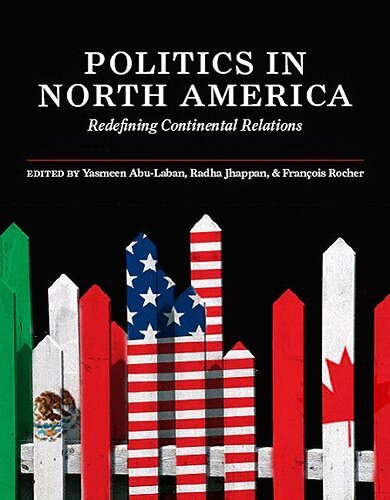
It is no longer sufficient to examine discrete nation-states in isolation from each other. In Politics in North America: Redefining Continental Relations, prominent authors from Canada, the United States, and Mexico explore the politics of redefining the institutional, economic, geographic, and cultural boundaries of North America. The contributors argue that the study of politics in the twenty-first century requires simultaneous attention to all levels (local, national, and international) as well as, increasingly, to continents. This argument is explored through the historical and contemporary social and political forces that have created competing visions of what it means to belong to a North American political community. In this process, new debates emerge in the book concerning the appropriate role for the state, as well as the meaning of sovereignty, democracy, and rights.
E-bok
PDF, Engelska, 2007626 kr
Läs direkt efter köp
It is no longer sufficient to examine discrete nation-states in isolation from each other. In Politics in North America: Redefining Continental Relations, prominent authors from Canada, the United States, and Mexico explore the politics of redefining the institutional, economic, geographic, and cultural boundaries of North America. The contributors argue that the study of politics in the twenty-first century requires simultaneous attention to all levels (local, national, and international) as well as, increasingly, to continents. This argument is explored through the historical and contemporary social and political forces that have created competing visions of what it means to belong to a North American political community. In this process, new debates emerge in the book concerning the appropriate role for the state, as well as the meaning of sovereignty, democracy, and rights.
Häftad, Engelska, 2007
595 kr
Skickas inom 5-8 vardagar