Francois Roubaud – författare
Visar alla böcker från författaren . Handla med fri frakt och snabb leverans.
11 produkter
11 produkter
E-bok
PDF, Engelska, 202055 kr
Läs direkt efter köp
This is an open access title available under the terms of a CC BY-NC-ND 4.0 International licence. It is free to read at Oxford Academic and offered as a free PDF download from OUP and selected open access locations. In October 2019, Abhijit Banerjee, Esther Duflo, and Michael Kremer jointly won the 51st Sveriges Riksbank Prize in Economic Sciences in Memory of Alfred Nobel "for their experimental approach to alleviating global poverty." But what is the exact scope of their experimental method, known as randomized control trials (RCTs)? Which sorts of questions are RCTs able to address and which do they fail to answer? The first of its kind, Randomized Control Trials in the Field of Development: A Critical Perspective provides answers to these questions, explaining how RCTs work, what they can achieve, why they sometimes fail, how they can be improved and why other methods are both useful and necessary. Bringing together leading specialists in the field from a range of backgrounds and disciplines (economics, econometrics, mathematics, statistics, political economy, socioeconomics, anthropology, philosophy, global health, epidemiology, and medicine), it presents a full and coherent picture of the main strengths and weaknesses of RCTs in the field of development. Looking beyond the epistemological, political, and ethical differences underlying many of the disagreements surrounding RCTs, it explores the implementation of RCTs on the ground, outside of their ideal theoretical conditions and reveals some unsuspected uses and effects, their disruptive potential, but also their political uses. The contributions uncover the implicit worldview that many RCTs draw on and disseminate, and probe the gap between the method''s narrow scope and its success, while also proposing improvements and alternatives. Without disputing the contribution of RCTs to scientific knowledge, Randomized Control Trials in the Field of Development warns against the potential dangers of their excessive use, arguing that the best use for RCTs is not necessarily that which immediately springs to mind. Written in plain language, this book offers experts and laypeople alike a unique opportunity to come to an informed and reasoned judgement on RCTs and what they can bring to development.
Inbunden, Engelska, 2020
1 537 kr
Skickas inom 5-8 vardagar
This is an open access title available under the terms of a CC BY-NC-ND 4.0 International licence. It is free to read at Oxford Academic and offered as a free PDF download from OUP and selected open access locations.In October 2019, Abhijit Banerjee, Esther Duflo, and Michael Kremer jointly won the 51st Sveriges Riksbank Prize in Economic Sciences in Memory of Alfred Nobel "for their experimental approach to alleviating global poverty." But what is the exact scope of their experimental method, known as randomized control trials (RCTs)? Which sorts of questions are RCTs able to address and which do they fail to answer? The first of its kind, Randomized Control Trials in the Field of Development: A Critical Perspective provides answers to these questions, explaining how RCTs work, what they can achieve, why they sometimes fail, how they can be improved and why other methods are both useful and necessary. Bringing together leading specialists in the field from a range of backgrounds and disciplines (economics, econometrics, mathematics, statistics, political economy, socioeconomics, anthropology, philosophy, global health, epidemiology, and medicine), it presents a full and coherent picture of the main strengths and weaknesses of RCTs in the field of development. Looking beyond the epistemological, political, and ethical differences underlying many of the disagreements surrounding RCTs, it explores the implementation of RCTs on the ground, outside of their ideal theoretical conditions and reveals some unsuspected uses and effects, their disruptive potential, but also their political uses. The contributions uncover the implicit worldview that many RCTs draw on and disseminate, and probe the gap between the method's narrow scope and its success, while also proposing improvements and alternatives. Without disputing the contribution of RCTs to scientific knowledge, Randomized Control Trials in the Field of Development warns against the potential dangers of their excessive use, arguing that the best use for RCTs is not necessarily that which immediately springs to mind. Written in plain language, this book offers experts and laypeople alike a unique opportunity to come to an informed and reasoned judgement on RCTs and what they can bring to development.
Häftad, Engelska, 2018
746 kr
Skickas inom 10-15 vardagar
Informality is ubiquitous in most developing countries. Understanding the informal economy is therefore of utmost importance from a political, economic and social point of view. Paradoxically, despite its economic importance, knowledge is extremely limited regarding the informal economy. It remains largely unrecognized by researchers, is neglected by politicians, and is even negatively perceived as it is meant to disappear with development.This book aims to amend this situation by presenting recent high level research which studies the informal sector and informal employment. Fresh research into this subject is presented through empirical analysis which covers Asia, Africa and Latin America. Each chapter relies on data and a detailed knowledge of the context of the countries studied in order to question the dominant schools of thought on the origins and causes of informality. The results provide interesting insights into the constraints faced by informal workers, the dynamics of the informal economy and its link with poverty issues. On the basis of the evidences provided by results adequate policies could be defined to address informality issues. The principal characteristics of the informal sector testify to some profound similarities between developing countries: low qualifications and the precariousness of jobs, mediocre incomes and working conditions, atomization of production units and lack of articulation with the formal economy, etc. This general statement does not contradict the observation that there is a high level of heterogeneity in the sector and in informal employment within each country, confirmed by several chapters in this work. In the absence of a sufficient number of job creations, the informal sector essentially constitutes a refuge for workers seeking and is here to stay in the short and medium term, even in emerging countries.
Inbunden, Engelska, 2003
2 963 kr
Skickas inom 10-15 vardagar
The World Bank and the International Monetary Fund (IMF) launched a joint initiative at the end of 1999, stating that they intended to set the fight against poverty at the heart of their development policies. This book provides the expert, critical analysis of the poverty reduction strategies that is needed. Originally published in French and updated here for the first time in English, the book emphasises three main innovations brought about by focus on poverty reduction, participatory process implemented for policy-making and better coordination of official development assistance.The contributions also show that there remains a large gap between the principles of the World Bank and IMF's strategies and their application. That this valuable and insightful book will be of great interest to students and lecturers involved in development economics goes almost without saying. What also needs to be understood is that the lessons and policy implications drawn from the book need to be read and acted upon by those involved with the World Bank and the IMF.
Häftad, Engelska, 2006
373 kr
Skickas inom 10-15 vardagar
The World Bank and the International Monetary Fund (IMF) launched a joint initiative at the end of 1999, stating that they intended to set the fight against poverty at the heart of their development policies. This book provides the expert, critical analysis of the poverty reduction strategies that is needed. Originally published in French and updated here for the first time in English, the book emphasises three main innovations brought about by focus on poverty reduction, participatory process implemented for policy-making and better coordination of official development assistance.The contributions also show that there remains a large gap between the principles of the World Bank and IMF's strategies and their application. That this valuable and insightful book will be of great interest to students and lecturers involved in development economics goes almost without saying. What also needs to be understood is that the lessons and policy implications drawn from the book need to be read and acted upon by those involved with the World Bank and the IMF.
Inbunden, Engelska, 2014
2 503 kr
Skickas inom 10-15 vardagar
Informality is ubiquitous in most developing countries. Understanding the informal economy is therefore of utmost importance from a political, economic and social point of view. Paradoxically, despite its economic importance, knowledge is extremely limited regarding the informal economy. It remains largely unrecognized by researchers, is neglected by politicians, and is even negatively perceived as it is meant to disappear with development.This book aims to amend this situation by presenting recent high level research which studies the informal sector and informal employment. Fresh research into this subject is presented through empirical analysis which covers Asia, Africa and Latin America. Each chapter relies on data and a detailed knowledge of the context of the countries studied in order to question the dominant schools of thought on the origins and causes of informality. The results provide interesting insights into the constraints faced by informal workers, the dynamics of the informal economy and its link with poverty issues. On the basis of the evidences provided by results adequate policies could be defined to address informality issues. The principal characteristics of the informal sector testify to some profound similarities between developing countries: low qualifications and the precariousness of jobs, mediocre incomes and working conditions, atomization of production units and lack of articulation with the formal economy, etc. This general statement does not contradict the observation that there is a high level of heterogeneity in the sector and in informal employment within each country, confirmed by several chapters in this work. In the absence of a sufficient number of job creations, the informal sector essentially constitutes a refuge for workers seeking and is here to stay in the short and medium term, even in emerging countries.
Häftad, Engelska, 2013
466 kr
Skickas inom 10-15 vardagar
Although labour is usually the unique asset upon which poor people can make a living, little is known about the functioning of labour markets in Sub-Saharan Africa. The purpose of this volume is to contribute to the building of knowledge in this area. In this book, the authors use a unique set of identical and simultaneous labour force surveys conducted in seven capitals of Western Africa, as well as in some other African countries (Cameroon, Madagascar, Democratic Republic of Congo) in the 2000s. They present innovative and original results on how people are faring in these labour markets, using up-to-date econometric and statistical methods. Because so little is known about labour markets in the region, each chapter starts with detailed descriptive statistics that aim to shed light onto specific aspects of African urban labour markets. Comparisons between the ten cities are systematically carried out. Descriptive sections are followed by in-depth analyses on various issues. The book is divided into four parts that examine 13 topics. Part I presents the main stylised facts, which are investigated further in a more analytical way throughout the volume. Part II focuses on job quality and labour market conditions, such as unemployment and underemployment, vulnerability, and job satisfaction. Part III explores the many dimensions of labour market inequalities through various lenses, such as returns on education, segmentation, life-cycle inequality (with a particular focus on old age), inter-generational mobility, time related inequality, and gender and ethnic earnings discrimination. Part IV addresses some key coping mechanisms and private responses, with a focus on migration and child labour. The book concludes with recommendations for future research.
E-bok
PDF, Engelska, 20201 711 kr
Läs direkt efter köp
Madagascar''s long-term trajectory is unique: not only has GDP per capita been trending downward since 1960 (the puzzle), but every time the country has set out on the path of growth, it has been stopped in its tracks by a socio-political crisis that has shattered the hopes it raised (the paradox). No satisfactory explanation of this failure has been provided so far. This book elaborates a model of intelligibility of Madagascar''s downfall, based on an integrated political economy approach as well as mobilizing the most recent development theories. Combining a review of historical literature with original and sometimes unique statistical surveys, it proposes a general interpretative framework for the workings of Malagasy society. Richly documented and accessible, Puzzle and Paradox allows readers to understand Madagascar''s sociopolitical history while more broadly offering an opportunity to grasp the different dimensions of development in the Global South.
E-bok
Engelska, 20201 651 kr
Läs direkt efter köp
Madagascar''s long-term trajectory is unique: not only has GDP per capita been trending downward since 1960 (the puzzle), but every time the country has set out on the path of growth, it has been stopped in its tracks by a socio-political crisis that has shattered the hopes it raised (the paradox). No satisfactory explanation of this failure has been provided so far. This book elaborates a model of intelligibility of Madagascar''s downfall, based on an integrated political economy approach as well as mobilizing the most recent development theories. Combining a review of historical literature with original and sometimes unique statistical surveys, it proposes a general interpretative framework for the workings of Malagasy society. Richly documented and accessible, Puzzle and Paradox allows readers to understand Madagascar''s sociopolitical history while more broadly offering an opportunity to grasp the different dimensions of development in the Global South.
E-bok
Engelska, 2003433 kr
Läs direkt efter köp
The World Bank and the International Monetary Fund (IMF) launched a joint initiative at the end of 1999, stating that they intended to set the fight against poverty at the heart of their development policies. This book provides the expert, critical analysis of the poverty reduction strategies that is needed. Originally published in French and updat
E-bok
PDF, Franska, 2018347 kr
Läs direkt efter köp
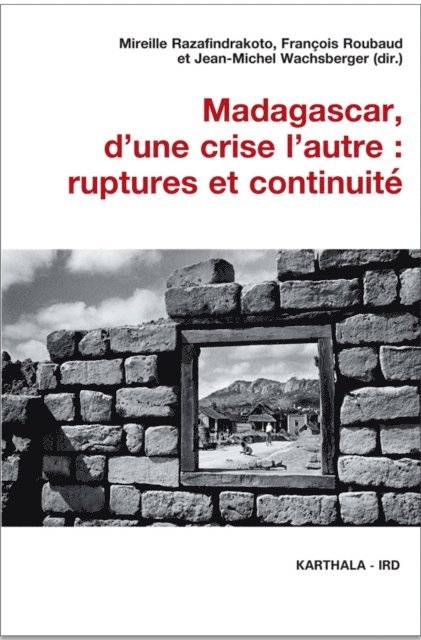
Coédition Karthala - IRD.Madagascar se caractérise par une récession économique qui perdure et des crises socio-politiques récurrentes depuis son indépendance. Cette trajectoire atypique est d’autant plus étonnante que le pays n’a jamais connu de guerre ni de conflit majeur. De plus, l’Île est riche en ressources naturelles, un constat qui vient en contraste avec la pauvreté extrême de la majorité de la population.Comment expliquer ces deux faces antinomiques de la réalité malgache ? Quels en sont les ressorts ? La structure de l’économie et les mécanismes sous-jacents suffisent-ils pour expliquer la chute continue des niveaux de vie ? Dans quelle mesure les dispositifs institutionnels ou les systèmes politiques ont-ils joué ? Peut-on évaluer la part des facteurs historiques ? Comment les jeux et les stratégies des acteurs ont-ils nourri les crises à répétition ?À l’instar d’un puzzle qui se construit, cet ouvrage assemble les réflexions de différents spécialistes de Madagascar, d’horizons institutionnels et disciplinaires variés. Il couvre un large panorama de thématiques abordées sous l’angle économique, socio-politique, historique ou anthropologique, pour produire une vision d’ensemble. Les éclairages proposés, qui combinent les approches macro et micro, permettent de mieux comprendre l’enchevêtrement des contextes, le rôle des acteurs et leur enchâssement dans les structures. Les analyses s’attachent en particulier à décrypter les mécanismes qui enferment les acteurs dans une spirale crisogène et les facteurs qui étouffent les dynamiques et entrainent l’économie sur une pente récessive.