Frank A. J. L James – författare
Visar alla böcker från författaren Frank A. J. L James. Handla med fri frakt och snabb leverans.
7 produkter
7 produkter
E-bok
Engelska, 201089 kr
Läs direkt efter köp
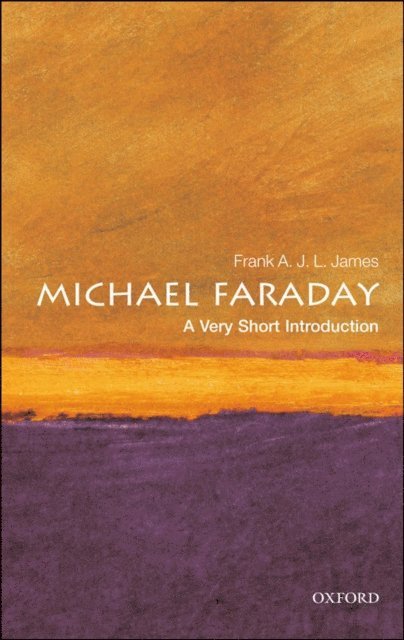
Michael Faraday is one of the best known scientific figures of all time. Known as the discoverer of electro-magnetic induction, the principle behind the electric generator and transformer, he has frequently been portrayed as the ''father'' of electrical engineering from whence much of his popular fame derives. This Very Short Introduction dispels the myth that Faraday was an experimental genius working alone in his basement laboratory, making fundamental discoveries that were later applied by others. Instead, it portrays Faraday as a grand theorist of the physical world profoundly influencing later physicists such as Thomson (Kelvin), Maxwell, and Einstein. Frank A.J.L. James explores Faraday''s life from his origins in eighteenth-century Westmorland and Yorkshire, his religious and scientific background, to the growth of his fame in the nineteenth and twentieth centuries. As well as introducing his scientific research, he also puts Faraday in the various institutional contexts in which he lived and worked, including the Royal Institution, the Royal Society, Trinity House, and other agencies of the state. James therefore provides a commentary on the rapidly changing place of science in nineteenth-century society, especially in regards to its role in government and the growth of a professional scientific community. ABOUT THE SERIES: The Very Short Introductions series from Oxford University Press contains hundreds of titles in almost every subject area. These pocket-sized books are the perfect way to get ahead in a new subject quickly. Our expert authors combine facts, analysis, perspective, new ideas, and enthusiasm to make interesting and challenging topics highly readable.
E-bok
PDF, Engelska, 201089 kr
Läs direkt efter köp
Michael Faraday is one of the best known scientific figures of all time. Known as the discoverer of electro-magnetic induction, the principle behind the electric generator and transformer, he has frequently been portrayed as the ''father'' of electrical engineering from whence much of his popular fame derives. This Very Short Introduction dispels the myth that Faraday was an experimental genius working alone in his basement laboratory, making fundamental discoveries that were later applied by others. Instead, it portrays Faraday as a grand theorist of the physical world profoundly influencing later physicists such as Thomson (Kelvin), Maxwell, and Einstein. Frank A.J.L. James explores Faraday''s life from his origins in eighteenth-century Westmorland and Yorkshire, his religious and scientific background, to the growth of his fame in the nineteenth and twentieth centuries. As well as introducing his scientific research, he also puts Faraday in the various institutional contexts in which he lived and worked, including the Royal Institution, the Royal Society, Trinity House, and other agencies of the state. James therefore provides a commentary on the rapidly changing place of science in nineteenth-century society, especially in regards to its role in government and the growth of a professional scientific community. ABOUT THE SERIES: The Very Short Introductions series from Oxford University Press contains hundreds of titles in almost every subject area. These pocket-sized books are the perfect way to get ahead in a new subject quickly. Our expert authors combine facts, analysis, perspective, new ideas, and enthusiasm to make interesting and challenging topics highly readable.
Häftad, Engelska, 1997
572 kr
Skickas inom 7-10 vardagar
Renaissance and Revolution is a collection of fifteen essays which opens up alternative perspectives on some of the problems seen to be associated with the Scientific Revolution of the sixteenth and seventeenth centuries. The topics treated include the dissemination of Greek science, medical empiricism, natural history, the relations of scholars and craftsmen in various walks of life from the fifteenth to the sixteenth centuries, the so-called 'mechanical philosophy' in France and England, the work of Isaac Newton, and the difficulties encountered by proponents of Newtonianism in Italy in the early eighteenth century. Figures discussed include Leonardo Fioravanti, Jan Swammerdam, Piero Della Francesca, Johannes Hevelius, Jonas Moore, Robert Boyle, Isaac Newton, Christiaan Huygens, Francesco Algarotti, and Luigi Ferdinando Marsigli. There is an introduction by the editors and an afterword by A. Rupert Hall.
Inbunden, Engelska, 2011
1 964 kr
Skickas inom 5-8 vardagar
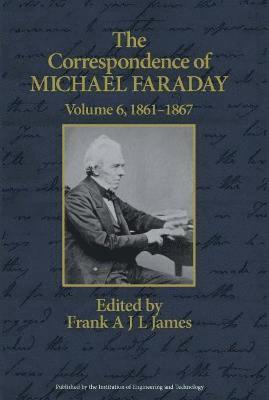
Michael Faraday (1791-1867) was one of the most important men of science in nineteenth century Britain. His discoveries of electro-magnetic rotations (1821) and electro-magnetic induction (1831) laid the foundations of the modern electrical industry. His discovery of the magneto-optical effect and diamagnetism (1845) led him to formulate the field theory of electro-magnetism, which forms one of the cornerstones of modern physics. These and a whole host of other fundamental discoveries in physics and chemistry, together with his lecturing at the Royal Institution, his work for the state (including Trinity House), his religious beliefs and his lack of mathematical ability, make Faraday one of the most fascinating scientific figures ever. All these aspects of his life and work and others, such as his health, are reflected in his letters which, in this final volume, cover Faraday's life to his death in August 1867. Also published here are letters that could not be dated and letters that should have been included in volumes one to five but which had not been located when those volumes were published. In total just over 80% of the letters in this volume are previously unpublished. The dominant topic of the 1860s (covered in nearly 40% of the letters) is Faraday's involvement with the lighthouse service relating in particular to his advice to Trinity House and the Board of Trade on matters such as electric light and the controversial issue of fog signals. Also detailed is the complex process by which his various posts were transferred to John Tyndall. Similar issues existed with Faraday's gradual withdrawal from his duties at the Royal Institution, including the misguided attempt to make him President. And, of course, running through many of the letters are comments on his declining health and impending death. Major correspondents include the Astronomer Royal G.B. Airy, the Secretary of Trinity House P.H. Berthon, the Birmingham glassmaker J.T. Chance, the Assistant Secretary of the Board of Trade T.H. Farrer, the German mathematician Julius Plücker, the Cambridge trained mathematical natural philosophers James Clerk Maxwell and William Thomson, Faraday's colleagues at the Royal Institution Henry Bence Jones, John Tyndall and Benjamin Vincent, the Swiss chemist Christian Schoenbein and the astronomer James South.
E-bok
PDF, Engelska, 1989718 kr
Läs direkt efter köp
Laboratories are fundamental to the practice of science, yet there is a paucity of serious historical analysis of the subject. This book sets out to reflect the diversity in the variety of laboratories in existence and the multiplicity of their development.
Inbunden, Engelska, 2007
2 180 kr
Skickas inom 5-8 vardagar
Since the mid-1820s, a series of lectures has been delivered each year over the Christmas period in the world-famous Faraday Lecture Theatre at The Royal Institution of Great Britain by prominent scientists, addressed specifically to an audience of children. Initially made accessible in book form, the lectures have been nationally televised throughout the UK and distributed worldwide since the 1960s, making them accessible to an even larger audience. The importance of these lectures in promoting science to a broad audience is perhaps best gauged by the fact that an image of one of Faraday's lectures appeared on the Bank of England £20 note in the 1990s.This anthology brings together, for the first time, a carefully chosen selection of 11 lectures from the 1860s to the 1990s. The selection includes lectures by Michael Faraday, arguably the most important and influential 19th-century physicist, and Lawrence Bragg, the youngest ever winner of the Nobel Prize. Through this work, readers will come to grips with the changing nature of popular science lectures over the past 140 years.
Häftad, Engelska, 2007
1 249 kr
Skickas inom 5-8 vardagar
Since the mid-1820s, a series of lectures has been delivered each year over the Christmas period in the world-famous Faraday Lecture Theatre at The Royal Institution of Great Britain by prominent scientists, addressed specifically to an audience of children. Initially made accessible in book form, the lectures have been nationally televised throughout the UK and distributed worldwide since the 1960s, making them accessible to an even larger audience. The importance of these lectures in promoting science to a broad audience is perhaps best gauged by the fact that an image of one of Faraday's lectures appeared on the Bank of England £20 note in the 1990s.This anthology brings together, for the first time, a carefully chosen selection of 11 lectures from the 1860s to the 1990s. The selection includes lectures by Michael Faraday, arguably the most important and influential 19th-century physicist, and Lawrence Bragg, the youngest ever winner of the Nobel Prize. Through this work, readers will come to grips with the changing nature of popular science lectures over the past 140 years.