Frank D. Fincham - Böcker
Visar alla böcker från författaren Frank D. Fincham. Handla med fri frakt och snabb leverans.
8 produkter
8 produkter
1 258 kr
Skickas inom 10-15 vardagar
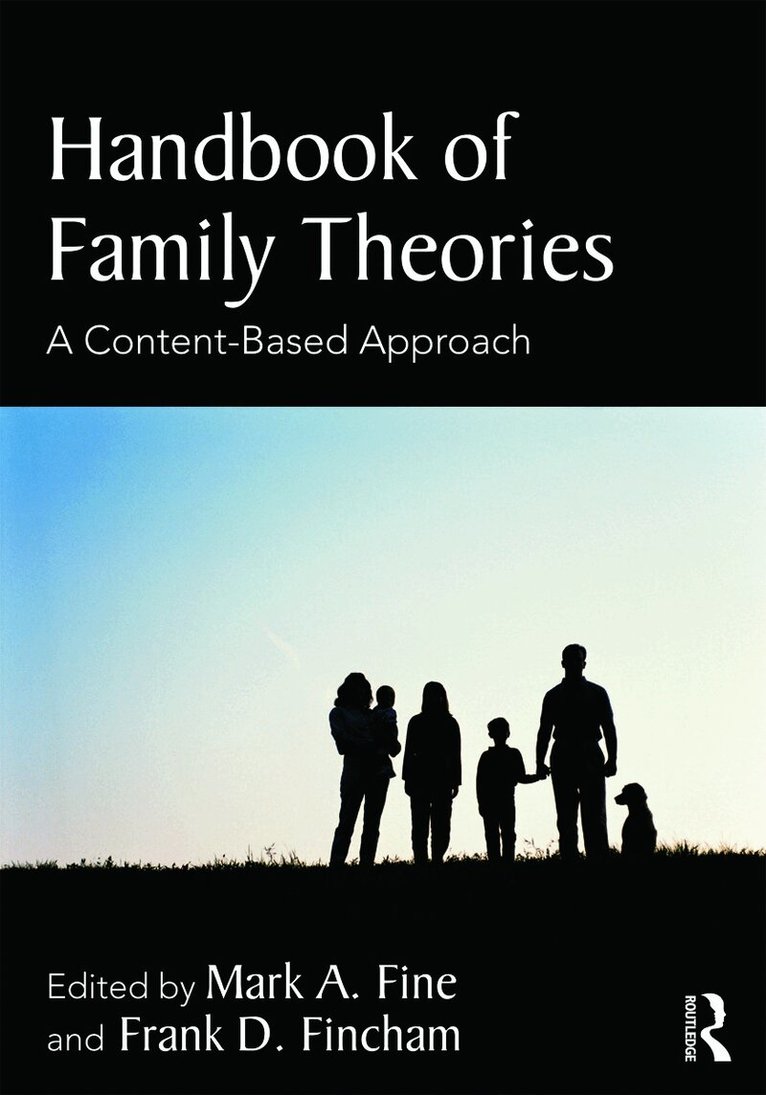
Organized by content areas rather than by theory, this comprehensive, accessible handbook helps readers gain greater insight into how key theories have impacted today’s family research. Most competing books, organized by theory, do not provide a strong sense of the links between theory and research. Using the 2000 and 2010 decade-in-review issues of the Journal of Marriage and Family as a resource, the book addresses the most important topics impacting family studies research today. The introductory chapter, written by the editors, provides an overview of the role family theories have had on the field. This chapter is followed by 23 others on family-related content areas written by renowned scholars in the field. The book is organized around the most important domains in the field: parenting and parent-child relationships, romantic relationships, conflict and aggression, structural variation and transitions, demographic variations, and families and extra-familial institutions. Each of the contributors describes how theory has been used to generate new knowledge in the field and suggests future directions for how theory may be used to extend our knowledge base. The book helps readers acquire a working knowledge of the key family science theories, findings, and issues and understand how researchers make use of these theories in their empirical efforts.To maximize accessibility, each of the renowned contributors addresses a common set of issues in their chapter:• Introduction to the content area • Review of the key topics, issues, and findings• A description of each of the major theories used to study that particular content area • Limitations of the theories • Suggestions for better use of the theories and/or new theoretical advances • Conclusions about future theoretical developments.An ideal text for graduate and/or advanced undergraduate family theories courses, this book’s unique organization also lends itself to use in content-based family studies/science courses taught in family studies, human development, psychology, sociology, communication, education, and nursing. Due to its comprehensive and current approach, the book also appeals to scholars and researchers in these areas.
3 072 kr
Skickas inom 10-15 vardagar
Organized by content areas rather than by theory, this comprehensive, accessible handbook helps readers gain greater insight into how key theories have impacted today’s family research. Most competing books, organized by theory, do not provide a strong sense of the links between theory and research. Using the 2000 and 2010 decade-in-review issues of the Journal of Marriage and Family as a resource, the book addresses the most important topics impacting family studies research today. The introductory chapter, written by the editors, provides an overview of the role family theories have had on the field. This chapter is followed by 23 others on family-related content areas written by renowned scholars in the field. The book is organized around the most important domains in the field: parenting and parent-child relationships, romantic relationships, conflict and aggression, structural variation and transitions, demographic variations, and families and extra-familial institutions. Each of the contributors describes how theory has been used to generate new knowledge in the field and suggests future directions for how theory may be used to extend our knowledge base. The book helps readers acquire a working knowledge of the key family science theories, findings, and issues and understand how researchers make use of these theories in their empirical efforts.To maximize accessibility, each of the renowned contributors addresses a common set of issues in their chapter:• Introduction to the content area • Review of the key topics, issues, and findings• A description of each of the major theories used to study that particular content area • Limitations of the theories • Suggestions for better use of the theories and/or new theoretical advances • Conclusions about future theoretical developments.An ideal text for graduate and/or advanced undergraduate family theories courses, this book’s unique organization also lends itself to use in content-based family studies/science courses taught in family studies, human development, psychology, sociology, communication, education, and nursing. Due to its comprehensive and current approach, the book also appeals to scholars and researchers in these areas.
1 466 kr
Skickas inom 7-10 vardagar
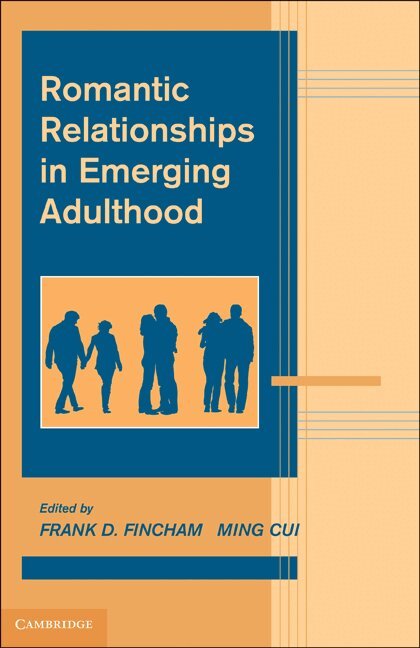
Emerging adulthood - the period between the late teens and mid-twenties - is a unique and important developmental period during which people gain relationship experience before settling on someone to partner with. Romantic Relationships in Emerging Adulthood presents a synthesis of research and theory on this topic. Leading scholars from demography, sociology, family studies, and psychology provide original data and theoretical analyses that address the formation, nature, and significance of romantic relationships in emerging adults. Until recently, it was assumed that romantic relationships in emerging adults were not particularly important or formative. The material presented allows this assumption to be thoroughly evaluated. This volume is intended to be a resource for anyone interested in understanding romantic relationships in emerging adulthood. It is especially appropriate for classroom use in upper-level undergraduate and graduate courses in the fields of family sociology, human development and family studies, clinical and developmental psychology, and social work.
Interparental Conflict and Child Development
Theory, Research and Applications
Inbunden, Engelska, 2001
1 670 kr
Skickas inom 7-10 vardagar
Interparental Conflict and Child Development provides an in-depth analysis of the rapidly expanding body of research on the impact of interparental conflict on children. Emphasizing developmental and family systems perspectives, it investigates a range of important issues, including the processes by which exposure to conflict may lead to child maladjustment, the role of gender and ethnicity in understanding the effects of conflict, the influence of conflict on parent-child, sibling, and peer relations, family violence, and interparental conflict in divorced and step-families. It also addresses the implications of this research for prevention, clinical intervention, and public policy. Each chapter examines relevant conceptual and methodological questions, reviews on pertinent data, and identifies pathways for future research. Thus, the book serves to chart the course for continued investigation into the links between marital and child functioning.
647 kr
Skickas inom 7-10 vardagar
Interparental Conflict and Child Development provides an in-depth analysis of the rapidly expanding body of research on the impact of interparental conflict on children. Emphasizing developmental and family systems perspectives, it investigates a range of important issues, including the processes by which exposure to conflict may lead to child maladjustment, the role of gender and ethnicity in understanding the effects of conflict, the influence of conflict on parent-child, sibling, and peer relations, family violence, and interparental conflict in divorced and step-families. It also addresses the implications of this research for prevention, clinical intervention, and public policy. Each chapter examines relevant conceptual and methodological questions, reviews on pertinent data, and identifies pathways for future research. Thus, the book serves to chart the course for continued investigation into the links between marital and child functioning.
2 029 kr
Skickas inom 10-15 vardagar
The past decade has witnessed an explosion of interest and research on close relationships and social cognition. In both areas, numerous handbooks, textbooks, and journal articles have been published. However, it is the editors' impression that although cognitive theories and concepts have filtered through to research dealing with close relationships, much of this research reflects a relatively untutored understanding of the theoretical and empirical work in social cognition. Conversely, the research literature that provides a more sophisticated perspective on the role of cognition in close relationships typically reveals a relatively limited knowledge of the literature on close relationships. As researchers who have worked in both social cognitive processes and close relationships, Fletcher and Fincham are convinced that each field has much to offer the other. In fact, their book is based on two important postulates: first, that a social cognitive framework offers a valuable resource for developing our understanding of close relationships; and, second, that studying cognition within close relationships has the potential to inform our understanding of basic social cognitive processes.
493 kr
Skickas inom 7-10 vardagar
Emerging adulthood - the period between the late teens and mid-twenties - is a unique and important developmental period during which people gain relationship experience before settling on someone to partner with. Romantic Relationships in Emerging Adulthood presents a synthesis of research and theory on this topic. Leading scholars from demography, sociology, family studies, and psychology provide original data and theoretical analyses that address the formation, nature, and significance of romantic relationships in emerging adults. Until recently, it was assumed that romantic relationships in emerging adults were not particularly important or formative. The material presented allows this assumption to be thoroughly evaluated. This volume is intended to be a resource for anyone interested in understanding romantic relationships in emerging adulthood. It is especially appropriate for classroom use in upper-level undergraduate and graduate courses in the fields of family sociology, human development and family studies, clinical and developmental psychology, and social work.
705 kr
Skickas inom 10-15 vardagar
The past decade has witnessed an explosion of interest and research on close relationships and social cognition. In both areas, numerous handbooks, textbooks, and journal articles have been published. However, it is the editors' impression that although cognitive theories and concepts have filtered through to research dealing with close relationships, much of this research reflects a relatively untutored understanding of the theoretical and empirical work in social cognition. Conversely, the research literature that provides a more sophisticated perspective on the role of cognition in close relationships typically reveals a relatively limited knowledge of the literature on close relationships. As researchers who have worked in both social cognitive processes and close relationships, Fletcher and Fincham are convinced that each field has much to offer the other. In fact, their book is based on two important postulates: first, that a social cognitive framework offers a valuable resource for developing our understanding of close relationships; and, second, that studying cognition within close relationships has the potential to inform our understanding of basic social cognitive processes.