Frank Gaffikin – författare
599 kr
Skickas inom 10-15 vardagar
2 193 kr
Skickas inom 10-15 vardagar
348 kr
Skickas inom 5-8 vardagar
706 kr
Läs direkt efter köp
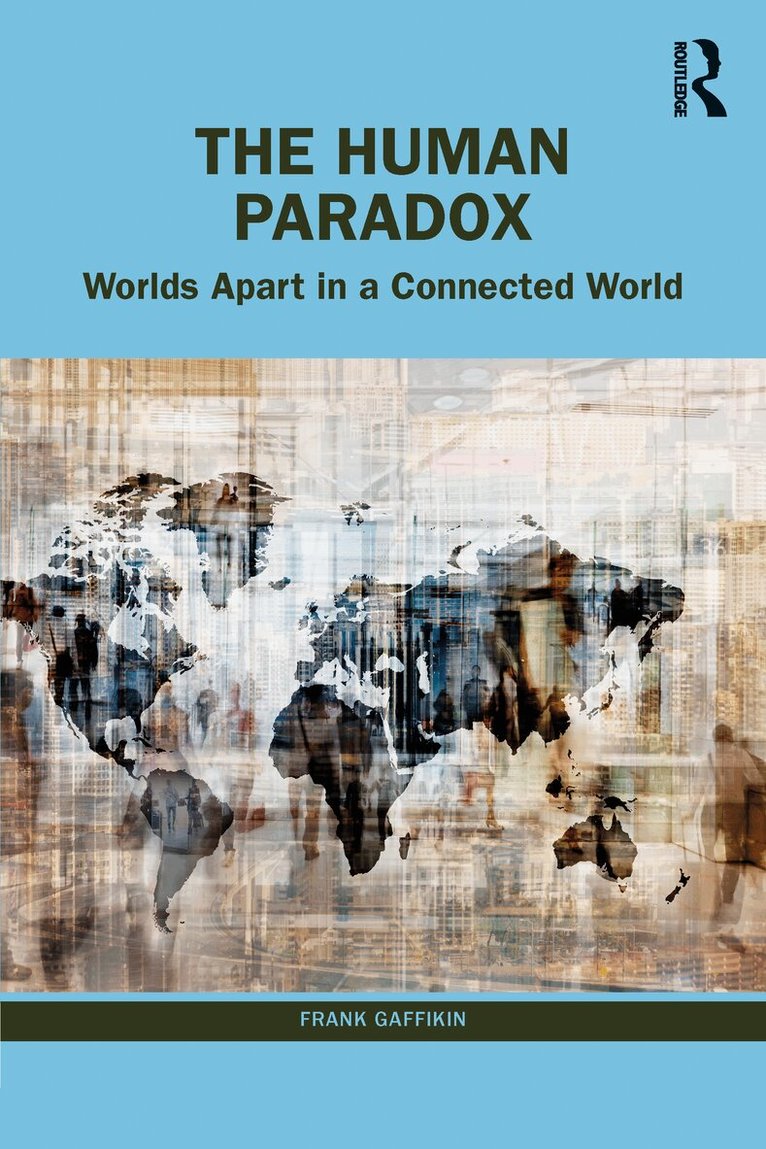
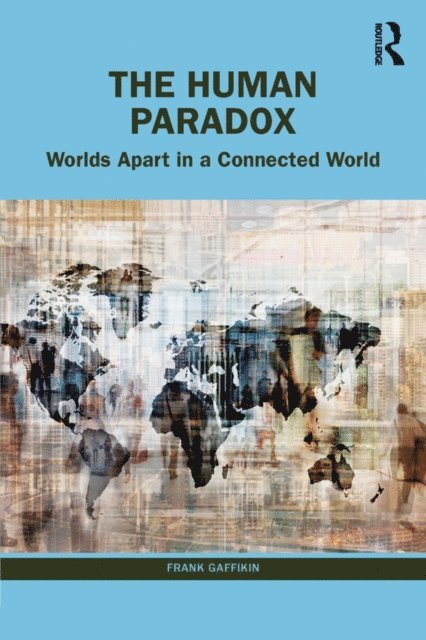
In The Human Paradox: Worlds Apart in a Connected World, author Frank Gaffikin probes widely and meticulously into our past and present to analyse the connections between the many acute polarisations that mark contemporary times. Addressing profound issues related to Trumpism, Brexit, the outbreak of Covid-19 and ensuing pandemic, and environmental change, the book argues that beneath all the present social tumult lies a fundamental dilemma for human stability and progress, namely how we can be estranged from what we refer to as humanity.
The book begins with an appraisal of populism and authoritarian nationalism, and later explores whether, in our human development, we are bound for enhancement or extinction. Interrogating these big ideas further, the book identifies three central challenges that confront us as a society: living on the planet, living with the planet, and living with one another on the planet. These challenges prompt a re-think of what it is to be human and social, and hinging on these key themes, the book thus concludes with consideration of a radical agenda for future social improvement.
Rather than peering through the conventional lenses offered by separate disciplines, this book argues for interdisciplinary appreciation and recognition, especially so if we are to address the dilemma at the center of its concern. The Human Paradox will appeal to readers interested in the major conflicts of our times, as well as students of subjects including sociology, politics, history, and economics.
706 kr
Läs direkt efter köp
In The Human Paradox: Worlds Apart in a Connected World, author Frank Gaffikin probes widely and meticulously into our past and present to analyse the connections between the many acute polarisations that mark contemporary times. Addressing profound issues related to Trumpism, Brexit, the outbreak of Covid-19 and ensuing pandemic, and environmental change, the book argues that beneath all the present social tumult lies a fundamental dilemma for human stability and progress, namely how we can be estranged from what we refer to as humanity.
The book begins with an appraisal of populism and authoritarian nationalism, and later explores whether, in our human development, we are bound for enhancement or extinction. Interrogating these big ideas further, the book identifies three central challenges that confront us as a society: living on the planet, living with the planet, and living with one another on the planet. These challenges prompt a re-think of what it is to be human and social, and hinging on these key themes, the book thus concludes with consideration of a radical agenda for future social improvement.
Rather than peering through the conventional lenses offered by separate disciplines, this book argues for interdisciplinary appreciation and recognition, especially so if we are to address the dilemma at the center of its concern. The Human Paradox will appeal to readers interested in the major conflicts of our times, as well as students of subjects including sociology, politics, history, and economics.
1 645 kr
Läs direkt efter köp
The book examines urban planning and policy in the context of deeply contested space, where place identity and cultural affinities are reshaping cities. Throughout the world, contentions around identity and territory abound, and in Britain, this problem has found recent expression in debates about multiculturalism and social cohesion. These issues are most visible in the urban arena, where socially polarised communities co-habit cities also marked by divided ethnic loyalties. The relationship between the two is complicated by the typical pattern that social disadvantage is disproportionately concentrated among ethnic groups, who also experience a social and cultural estrangement, based on religious or racial identity.
Navigating between social exclusion and community cohesion is essential for the urban challenges of efficient resource use, environmental enhancement, and the development of a flourishing economy.
The book addresses planning in divided cities in a UK and international context, examining cities such as Chicago, hyper-segregated around race, and Jerusalem, acting as a crucible for a wider conflict.
The first section deals with concepts and theories, examining the research literature and situating the issue within the urban challenges of competitiveness and inclusion. Section 2 covers collaborative planning and identifies models of planning, policy and urban governance that can operate in contested space. Section 3 presents case studies from Belfast, Chicago and Jerusalem, examining both the historical/contemporary features of these cities and their potential trajectories. The final section offers conclusions and ways forward, drawing the lessons for creating shared space in a pluralist cities and addressing cohesion and multiculturalism.
• Addresses important contemporary issue of social cohesion vs. urban competitiveness • focus on impact of government policies will appeal to practitioners in urban management, local government and regeneration • Examines role of planning in cities worldwide divided by religion, race, socio-economic, etc • Explores debate about contested space in urban policy and planning • Identifies models for understanding contested spaces in cities as a way of improving effectiveness of government policy
1 588 kr
Läs direkt efter köp
The book examines urban planning and policy in the context of deeply contested space, where place identity and cultural affinities are reshaping cities. Throughout the world, contentions around identity and territory abound, and in Britain, this problem has found recent expression in debates about multiculturalism and social cohesion. These issues are most visible in the urban arena, where socially polarised communities co-habit cities also marked by divided ethnic loyalties. The relationship between the two is complicated by the typical pattern that social disadvantage is disproportionately concentrated among ethnic groups, who also experience a social and cultural estrangement, based on religious or racial identity.
Navigating between social exclusion and community cohesion is essential for the urban challenges of efficient resource use, environmental enhancement, and the development of a flourishing economy.
The book addresses planning in divided cities in a UK and international context, examining cities such as Chicago, hyper-segregated around race, and Jerusalem, acting as a crucible for a wider conflict.
The first section deals with concepts and theories, examining the research literature and situating the issue within the urban challenges of competitiveness and inclusion. Section 2 covers collaborative planning and identifies models of planning, policy and urban governance that can operate in contested space. Section 3 presents case studies from Belfast, Chicago and Jerusalem, examining both the historical/contemporary features of these cities and their potential trajectories. The final section offers conclusions and ways forward, drawing the lessons for creating shared space in a pluralist cities and addressing cohesion and multiculturalism.
• Addresses important contemporary issue of social cohesion vs. urban competitiveness • focus on impact of government policies will appeal to practitioners in urban management, local government and regeneration • Examines role of planning in cities worldwide divided by religion, race, socio-economic, etc • Explores debate about contested space in urban policy and planning • Identifies models for understanding contested spaces in cities as a way of improving effectiveness of government policy