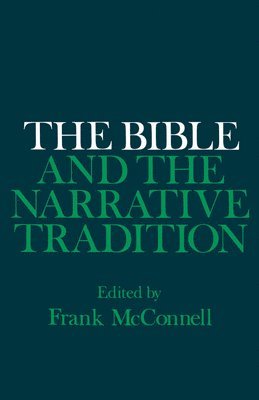
In his introduction to this book, McConnell describes the Bible as "less a book and more a living entity in the evolving consciousness of Western man." Until recently, studies of the Bible centered on finding sources for historical knowledge, theological insights, or ethical advice, overlooking the true beauty of the words in the "book of books." This collection of six essays by noted literary critics and biblical scholars--including Harold Bloom, Hans Frei, Frank Kermode, James Robinson, Donald Foster, and Herbert Schneidau--breaks new ground by exploring the Bible as poetry, rhetoric, and narrative. The authors treat such issues involved in biblical narrative as its genesis, its revisionist dynamic, its fictional character, its interpretive nature, and its contradictions, prejudices, and claims. McConnell's lively, readable introduction elucidates and unifies the book's themes.
Until recently, studies of the Bible centered on finding sources for historical knowledge, theological insights, or ethical advice, overlooking the true beauty of the words in the "book of books." This collection of six essays by noted literary critics and biblical scholars--including Harold Bloom, Hans Frei, Frank Kermode, James Robinson, Donald Foster, and Herbert Schneidau--breaks new ground by exploring the Bible as poetry, rhetoric, and narrative. The authors treat such issues involved in biblical narrative as its genesis, its revisionist dynamic, its fictional character, its interpretive nature, and its contradictions, prejudices, and claims. McConnell''s lively, readable introduction elucidates and unifies the book''s themes.
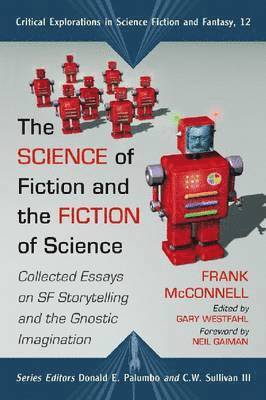
A member of the Pulitzer Prize jury, the late Frank McConnell helped science fiction gain standing as serious literature. His 16 essays herein were first presented as papers at the prestigious Eaton Conferences. Initially believing that science fiction is primarily one of many forms of storytelling, McConnell gradually recognized science fiction as a modern expression of Gnosticism, rejecting bodily concerns for an emphasis on spirituality.
In his introduction to this book, McConnell describes the Bible as "less a book and more a living entity in the evolving consciousness of Western man." Until recently, studies of the Bible centered on finding sources for historical knowledge, theological insights, or ethical advice, overlooking the true beauty of the words in the "book of books." This collection of six essays by noted literary critics and biblical scholars--including Harold Bloom, Hans Frei, Frank Kermode, James Robinson, Donald Foster, and Herbert Schneidau--breaks new ground by exploring the Bible as poetry, rhetoric, and narrative. The authors treat such issues involved in biblical narrative as its genesis, its revisionist dynamic, its fictional character, its interpretive nature, and its contradictions, prejudices, and claims. McConnell's lively, readable introduction elucidates and unifies the book's themes.
Until recently, studies of the Bible centered on finding sources for historical knowledge, theological insights, or ethical advice, overlooking the true beauty of the words in the "book of books." This collection of six essays by noted literary critics and biblical scholars--including Harold Bloom, Hans Frei, Frank Kermode, James Robinson, Donald Foster, and Herbert Schneidau--breaks new ground by exploring the Bible as poetry, rhetoric, and narrative. The authors treat such issues involved in biblical narrative as its genesis, its revisionist dynamic, its fictional character, its interpretive nature, and its contradictions, prejudices, and claims. McConnell''s lively, readable introduction elucidates and unifies the book''s themes.
A member of the Pulitzer Prize jury, the late Frank McConnell helped science fiction gain standing as serious literature. His 16 essays herein were first presented as papers at the prestigious Eaton Conferences. Initially believing that science fiction is primarily one of many forms of storytelling, McConnell gradually recognized science fiction as a modern expression of Gnosticism, rejecting bodily concerns for an emphasis on spirituality.