Frank Symons - Böcker
Visar alla böcker från författaren Frank Symons. Handla med fri frakt och snabb leverans.
3 produkter
3 produkter
948 kr
Skickas inom 5-8 vardagar
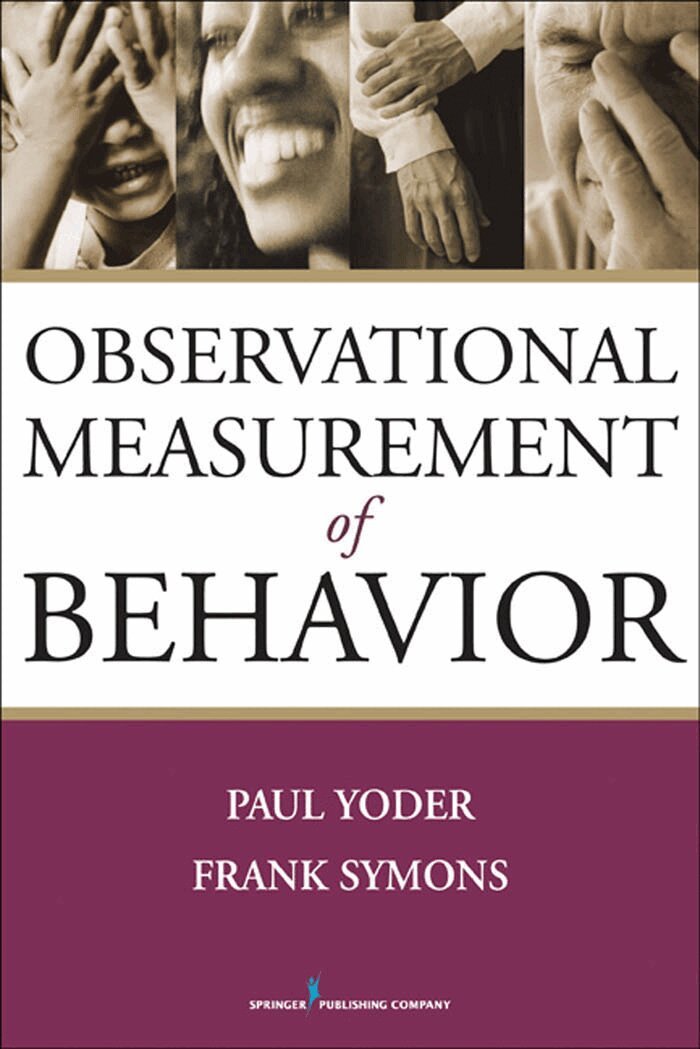
Yoder and Symons bring decades of work to bear and it shows....[The book is] presented with broad scholarship and conceptual depth. óRoger Bakeman, PhD Professor Emeritus Georgia State University This outstanding volume transcends the typical treatment of behavior observation methods in introductory research texts. Yoder and Symons articulate a set of measurement principles that serve as the foundation for behavior observation as a scientific tool. óWilliam E. MacLean Jr., PhD Executive Director Wyoming Institute for Disabilities University of Wyoming This comprehensive textbook introduces graduate students to the competent conduct of observational research methods and measurement. The unique approach of this book is that the chapters delineate not only the techniques and mechanics of observational methods, but also the theoretical and conceptual underpinnings of these methods. The observational methods presented can be used for both single-subject and group-design perspectives, showing students how and when to use both methodologies. In addition, the authors provide many practical exercises within chapters as well as electronic media files of a sample observation session to code with multiple behavior sampling methods. Key topics: Improving measurement of generalized characteristics through direct observation and the generalizability theoryDeveloping coding schemes and designing or adapting coding manualsDetermining sampling methods and metrics for observational variablesTraining observers and assessing their agreementPerforming sequential analysis on observational dataAssessing the validity of observational variables
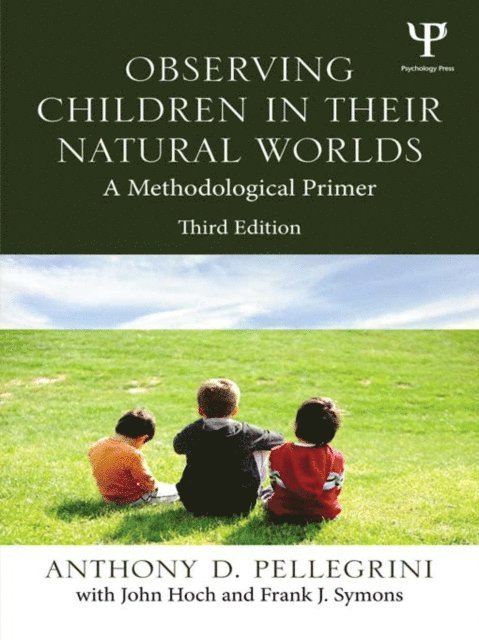
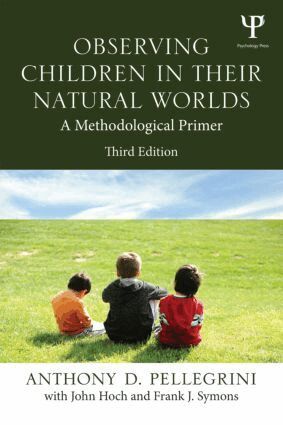
Observing Children in Their Natural Worlds
A Methodological Primer, Third Edition
Inbunden, Engelska, 2012
2 029 kr
Skickas inom 10-15 vardagar
This book shows readers how to conduct observational methods, research tools used to describe and explain behaviors as they unfold in everyday settings. The book now uses both an evolutionary and a cultural perspective. The methods presented are drawn from psychology, education, family studies, sociology, and anthropology, but the author's primary focus is on children in school, family, and social settings. Readers learn how to make observations in real contexts to help them create a verbal picture of behaviors they see. The importance of considering reliability and validity factors while testing within each environment is emphasized throughout. The author draws from the literature that provides methods for observing animals in their natural habitats, but emphasizes the use of observational methods to solve human problems. The book is organized in the way a researcher conducts observational studies—conceptualizing of the idea, designing and implementing the study, and writing the report. “Things to think about” sections provide an opportunity for students to solidify their understanding of the material and the Glossary defines the key terms introduced in the book.Highlights of changes in the new edition include:• The introduction of the cultural perspective in chapter 4 along with the evolutionary (epigenetic theory) perspective and the integration of cultural examples throughout the book. • More varied examples from developmental psychology, family studies, and education.• Extensively revised chapter (3) on ethics reflects the current revelations of scientific fraud and the push for researchers to maximize scientific integrity in their community. • Updated chapter (12) reflects the latest computer technologies used in observational methods including iPhones and Blackberrys for conducting observation, ABC Data Pro and Behavior Tracker for evaluations, and Excel for constructing observational templates. • Expanded chapter (13) on writing the research report and more on issues of plagiarism (ch. 3). • The latest on minimizing observer effects on participants and testing their effectiveness.• New environmentally friendly design, the Things to Think About sections were retained, but the blank pages for answers were eliminated.Intended as a supplementary text for advanced undergraduate and/or graduate courses in research methods and/or developmental research or developmental/child psychology taught in psychology, education, human development, and nursing, educators and researchers concerned with assessing children will also appreciate this book’s introduction to observational methods.
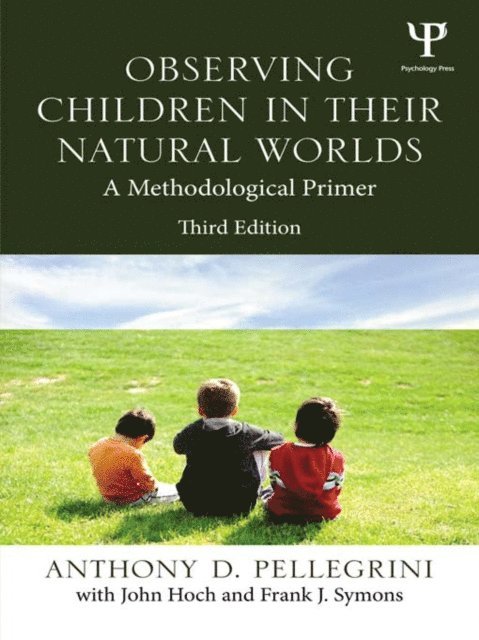
Observing Children in Their Natural Worlds
A Methodological Primer, Third Edition
Häftad, Engelska, 2012
784 kr
Skickas inom 10-15 vardagar
This book shows readers how to conduct observational methods, research tools used to describe and explain behaviors as they unfold in everyday settings. The book now uses both an evolutionary and a cultural perspective. The methods presented are drawn from psychology, education, family studies, sociology, and anthropology, but the author's primary focus is on children in school, family, and social settings. Readers learn how to make observations in real contexts to help them create a verbal picture of behaviors they see. The importance of considering reliability and validity factors while testing within each environment is emphasized throughout. The author draws from the literature that provides methods for observing animals in their natural habitats, but emphasizes the use of observational methods to solve human problems. The book is organized in the way a researcher conducts observational studies—conceptualizing of the idea, designing and implementing the study, and writing the report. “Things to think about” sections provide an opportunity for students to solidify their understanding of the material and the Glossary defines the key terms introduced in the book.Highlights of changes in the new edition include:• The introduction of the cultural perspective in chapter 4 along with the evolutionary (epigenetic theory) perspective and the integration of cultural examples throughout the book. • More varied examples from developmental psychology, family studies, and education.• Extensively revised chapter (3) on ethics reflects the current revelations of scientific fraud and the push for researchers to maximize scientific integrity in their community. • Updated chapter (12) reflects the latest computer technologies used in observational methods including iPhones and Blackberrys for conducting observation, ABC Data Pro and Behavior Tracker for evaluations, and Excel for constructing observational templates. • Expanded chapter (13) on writing the research report and more on issues of plagiarism (ch. 3). • The latest on minimizing observer effects on participants and testing their effectiveness.• New environmentally friendly design, the Things to Think About sections were retained, but the blank pages for answers were eliminated.Intended as a supplementary text for advanced undergraduate and/or graduate courses in research methods and/or developmental research or developmental/child psychology taught in psychology, education, human development, and nursing, educators and researchers concerned with assessing children will also appreciate this book’s introduction to observational methods.