Frank T. Coulson - Böcker
Visar alla böcker från författaren Frank T. Coulson. Handla med fri frakt och snabb leverans.
4 produkter
4 produkter
949 kr
Skickas
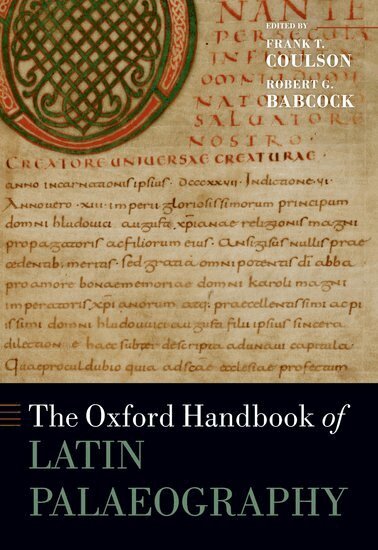
Latin books are among the most numerous surviving artifacts of the Late Antique, Mediaeval, and Renaissance periods in European history; written in a variety of formats and scripts, they preserve the literary, philosophical, scientific, and religious heritage of the West. The Oxford Handbook of Latin Palaeography surveys these books, with special emphasis on the variety of scripts in which they were written. Palaeography, in the strictest sense, examines how the changing styles of script and the fluctuating shapes of individual letters allow the date and the place of production of books to be determined. More broadly conceived, palaeography examines the totality of early book production, ownership, dissemination, and use. The Oxford Handbook of Latin Palaeography includes essays on major types of script (Uncial, Insular, Beneventan, Visigothic, Gothic, etc.), describing what defines these distinct script types, and outlining when and where they were used. It expands on previous handbooks of the subject by incorporating select essays on less well-studied periods and regions, in particular late mediaeval Eastern Europe. The Oxford Handbook of Latin Palaeography is also distinguished from prior handbooks by its extensive focus on codicology and on the cultural settings and contexts of mediaeval books. Essays treat of various important features, formats, styles, and genres of mediaeval books, and of representative mediaeval libraries as intellectual centers. Additional studies explore questions of orality and the written word, the book trade, glossing and glossaries, and manuscript cataloguing. The extensive plates and figures in the volume will provide readers wtih clear illustrations of the major points, and the succinct bibliographies in each essay will direct them to more detailed works in the field.
326 kr
Skickas inom 7-10 vardagar
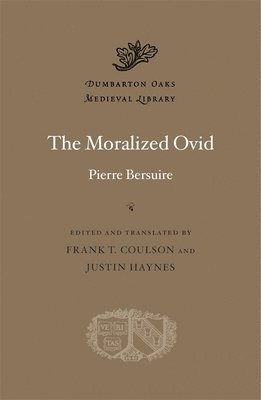
An influential medieval allegorical interpretation of the Metamorphoses that uncovers the hidden moral truths of Ovid’s stories, translated into English for the first time.Written in about 1340 in Avignon by the Benedictine preacher Pierre Bersuire, The Moralized Ovid—commonly referred to by its Latin title, Ovidius moralizatus, to distinguish it from the anonymous French vernacular Ovide moralisé—was arguably the most influential interpretation of Ovid’s Metamorphoses in the High Middle Ages. It circulated widely in manuscript form and was frequently printed during the Renaissance. Originally intended as a sourcebook of exempla for preachers’ sermons, The Moralized Ovid provides not only a window into the reception of classical literature in the fourteenth century but also amazingly vivid details of daily life in the Middle Ages across all strata of society.The work begins with a detailed description of the Greco-Roman gods, inspired in part by Bersuire’s friend and fellow proponent of classical poetry, Francesco Petrarch. It then retells selected major myths from Ovid’s Metamorphoses, each followed by numerous allegorical interpretations that draw from biblical stories, contemporary events, and the natural world.This edition presents the first full English translation alongside an authoritative Latin text.
1 658 kr
Skickas inom 7-10 vardagar
Ovid is perhaps the most important surviving Latin poet and his work has influenced writers throughout the world to the present day. This volume presents a groundbreaking series of essays on his reception across in the Middle Ages. The collection includes contributions from distinguished Ovidians as well as leading specialists in medieval Latin and vernacular literature, clerical and extra-clerical culture and medieval art, and addresses questions of manuscript and textual transmission, translation, adaptation and imitation. It also explores the intersecting cultural contexts of the schools (monastic and secular), courts and literate lay households. It elaborates the scale and scope of the enthusiasm for Ovid in medieval Europe, following readers of the canon from the Carolingian monasteries to the early schools of the Île de France and on into clerical and curial milieux in Italy, Spain, the British Isles and even the Byzantine Empire.
584 kr
Skickas inom 7-10 vardagar
Ovid is perhaps the most important surviving Latin poet and his work has influenced writers throughout the world to the present day. This volume presents a groundbreaking series of essays on his reception across in the Middle Ages. The collection includes contributions from distinguished Ovidians as well as leading specialists in medieval Latin and vernacular literature, clerical and extra-clerical culture and medieval art, and addresses questions of manuscript and textual transmission, translation, adaptation and imitation. It also explores the intersecting cultural contexts of the schools (monastic and secular), courts and literate lay households. It elaborates the scale and scope of the enthusiasm for Ovid in medieval Europe, following readers of the canon from the Carolingian monasteries to the early schools of the Île de France and on into clerical and curial milieux in Italy, Spain, the British Isles and even the Byzantine Empire.