Frank van Oort - Böcker
Visar alla böcker från författaren Frank van Oort. Handla med fri frakt och snabb leverans.
3 produkter
3 produkter
649 kr
Skickas inom 10-15 vardagar
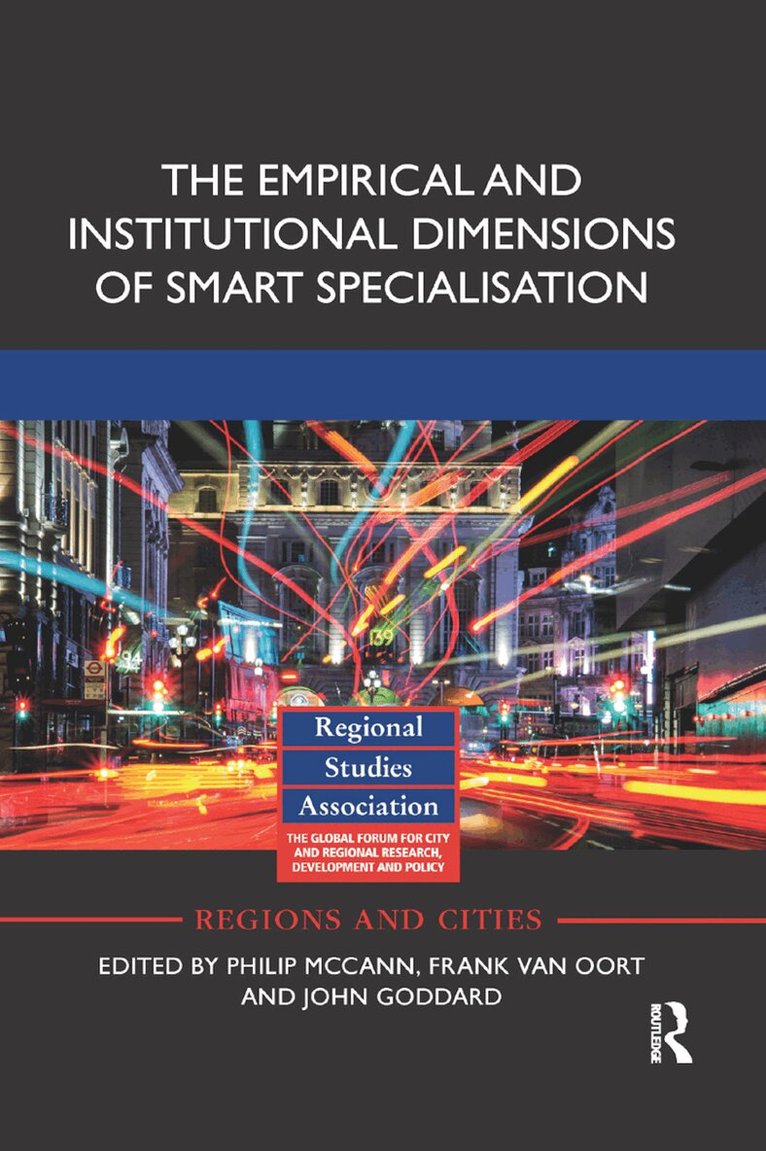
Smart specialisation is the new policy approach to the development of regional innovation systems across Europe and it involves fostering innovative and entrepreneurial initiatives which are well tailored to the local context. The different technologies, skills profiles, business activities, institutions and sectors which reflect a region’s economic strengths and potential are to be fostered and encouraged to diversify in ways which also exploit the region’s linkages with broader global value-chains.Yet, the ideas contained in the smart specialisation agenda have until now been primarily conceptual in nature. The Empirical and Institutional Dimensions of Smart Specialisation draws together some of the leading regional economists and scientists in Europe to analyse how smart specialisation is working in practice. This book investigates different dimensions of the agenda as it is developing across parts of Europe from both quantitative and qualitative perspectives. The quantitative analysis examines the nature of the diversification processes undertaken by regions and the interplay between the chosen local regional development priorities and the wider global value-chain impacts of these choices. Meanwhile, the qualitative analysis examines the institutional opportunities and challenges facing policy makers and the key elements most likely to provide the underpinnings of a workable set of policy settings.The book is aimed both at academic researchers interested in the interface between economic geography and regional innovation systems as well as at policy makers making public policy decisions related to regional development at the local, city, regional or national levels.
2 238 kr
Skickas inom 10-15 vardagar
Smart specialisation is the new policy approach to the development of regional innovation systems across Europe and it involves fostering innovative and entrepreneurial initiatives which are well tailored to the local context. The different technologies, skills profiles, business activities, institutions and sectors which reflect a region’s economic strengths and potential are to be fostered and encouraged to diversify in ways which also exploit the region’s linkages with broader global value-chains.Yet, the ideas contained in the smart specialisation agenda have until now been primarily conceptual in nature. The Empirical and Institutional Dimensions of Smart Specialisation draws together some of the leading regional economists and scientists in Europe to analyse how smart specialisation is working in practice. This book investigates different dimensions of the agenda as it is developing across parts of Europe from both quantitative and qualitative perspectives. The quantitative analysis examines the nature of the diversification processes undertaken by regions and the interplay between the chosen local regional development priorities and the wider global value-chain impacts of these choices. Meanwhile, the qualitative analysis examines the institutional opportunities and challenges facing policy makers and the key elements most likely to provide the underpinnings of a workable set of policy settings.The book is aimed both at academic researchers interested in the interface between economic geography and regional innovation systems as well as at policy makers making public policy decisions related to regional development at the local, city, regional or national levels.
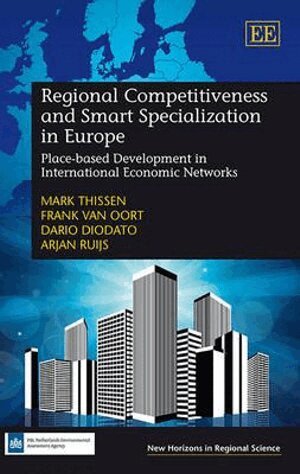
Regional Competitiveness and Smart Specialization in Europe
Place-based Development in International Economic Networks
Inbunden, Engelska, 2013
1 767 kr
Skickas inom 7-10 vardagar
Regions economically differ from each other - they compete in different products and geographical spaces, exhibit different strengths and weaknesses, and provide different possibilities for growth and development. What fosters growth in one region may hamper it in another. This highly original book presents an accessible methodology for identifying competitors and their particular circumstances in Europe, discusses regional competitiveness from a conceptual perspective and explores both past and future regional development policies in Europe.The authors illustrate that for the concept of regional competition to be valued correctly it should not solely be identified by the structural asset characteristics of cities and regions. They therefore present a unique applied analytic framework that takes into account economically valued network relations between places of (mobile) production factors and traded goods. Underpinned with thorough analysis and theory, the framework uses actual networks of competing and economically valued relations between regions to help develop smart specialization strategies that are central in the place-based policy initiatives of the new European cohesion policy.This path-breaking book presents a crucial contribution to the current academic discussion on regional competitiveness and the policy debate on smart specialization, place-based development and cohesion policy in the European Union. As such it will prove an invaluable read for academics, researchers, students and policy-makers with an interest in economics - particularly applied regional economics, European studies and regional studies.