Franklin Mendivil - Böcker
Visar alla böcker från författaren Franklin Mendivil. Handla med fri frakt och snabb leverans.
6 produkter
6 produkter
712 kr
Skickas inom 5-8 vardagar
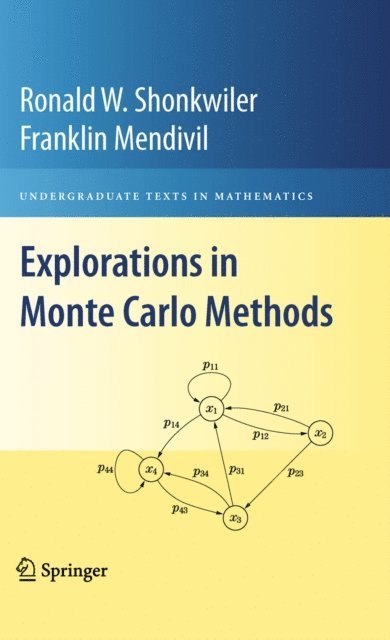
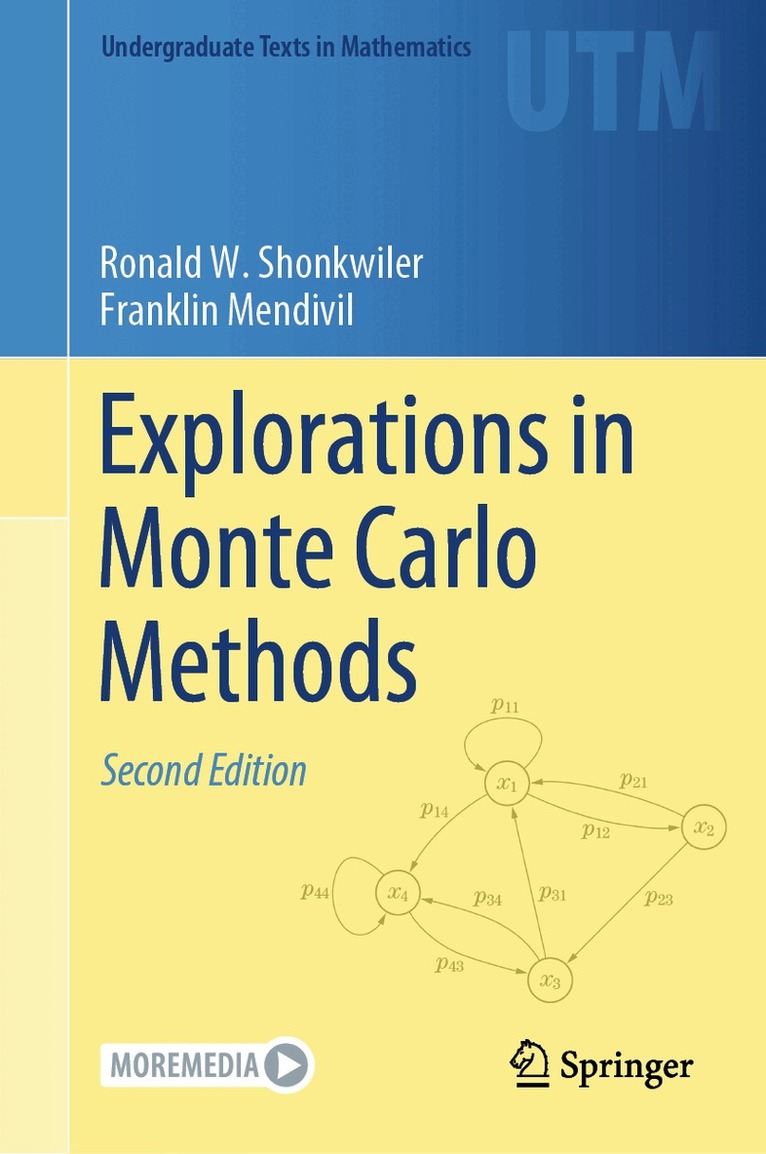
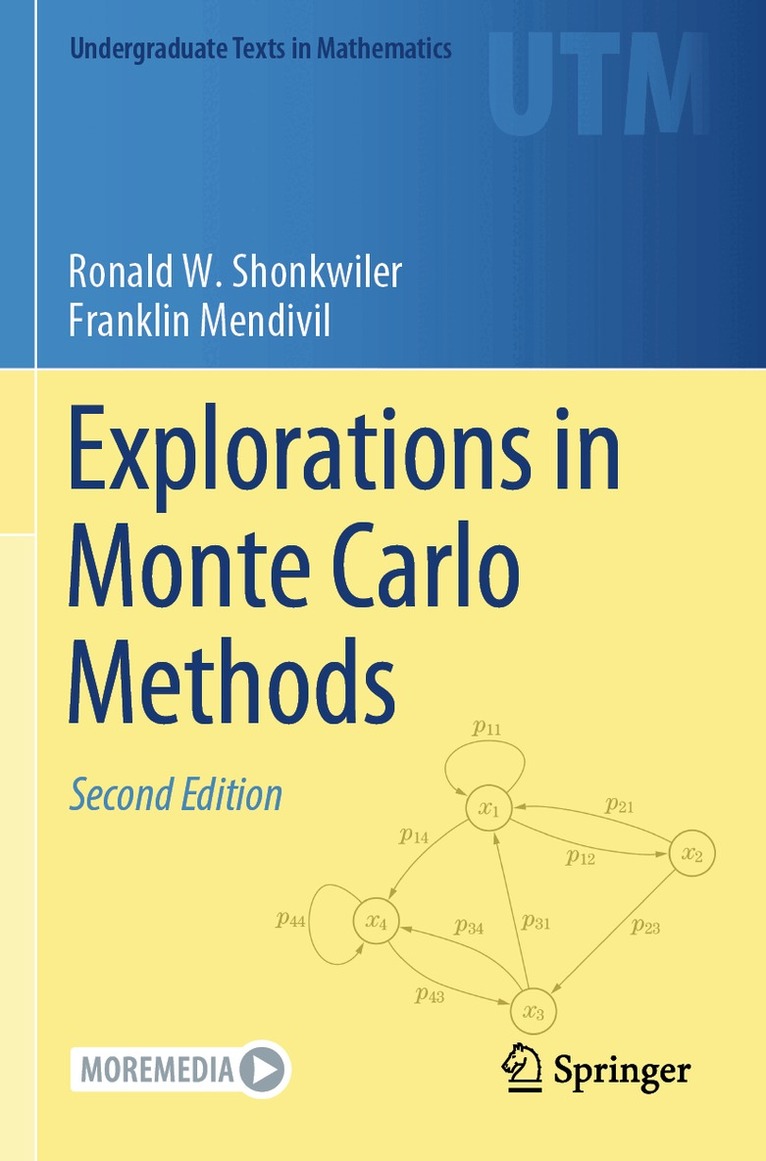
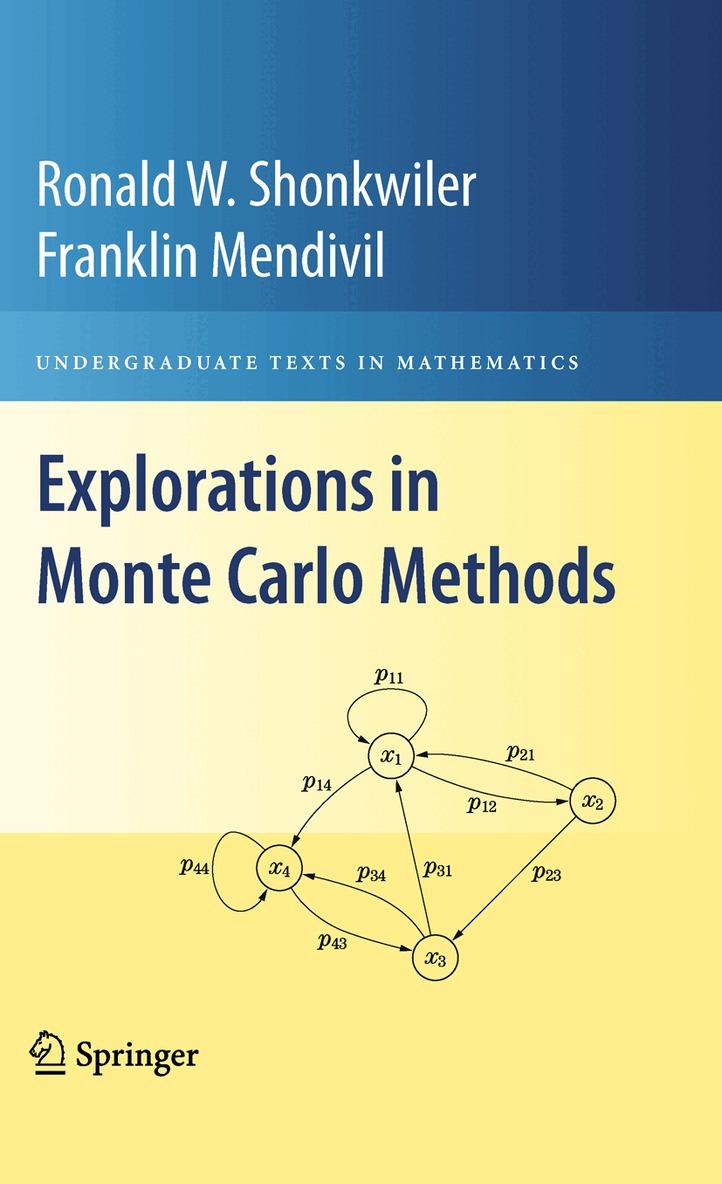
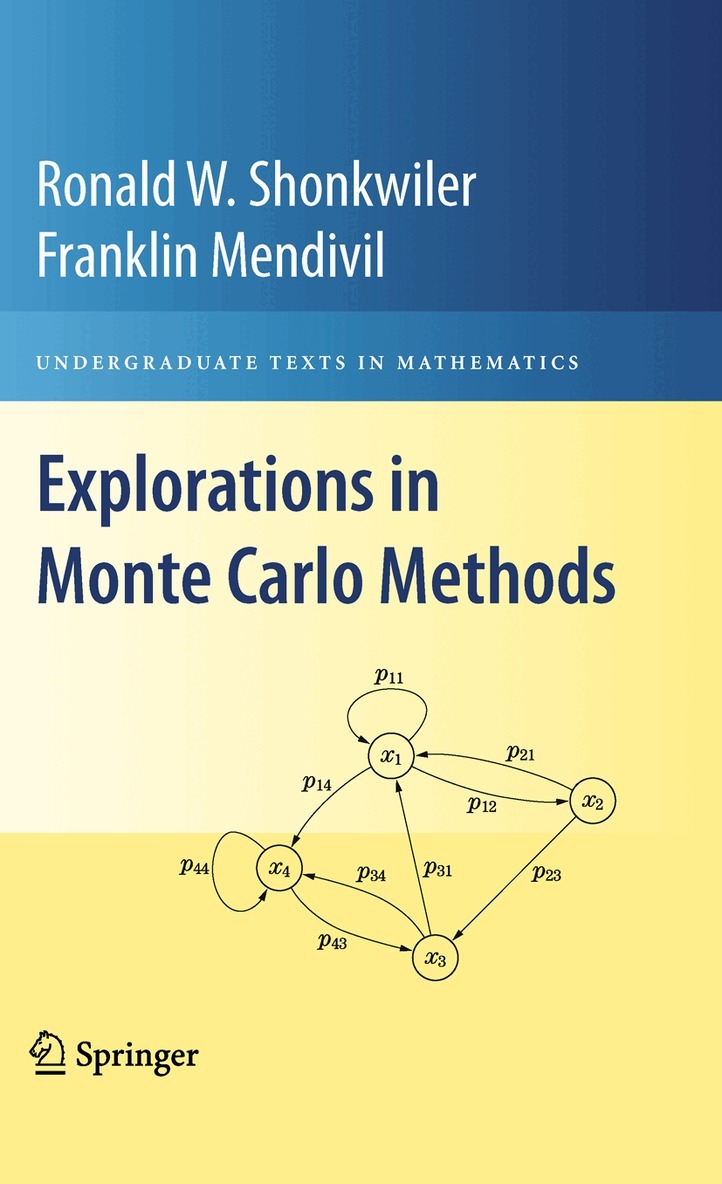
Monte Carlo methods are among the most used and useful computational tools available today, providing efficient and practical algorithims to solve a wide range of scientific and engineering problems.Explorations in Monte Carlo Methods provides a hands-on approach to learning this subject. Each new idea is carefully motivated by a realistic problem, thus leading from questions to theory via examples and numerical simulations. Programming exercises are integrated throughout the text as the primary vehicle for learning the material. Each chapter ends with a large collection of problems illustrating and directing the material.This book is suitable as a textbook for students of engineering and the sciences, as well as mathematics. The problem-oriented approach makes it ideal for an applied course in basic probability and for a more specialized course in Monte Carlo methods. Topics include probability distributions, counting combinatorial objects, simulated annealing, genetic algorithms, option pricing, gamblers ruin, statistical mechanics, sampling, and random number generation.
1 064 kr
Skickas inom 10-15 vardagar
The idea of modeling the behaviour of phenomena at multiple scales has become a useful tool in both pure and applied mathematics. Fractal-based techniques lie at the heart of this area, as fractals are inherently multiscale objects; they very often describe nonlinear phenomena better than traditional mathematical models. In many cases they have been used for solving inverse problems arising in models described by systems of differential equations and dynamical systems. "Fractal-Based Methods in Analysis" draws together, for the first time in book form, methods and results from almost twenty years of research in this topic, including new viewpoints and results in many of the chapters. For each topic the theoretical framework is carefully explained using examples and applications. The second chapter on basic iterated function systems theory is designed to be used as the basis for a course and includes many exercises. This chapter, along with the three background appendices on topological and metric spaces, measure theory, and basic results from set-valued analysis, make the book suitable for self-study or as a source book for a graduate course. The other chapters illustrate many extensions and applications of fractal-based methods to different areas. This book is intended for graduate students and researchers in applied mathematics, engineering and social sciences. Herb Kunze is a professor of mathematics at the University of Guelph in Ontario. Davide La Torre is an associate professor of mathematics in the Department of Economics, Management and Quantitative Methods of the University of Milan. Franklin Mendivil is a professor of mathematics at Acadia University in Nova Scotia. Edward Vrscay is a professor in the department of Applied Mathematics at the University of Waterloo inOntario. The major focus of their research is on fractals and the applications of fractals.
1 064 kr
Skickas inom 10-15 vardagar
The idea of modeling the behaviour of phenomena at multiple scales has become a useful tool in both pure and applied mathematics. Fractal-based techniques lie at the heart of this area, as fractals are inherently multiscale objects; they very often describe nonlinear phenomena better than traditional mathematical models. In many cases they have been used for solving inverse problems arising in models described by systems of differential equations and dynamical systems. "Fractal-Based Methods in Analysis" draws together, for the first time in book form, methods and results from almost twenty years of research in this topic, including new viewpoints and results in many of the chapters. For each topic the theoretical framework is carefully explained using examples and applications. The second chapter on basic iterated function systems theory is designed to be used as the basis for a course and includes many exercises. This chapter, along with the three background appendices on topological and metric spaces, measure theory, and basic results from set-valued analysis, make the book suitable for self-study or as a source book for a graduate course. The other chapters illustrate many extensions and applications of fractal-based methods to different areas. This book is intended for graduate students and researchers in applied mathematics, engineering and social sciences. Herb Kunze is a professor of mathematics at the University of Guelph in Ontario. Davide La Torre is an associate professor of mathematics in the Department of Economics, Management and Quantitative Methods of the University of Milan. Franklin Mendivil is a professor of mathematics at Acadia University in Nova Scotia. Edward Vrscay is a professor in the department of Applied Mathematics at the University of Waterloo inOntario. The major focus of their research is on fractals and the applications of fractals.
763 kr
Skickas inom 5-8 vardagar
Monte Carlo methods are among the most used and useful computational tools available today, providing efficient and practical algorithims to solve a wide range of scientific and engineering problems.Explorations in Monte Carlo Methods provides a hands-on approach to learning this subject. Each new idea is carefully motivated by a realistic problem, thus leading from questions to theory via examples and numerical simulations. Programming exercises are integrated throughout the text as the primary vehicle for learning the material. Each chapter ends with a large collection of problems illustrating and directing the material.This book is suitable as a textbook for students of engineering and the sciences, as well as mathematics. The problem-oriented approach makes it ideal for an applied course in basic probability and for a more specialized course in Monte Carlo methods. Topics include probability distributions, counting combinatorial objects, simulated annealing, genetic algorithms, option pricing, gamblers ruin, statistical mechanics, sampling, and random number generation.
800 kr
Skickas inom 10-15 vardagar
Topics include probability distributions, probability calculations, sampling, counting combinatorial objects, Markov chains, random walks, simulated annealing, genetic algorithms, option pricing, gamblers ruin, statistical mechanics, random number generation, Bayesian Inference, Gibbs Sampling and Monte Carlo integration.
588 kr
Skickas inom 10-15 vardagar
Monte Carlo Methods are among the most used, and useful, computational tools available today. They provide efficient and practical algorithms to solve a wide range of scientific and engineering problems in dozens of areas many of which are covered in this text. These include simulation, optimization, finance, statistical mechanics, birth and death processes, Bayesian inference, quadrature, gambling systems and more.This text is for students of engineering, science, economics and mathematics who want to learn about Monte Carlo methods but have only a passing acquaintance with probability theory. The probability needed to understand the material is developed within the text itself in a direct manner using Monte Carlo experiments for reinforcement. There is a prerequisite of at least one year of calculus and a semester of matrix algebra.Each new idea is carefully motivated by a realistic problem, thus leading to insights into probability theory via examples and numerical simulations. Programming exercises are integrated throughout the text as the primary vehicle for learning the material. All examples in the text are coded in Python as a representative language; the logic is sufficiently clear so as to be easily translated into any other language. Further, Python scripts for each worked example are freely accessible for each chapter. Along the way, most of the basic theory of probability is developed in order to illuminate the solutions to the questions posed. One of the strongest features of the book is the wealth of completely solved example problems. These provide the reader with a sourcebook to follow towards the solution of their own computational problems. Each chapter ends with a large collection of homework problems illustrating and directing the material. This book is suitable as a textbook for students of engineering, finance, and the sciences as well as mathematics. The problem-oriented approach makes it ideal for an applied course in basic probability as well as for a more specialized course in Monte Carlo Methods. Topics include probability distributions, probability calculations, sampling, counting combinatorial objects, Markov chains, random walks, simulated annealing, genetic algorithms, option pricing, gamblers ruin, statistical mechanics, random number generation, Bayesian Inference, Gibbs Sampling and Monte Carlo integration.