Franz L. Fillafer – författare
Visar alla böcker från författaren Franz L. Fillafer. Handla med fri frakt och snabb leverans.
3 produkter
3 produkter
Inbunden, Engelska, 2018
1 401 kr
Skickas inom 10-15 vardagar
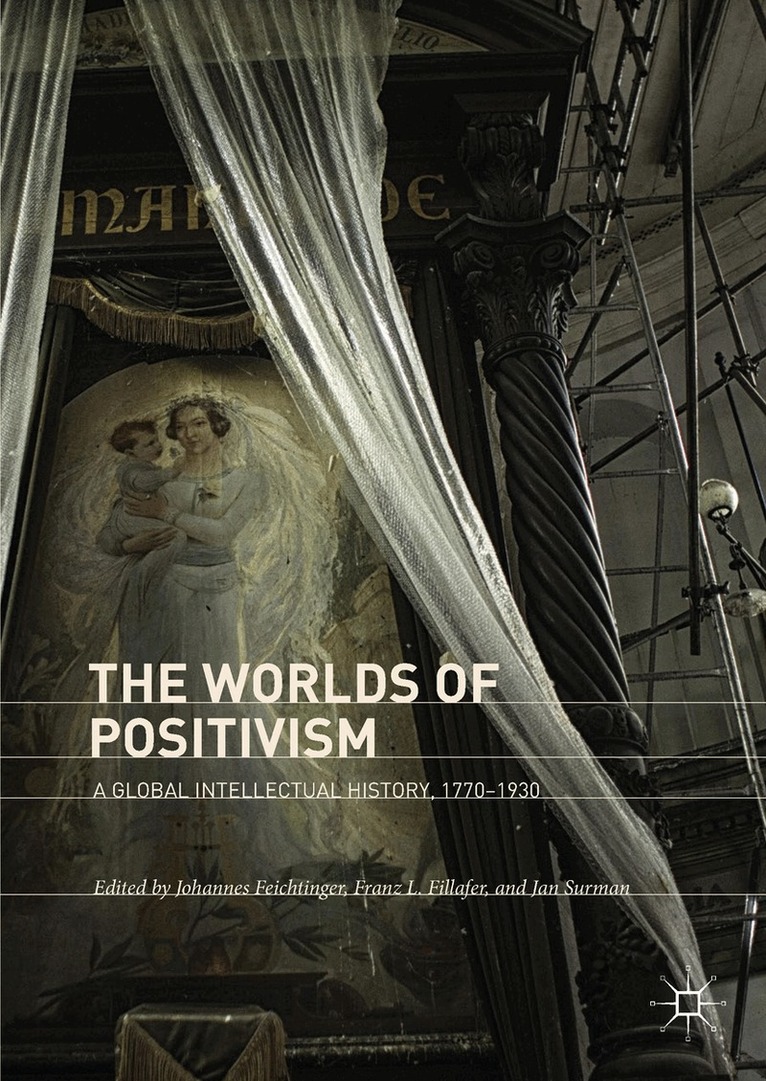
This book is the first to trace the origins and significance of positivism on a global scale. Taking their cues from Auguste Comte and John Stuart Mill, positivists pioneered a universal, experience-based culture of scientific inquiry for studying nature and society—a new science that would enlighten all of humankind. Positivists envisaged one world united by science, but their efforts spawned many. Uncovering these worlds of positivism, the volume ranges from India, the Ottoman Empire, and the Iberian Peninsula to Central Europe, Russia, and Brazil, examining positivism’s impact as one of the most far-reaching intellectual movements of the modern world. Positivists reinvented science, claiming it to be distinct from and superior to the humanities. They predicated political governance on their refashioned science of society, and as political activists, they sought and often failed to reconcile their universalism with the values of multiculturalism. Providing a genealogy of scientific governance that is sorely needed in an age of post-truth politics, this volume breaks new ground in the fields of intellectual and global history, the history of science, and philosophy.
E-bok
Engelska, 20181 785 kr
Läs direkt efter köp
This book is the first to trace the origins and significance of positivism on a global scale. Taking their cues from Auguste Comte and John Stuart Mill, positivists pioneered a universal, experience-based culture of scientific inquiry for studying nature and society—a new science that would enlighten all of humankind. Positivists envisaged one world united by science, but their efforts spawned many. Uncovering these worlds of positivism, the volume ranges from India, the Ottoman Empire, and the Iberian Peninsula to Central Europe, Russia, and Brazil, examining positivism’s impact as one of the most far-reaching intellectual movements of the modern world. Positivists reinvented science, claiming it to be distinct from and superior to the humanities. They predicated political governance on their refashioned science of society, and as political activists, they sought and often failed to reconcile their universalism with the values of multiculturalism. Providing a genealogy of scientific governance that is sorely needed in an age of post-truth politics, this volume breaks new ground in the fields of intellectual and global history, the history of science, and philosophy.
Häftad, Engelska, 2019
1 407 kr
Skickas inom 10-15 vardagar
This book is the first to trace the origins and significance of positivism on a global scale. Taking their cues from Auguste Comte and John Stuart Mill, positivists pioneered a universal, experience-based culture of scientific inquiry for studying nature and society—a new science that would enlighten all of humankind. Positivists envisaged one world united by science, but their efforts spawned many. Uncovering these worlds of positivism, the volume ranges from India, the Ottoman Empire, and the Iberian Peninsula to Central Europe, Russia, and Brazil, examining positivism’s impact as one of the most far-reaching intellectual movements of the modern world. Positivists reinvented science, claiming it to be distinct from and superior to the humanities. They predicated political governance on their refashioned science of society, and as political activists, they sought and often failed to reconcile their universalism with the values of multiculturalism. Providing a genealogy of scientific governance that is sorely needed in an age of post-truth politics, this volume breaks new ground in the fields of intellectual and global history, the history of science, and philosophy.