Franziska Wolff – författare
Visar alla böcker från författaren Franziska Wolff. Handla med fri frakt och snabb leverans.
3 produkter
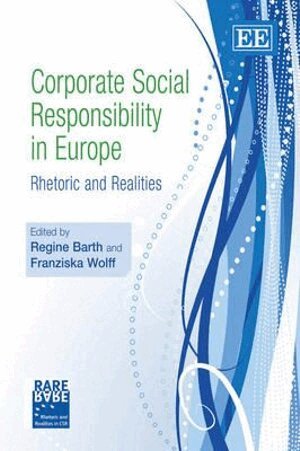
Corporate Social Responsibility in Europe
Rhetoric and Realities
Av Regine Barth, Franziska Wolff
Inbunden, 2009
2489 kr
Lägg i varukorg
The acid test of corporate social responsibility (CSR) is simply this: does it lead to positive impacts on society and the environment or is it just rhetoric? And if it does lead to positive impacts, how can these be enhanced? This timely book tackles this cutting-edge challenge by presenting …
Corporate Social Responsibility in Europe
Rhetoric and Realities
Av Franziska Wolff, Regine Barth
E-bok, 2009
472 kr
Lägg i varukorg
The acid test of corporate social responsibility (CSR) is simply this: does it lead to positive impacts on society and the environment or is it just rhetoric? And if it does lead to positive impacts, how can these be enhanced? This timely book tackles this cutting-edge challenge by presenting …
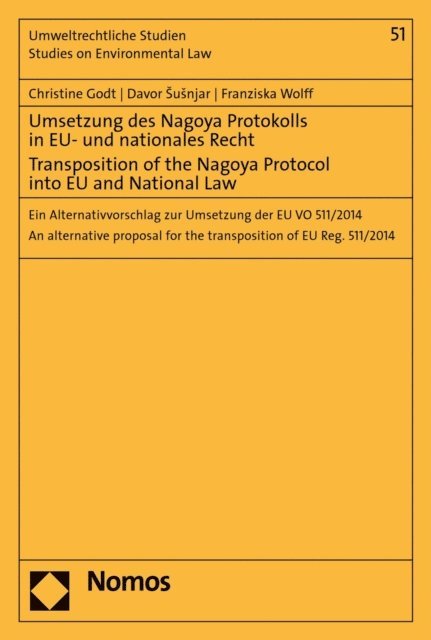
Umsetzung des Nagoya Protokolls in EU- und nationales Recht - Transposition of the Nagoya Protocol into EU- and National Law
Ein Alternativvorschlag zur Umsetzung der EU VO 511/2014 - An alternative proposal for the transposition of EU Reg. 511/2014
Av Franziska Wolff, Davor Susnjar m. fl.
E-bok, 2020
1000 kr
Lägg i varukorg
Das Nagoya-Protokoll gegen Biopiraterie stellt eine wichtige Errungenschaft in der internationalen Biodiversitätspolitik dar. Das Buch stellt ein Konzept vor, wie das Protokoll in der EU und ihren Mitgliedstaaten hätte wirkungsvoller umgesetzt werden können. Anders als die geltende EU Verordnung …