Fraser J. Harbutt – författare
Visar alla böcker från författaren Fraser J. Harbutt. Handla med fri frakt och snabb leverans.
7 produkter
7 produkter
Häftad, Engelska, 1989
542 kr
Skickas inom 5-8 vardagar
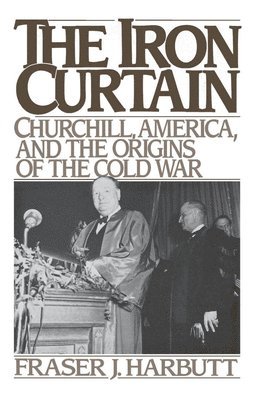
This book is at once a fascinating biography of Winston Churchill as the leading protagonist of the Cold War, and a penetrating re-examination of diplomatic relations between Great Britain, the United States, and the U.S.S.R. in the post-war years.
E-bok
PDF, Engelska, 1988341 kr
Läs direkt efter köp
It was forty-two years ago that Winston Churchill made his famous speech in Fulton, Missouri, in which he popularized the phrase "Iron Curtain." This speech, according to Fraser Harbutt, set forth the basic Western ideology of the coming East-West struggle. It was also a calculated move within, and a dramatic public definition of, the Truman administration''s concurrent turn from accommodation to confrontation with the Soviet Union. It provoked a response from Stalin that goes far to explain the advent of the Cold War a few weeks later. This book is at once a fascinating biography of Winston Churchill as the leading protagonist of an Anglo-American political and military front against the Soviet Union and a penetrating re-examination of diplomatic relations between the United States, Great Britain, and the U.S.S.R. in the postwar years. Pointing out the Americocentric bias in most histories of this period, Harbutt shows that the Europeans played a more significant part in precipitating the Cold War than most people realize. He stresses that the same pattern of events that earlier led America belatedly into two world wars, namely the initial separation and then the sudden coming together of the European and American political arenas, appeared here as well. From the combination of biographical and structural approaches, a new historical landscape emerges. The United States appears at times to be the rather passive object of competing Soviet and British maneuvers. The turning point came with the crisis of early 1946, which here receives its fullest analysis to date, when the Truman administration in a systematic but carefully veiled and still widely misunderstood reorientation of policy (in which Churchill figured prominently) led the Soviet Union into the political confrontation that brought on the Cold War.
E-bok
Engelska, 1988454 kr
Läs direkt efter köp
It was forty-two years ago that Winston Churchill made his famous speech in Fulton, Missouri, in which he popularized the phrase "Iron Curtain." This speech, according to Fraser Harbutt, set forth the basic Western ideology of the coming East-West struggle. It was also a calculated move within, and a dramatic public definition of, the Truman administration''s concurrent turn from accommodation to confrontation with the Soviet Union. It provoked a response from Stalin that goes far to explain the advent of the Cold War a few weeks later. This book is at once a fascinating biography of Winston Churchill as the leading protagonist of an Anglo-American political and military front against the Soviet Union and a penetrating re-examination of diplomatic relations between the United States, Great Britain, and the U.S.S.R. in the postwar years. Pointing out the Americocentric bias in most histories of this period, Harbutt shows that the Europeans played a more significant part in precipitating the Cold War than most people realize. He stresses that the same pattern of events that earlier led America belatedly into two world wars, namely the initial separation and then the sudden coming together of the European and American political arenas, appeared here as well. From the combination of biographical and structural approaches, a new historical landscape emerges. The United States appears at times to be the rather passive object of competing Soviet and British maneuvers. The turning point came with the crisis of early 1946, which here receives its fullest analysis to date, when the Truman administration in a systematic but carefully veiled and still widely misunderstood reorientation of policy (in which Churchill figured prominently) led the Soviet Union into the political confrontation that brought on the Cold War.
Häftad, Engelska, 2014
429 kr
Skickas inom 7-10 vardagar
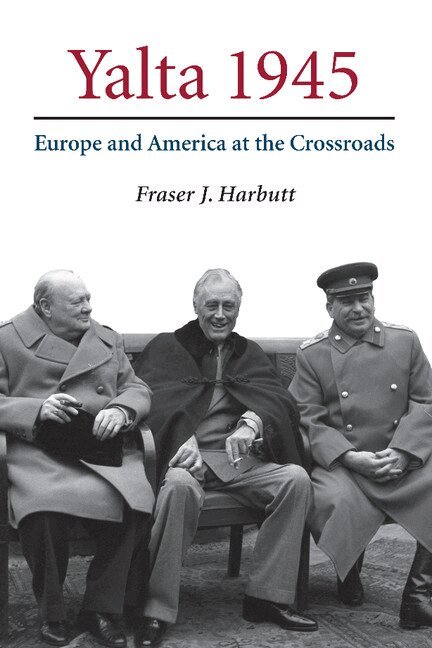
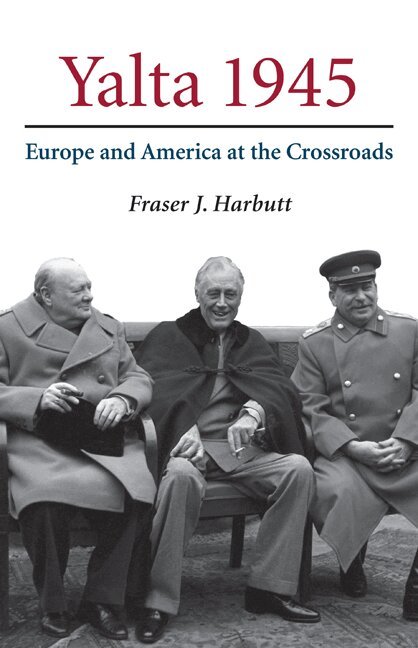
This revisionist study of Allied diplomacy from 1941 to 1946 challenges Americocentric views of the period and highlights Europe's neglected role. Fraser J. Harbutt, drawing on international sources, shows that in planning for the future Churchill, Roosevelt, Stalin, and others self-consciously operated into 1945, not on 'East/West' lines but within a 'Europe/America' political framework characterized by the plausible prospect of Anglo-Russian collaboration and persisting American detachment. Harbutt then explains the destabilizing transformation around the time of the pivotal Yalta conference of February 1945, when a sudden series of provocative initiatives, manipulations, and miscues interacted with events to produce the breakdown of European solidarity and the Anglo-Soviet nexus, an evolving Anglo-American alignment, and new tensions that led finally to the Cold War. This fresh perspective, stressing structural, geopolitical, and traditional impulses and constraints, raises important new questions about the enduringly controversial transition from World War II to a cold war that no statesman wanted.
Inbunden, Engelska, 2010
1 204 kr
Skickas inom 7-10 vardagar
This revisionist study of Allied diplomacy from 1941 to 1946 challenges Americocentric views of the period and highlights Europe's neglected role. Fraser J. Harbutt, drawing on international sources, shows that in planning for the future Churchill, Roosevelt, Stalin, and others self-consciously operated into 1945, not on 'East/West' lines but within a 'Europe/America' political framework characterized by the plausible prospect of Anglo-Russian collaboration and persisting American detachment. Harbutt then explains the destabilizing transformation around the time of the pivotal Yalta conference of February 1945, when a sudden series of provocative initiatives, manipulations, and miscues interacted with events to produce the breakdown of European solidarity and the Anglo-Soviet nexus, an evolving Anglo-American alignment, and new tensions that led finally to the Cold War. This fresh perspective, stressing structural, geopolitical, and traditional impulses and constraints, raises important new questions about the enduringly controversial transition from World War II to a cold war that no statesman wanted.
Inbunden, Engelska, 2002
1 714 kr
Skickas inom 5-8 vardagar
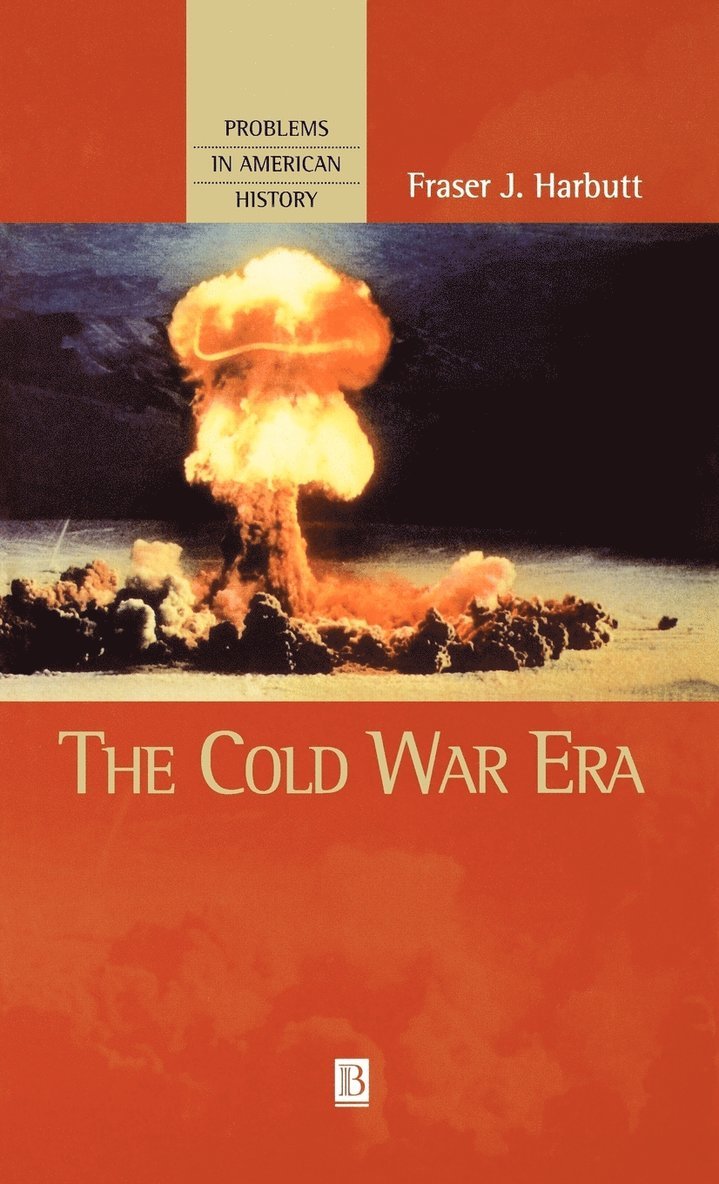
This concise historical narrative by a prize-winning Cold War historian covers the entire Cold War period from the Yalta conference of 1945 to the dissolution of the Soviet Union in 1991. The book analyzes the Cold War as the primary event and framework that dominated American thought and action for half a century.
Häftad, Engelska, 2002
664 kr
Skickas inom 5-8 vardagar
This concise historical narrative by a prize-winning Cold War historian covers the entire Cold War period from the Yalta conference of 1945 to the dissolution of the Soviet Union in 1991. The book analyzes the Cold War as the primary event and framework that dominated American thought and action for half a century.