Fred Pyrczak – författare
891 kr
Läs direkt efter köp
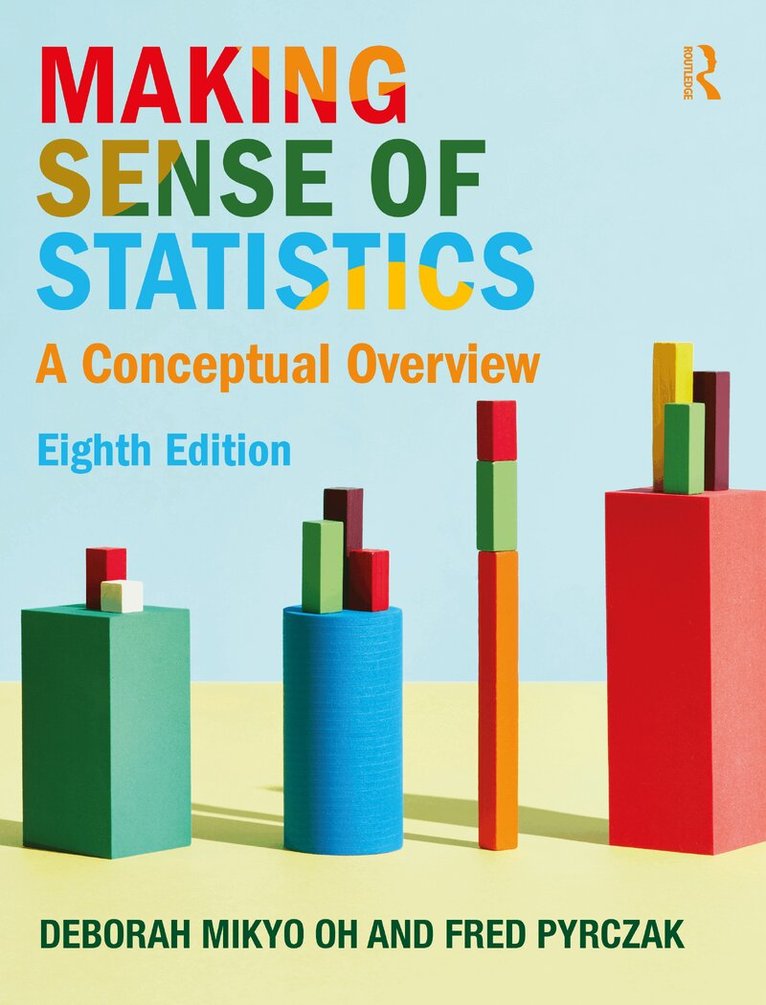
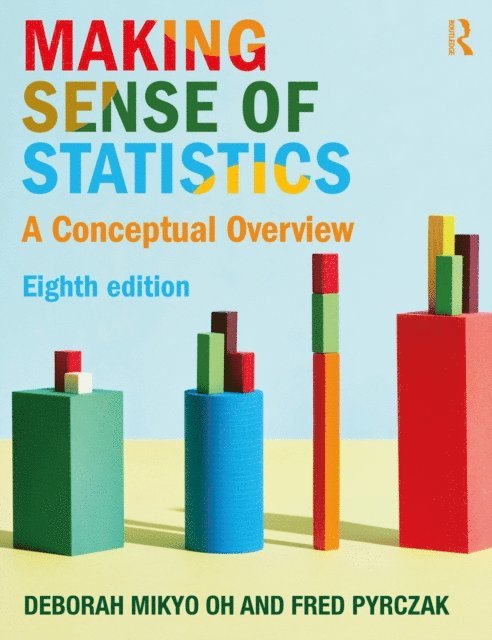
Making Sense of Statistics, Eighth Edition, is the ideal introduction to the concepts of descriptive and inferential statistics for students undertaking their first research project. It presents each statistical concept in a series of short steps, then uses worked examples and exercises to enable students to apply their own learning.
It focuses on presenting the “why,” as well as the “how” of statistical concepts, rather than computations and formulas. As such, it is suitable for students from all disciplines regardless of mathematical background. Only statistical techniques that are almost universally included in introductory statistics courses, and widely reported in journals, have been included.
This conceptual book is useful for all study levels, from undergraduate to doctoral level across disciplines. Once students understand and feel comfortable with the statistics presented in this book, they should find it easy to master additional statistical concepts.
New to the Eighth Edition
Reorganization of chapters to allow better progress in conceptual understanding Additional discussions on program evaluation, displays of outcomes, and examples Chapter objectives at the beginning of each chapter are listed with clear learning objectives for the reader Expanded appendices include a reference to common computational formulas and examples A glossary of key terms has been updated to function as a useful vocabulary list for use in a first course in statistics Updated online resources, including a basic math review and answers and a test bank of questions891 kr
Läs direkt efter köp
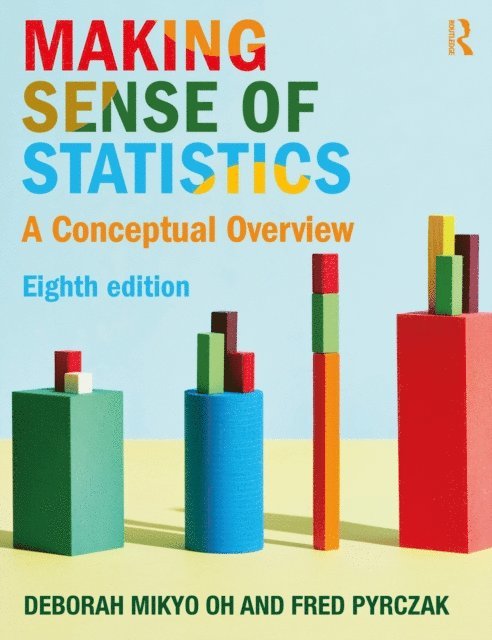
Making Sense of Statistics, Eighth Edition, is the ideal introduction to the concepts of descriptive and inferential statistics for students undertaking their first research project. It presents each statistical concept in a series of short steps, then uses worked examples and exercises to enable students to apply their own learning.
It focuses on presenting the “why,” as well as the “how” of statistical concepts, rather than computations and formulas. As such, it is suitable for students from all disciplines regardless of mathematical background. Only statistical techniques that are almost universally included in introductory statistics courses, and widely reported in journals, have been included.
This conceptual book is useful for all study levels, from undergraduate to doctoral level across disciplines. Once students understand and feel comfortable with the statistics presented in this book, they should find it easy to master additional statistical concepts.
New to the Eighth Edition
Reorganization of chapters to allow better progress in conceptual understanding Additional discussions on program evaluation, displays of outcomes, and examples Chapter objectives at the beginning of each chapter are listed with clear learning objectives for the reader Expanded appendices include a reference to common computational formulas and examples A glossary of key terms has been updated to function as a useful vocabulary list for use in a first course in statistics Updated online resources, including a basic math review and answers and a test bank of questions994 kr
Läs direkt efter köp
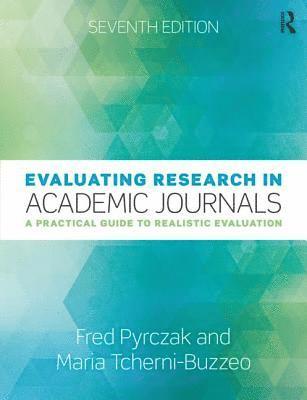
Evaluating Research in Academic Journals is a guide for students learning how to evaluate reports of empirical research published in academic journals. It breaks down the process of evaluating a journal article into easy-to-understand steps and emphasizes the practical aspects of evaluating research.
The book describes the nuances that may make an article publishable, even when it has serious methodological flaws. Students learn when and why certain types of flaws may be tolerated, and why evaluation should not be performed mechanically. Each chapter is organized around evaluation questions, and the book includes numerous examples from journals in the social and behavioral sciences to illustrate the application of evaluation questions and provide actual instances of strong and weak features of published reports.
Common-sense models for evaluation, combined with a lack of jargon make it possible for students to start evaluating research articles in the first week of class, making this the ideal textbook for instructors and students across a range of disciplines.
New to this edition:
A new chapter on Types of Research Coverage of the new realities of online survey methods and research using big data A new appendix on Emerging Issues in Survey Research More emphasis and information on qualitative, case studies, and action research Expanded discussion of research ethics, including additional research-ethics-oriented guidelines, and new appendices devoted to noteworthy cases of research ethics breaches.The accompanying Instructor and Student Resources provide free digital materials designed to test student knowledge and save time when preparing lessons, including over 150 multiple-choice questions, articles, videos, and weblinks for students to test their knowledge of the material and further their understanding of concepts; and downloadable lecture slides and test banks for instructors.
994 kr
Läs direkt efter köp
Evaluating Research in Academic Journals is a guide for students learning how to evaluate reports of empirical research published in academic journals. It breaks down the process of evaluating a journal article into easy-to-understand steps and emphasizes the practical aspects of evaluating research.
The book describes the nuances that may make an article publishable, even when it has serious methodological flaws. Students learn when and why certain types of flaws may be tolerated, and why evaluation should not be performed mechanically. Each chapter is organized around evaluation questions, and the book includes numerous examples from journals in the social and behavioral sciences to illustrate the application of evaluation questions and provide actual instances of strong and weak features of published reports.
Common-sense models for evaluation, combined with a lack of jargon make it possible for students to start evaluating research articles in the first week of class, making this the ideal textbook for instructors and students across a range of disciplines.
New to this edition:
A new chapter on Types of Research Coverage of the new realities of online survey methods and research using big data A new appendix on Emerging Issues in Survey Research More emphasis and information on qualitative, case studies, and action research Expanded discussion of research ethics, including additional research-ethics-oriented guidelines, and new appendices devoted to noteworthy cases of research ethics breaches.The accompanying Instructor and Student Resources provide free digital materials designed to test student knowledge and save time when preparing lessons, including over 150 multiple-choice questions, articles, videos, and weblinks for students to test their knowledge of the material and further their understanding of concepts; and downloadable lecture slides and test banks for instructors.
2 045 kr
Skickas inom 10-15 vardagar
752 kr
Skickas inom 10-15 vardagar
2 639 kr
Skickas inom 10-15 vardagar
838 kr
Skickas inom 10-15 vardagar
2 778 kr
Läs direkt efter köp
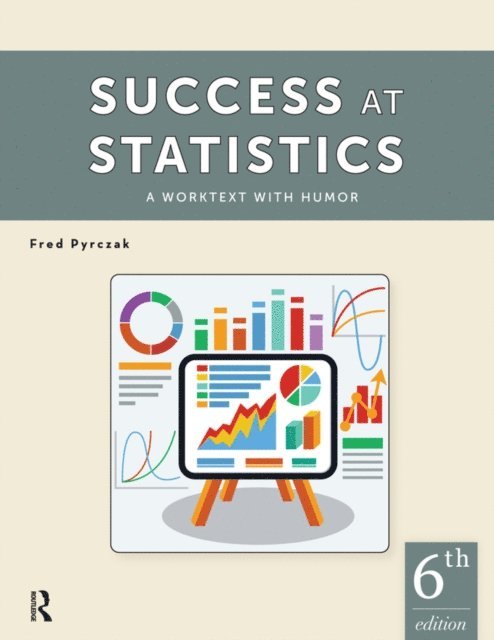
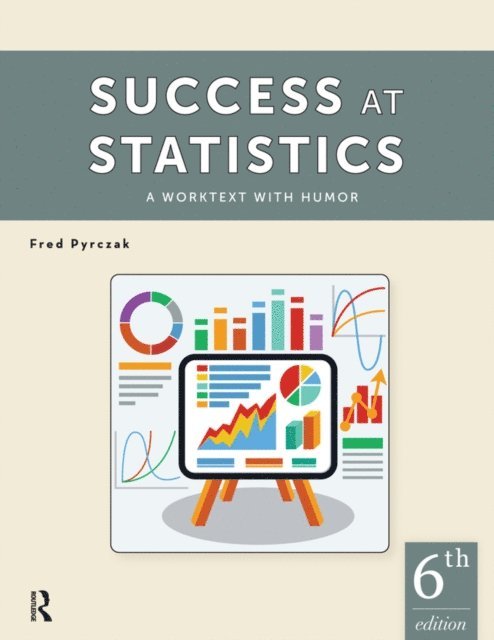
• This comprehensive text covers all the traditional topics in a first-semester course.
• Divided into 67 short sections, this book makes the topics easy to digest. Students regularly get positive reinforcement as they check their mastery with exercises at the end of each section.
• Each exercise is based on a humorous riddle. If the answer to a riddle makes sense, students know all their answers for that exercise are correct. If not, they know they need to check their answers.
• Short sections make it easy to customize your course by assigning only those sections needed to fulfill your objectives.
• A comprehensive basic math review at the end of this book may be used to help students whose math skills are rusty.
• Thoroughly field-tested for student interest and comprehension. The short sections and humor-based, self-checking riddles are greatly appreciated by students.
• Contains Part D on effect size, which provides technical solutions to issues raised in Part C (such as the limitations of inferential statistics).
New to this edition:
Section 1: Explains the importance of statistical techniques in the advancement of scientific knowledge.
Section 11:
Provides practice with the summation operation before using it in multiple statistical tests.Section 27:
This section on z-scores explains how to translate a percentile rank into a raw score.Section 30:
Underlines the importance of figural representations of data, explains how to identify the most appropriate figure, and discusses how to label figures effectively.Section 41:
Provides a deeper understanding of the relationship between p-values and critical values in a statistical test.Appendix J:
A summary table of all statistical equations and guidelines for choosing a particular statistical test.Table 1:
The format and discussion for the Table of the Normal Curve has been changed to a more conventional presentation of this statistical tool.2 778 kr
Läs direkt efter köp
• This comprehensive text covers all the traditional topics in a first-semester course.
• Divided into 67 short sections, this book makes the topics easy to digest. Students regularly get positive reinforcement as they check their mastery with exercises at the end of each section.
• Each exercise is based on a humorous riddle. If the answer to a riddle makes sense, students know all their answers for that exercise are correct. If not, they know they need to check their answers.
• Short sections make it easy to customize your course by assigning only those sections needed to fulfill your objectives.
• A comprehensive basic math review at the end of this book may be used to help students whose math skills are rusty.
• Thoroughly field-tested for student interest and comprehension. The short sections and humor-based, self-checking riddles are greatly appreciated by students.
• Contains Part D on effect size, which provides technical solutions to issues raised in Part C (such as the limitations of inferential statistics).
New to this edition:
Section 1: Explains the importance of statistical techniques in the advancement of scientific knowledge.
Section 11:
Provides practice with the summation operation before using it in multiple statistical tests.Section 27:
This section on z-scores explains how to translate a percentile rank into a raw score.Section 30:
Underlines the importance of figural representations of data, explains how to identify the most appropriate figure, and discusses how to label figures effectively.Section 41:
Provides a deeper understanding of the relationship between p-values and critical values in a statistical test.Appendix J:
A summary table of all statistical equations and guidelines for choosing a particular statistical test.Table 1:
The format and discussion for the Table of the Normal Curve has been changed to a more conventional presentation of this statistical tool.656 kr
Läs direkt efter köp
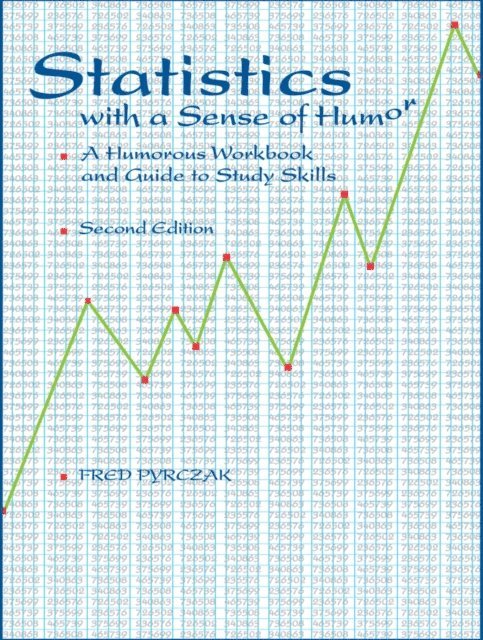
•We’ve added a comprehensive basic math review to this edition. It will get your students off to a good start in statistics.
• In the worksheets, students obtain answers to humorous riddles if their work is correct. If the answer to a riddle does not make sense, they know to check their work.
• Easy to coordinate with all major statistics textbooks because each exercise covers only a limited number of statistics.
• All major topics are included—from calculating percentages to conducting a one-way ANOVA.
• Over 40 humorously illustrated, interactive guides give your students solid advice on study skills covering everything from how to get the most out of a statistics textbook to how to work with a tutor.
• The 64-page instructor’s answer key shows all the steps in the solutions for the computational problems. This key makes it easy for you to start using the workbook right away.
• This book has been a perennial best-seller. Minor adjustments throughout bring you an improved Second Edition for 1999.
656 kr
Läs direkt efter köp
•We’ve added a comprehensive basic math review to this edition. It will get your students off to a good start in statistics.
• In the worksheets, students obtain answers to humorous riddles if their work is correct. If the answer to a riddle does not make sense, they know to check their work.
• Easy to coordinate with all major statistics textbooks because each exercise covers only a limited number of statistics.
• All major topics are included—from calculating percentages to conducting a one-way ANOVA.
• Over 40 humorously illustrated, interactive guides give your students solid advice on study skills covering everything from how to get the most out of a statistics textbook to how to work with a tutor.
• The 64-page instructor’s answer key shows all the steps in the solutions for the computational problems. This key makes it easy for you to start using the workbook right away.
• This book has been a perennial best-seller. Minor adjustments throughout bring you an improved Second Edition for 1999.
589 kr
Läs direkt efter köp
589 kr
Läs direkt efter köp
558 kr
Skickas inom 10-15 vardagar
473 kr
Skickas inom 10-15 vardagar
2 339 kr
Skickas inom 10-15 vardagar
592 kr
Tillfälligt slut
1 610 kr
Tillfälligt slut
191 kr
Tillfälligt slut
644 kr
Tillfälligt slut