Frederic R. Siegel - Böcker
Visar alla böcker från författaren Frederic R. Siegel. Handla med fri frakt och snabb leverans.
10 produkter
10 produkter
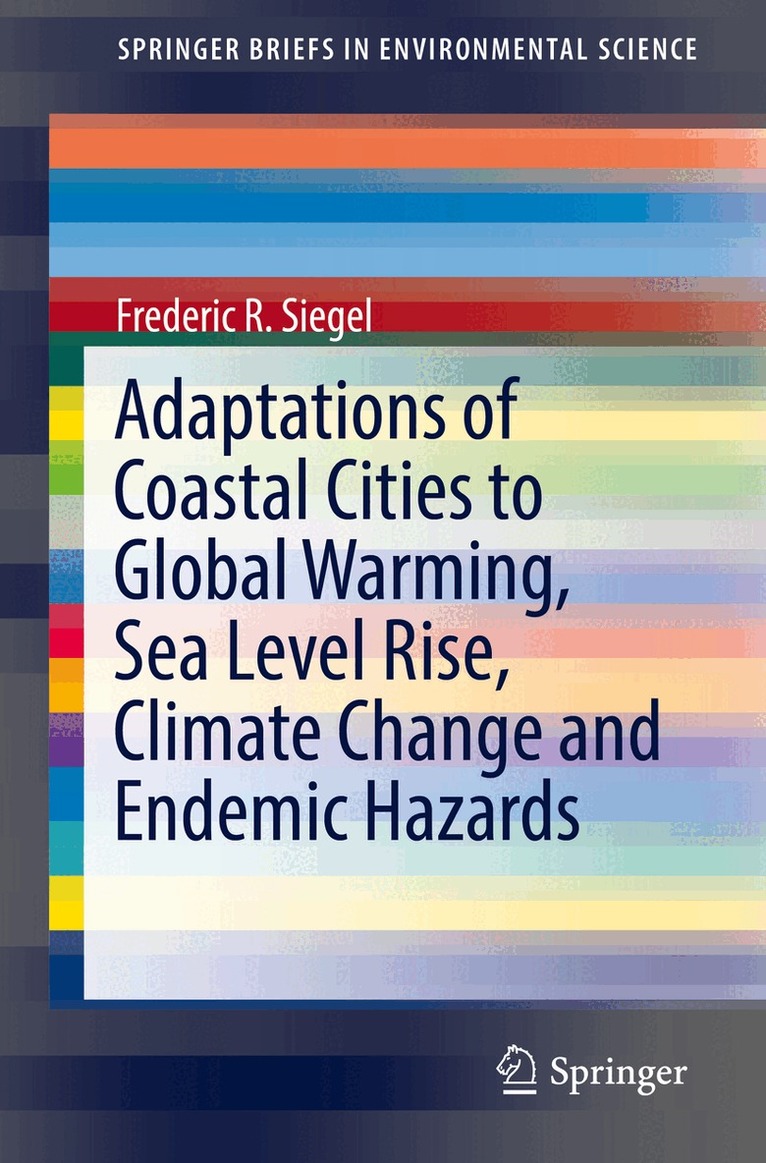
Adaptations of Coastal Cities to Global Warming, Sea Level Rise, Climate Change and Endemic Hazards
Häftad, Engelska, 2019
536 kr
Skickas inom 10-15 vardagar
This book discusses the identification of, solutions to, and management of threats to high population coastal cities and their seaports from global warming, climate change and endemic hazards.
1 381 kr
Skickas inom 10-15 vardagar
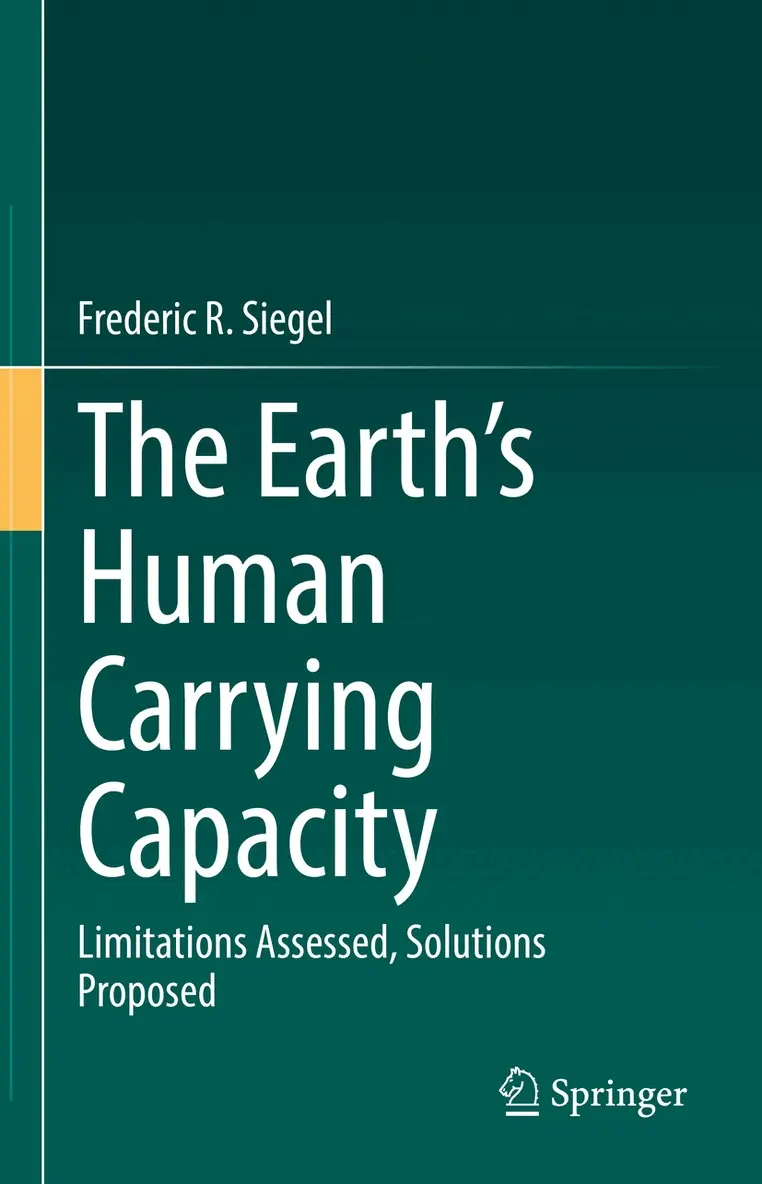
This book focuses on the Earth’s carrying capacity to service the needs of its human populations as well as preserve the ecosystems that provide natural resources that sustain life and support human activities in 2020 and later in the century (2050 and beyond).
1 276 kr
Skickas inom 10-15 vardagar
This book focuses on the Earth’s carrying capacity to service the needs of its human populations as well as preserve the ecosystems that provide natural resources that sustain life and support human activities in 2020 and later in the century (2050 and beyond).
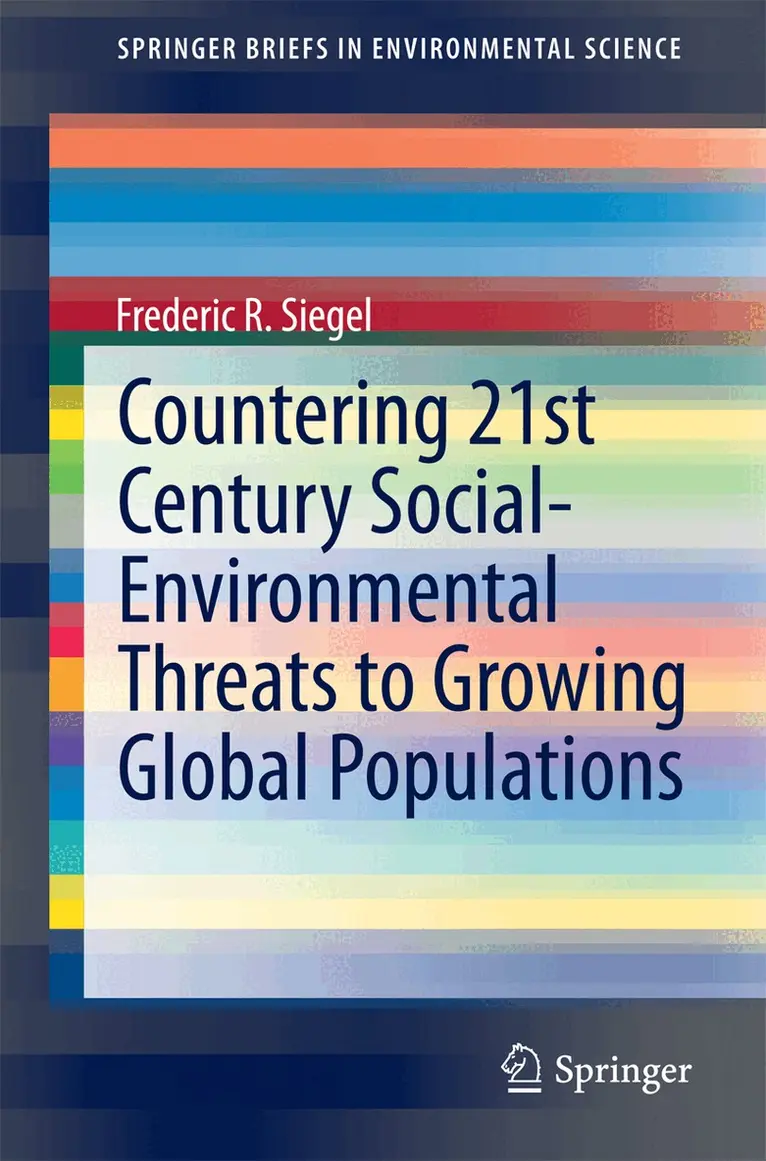
Countering 21st Century Social-Environmental Threats to Growing Global Populations
Häftad, Engelska, 2014
536 kr
Skickas inom 10-15 vardagar
This book brings together in a single volume a grand overview of solutions - political, economic, and scientific - to social and environmental problems that are related to the growth of human populations in areas that can least cope with them now. Through progressive adaptation to social and environmental changes projected for the future, including population growth, global warming/climate change, water deficits, and increasing competition for other natural resources, the world may be able to achieve a fair degree of sustainability for some time into the future.
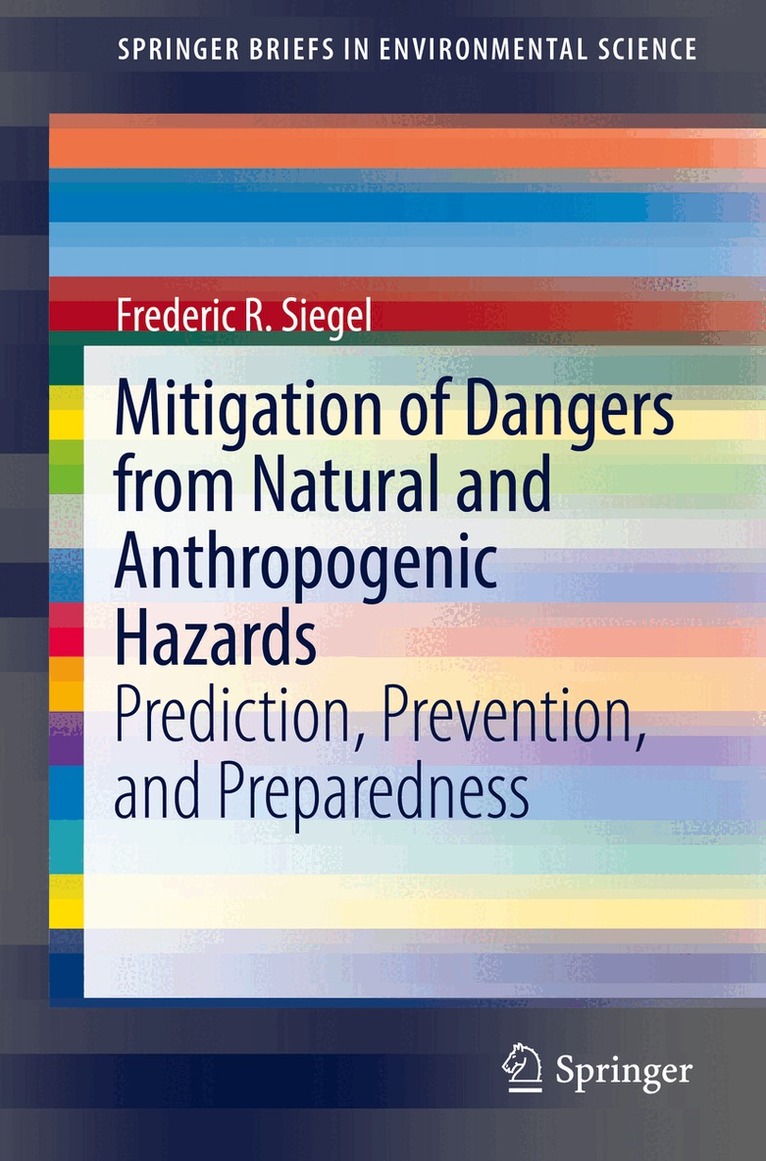
Mitigation of Dangers from Natural and Anthropogenic Hazards
Prediction, Prevention, and Preparedness
Häftad, Engelska, 2016
536 kr
Skickas inom 10-15 vardagar
This book advances a three-step program for mitigation of natural and anthropogenic hazards, addressing mitigation economics and funding possibilities to meet the needs of at risk countries that lack the financial resources to invest in disaster reduction programs. Within the context of mitigation, this book covers prediction-prevention-preparedness for global warming/climate change as existing and progressive processes that create or abet slow developing or rapidly occurring hazards that endanger society such as sea level rise, extreme weather events, threats to food/water security, and the spread of infectious diseases.
588 kr
Skickas inom 10-15 vardagar
This book discusses existing and future global problems of physical, chemical, biological and societal origins faced by increasingly populated cities and mega-cities, and options to mitigate or eliminate them.
536 kr
Skickas inom 10-15 vardagar
Contamination of the earth's ecosystems by potentially toxie metalsl metalloids is a global problem. It will likely grow with our planet's increasing populations and their requirements for natural resources (e. g. , water, food, energy, waste-disposal sites) and metals-based goods. The health impacts of pollution from the ingestion of heavy metals/metalloids via respiration, food, and drinking water are most often long-term and manifest themselves in many ways. These include, for example, disminution of mental acuity, loss of motor control, critieal organ dysfunction, cancer, chronie illnesses and con- comitant suffering, incapacitation, and finally death. The incidence and geographie distribution of disease (epidemiology) has been well-documented historieally and in modern times for toxic metals- triggered diseases in humans, animals and vegetation. The role of the environmental geochemist and colleagues in environ- mental sciences is to scientifically evaluate how to manage metalsl metalloids at sources or in-situ so as to alleviate or eliminate their negative health impacts on living populations.This is initiated by identifying sources and by developing models of the physieal, chem- ieal and biologieal controls on mobilization, interaction, deposition and accumulation of potentially toxie metals/metalloids in source systems and earth ecosystems. Prom this knowledge base, environ- mental scientists (e. g. , geologists, chemists, biologists, environmen- tal engineers, physicists/meteorologists) work together to develop Preface VI concepts and technologieal methodologies to preserve global eco- systems. Their concerted efforts are equally focussed on devising strategems to remediate ecosystems still carrying heavy metals/metal- loids pollutant burdens from ancient and modern societies.
Demands of Expanding Populations and Development Planning
Clean Air, Safe Water, Fertile Soils
Inbunden, Engelska, 2008
1 064 kr
Skickas inom 10-15 vardagar
Population: Answering the Needs and Demands The world’s human populationis 6. 6+ billion people and growing(by 80 million in 2005). Most of the growth is in less developed nations. The Population Reference Bureau (2006) estimates that the global population will reach 7. 9 billion people by 2025. It is projected to stabilize at 9. 2+ billion people by 2050. Governmentsstrive to attract industrial, manufacturing, services, and other projects to advance their economiesandthuscopewithexistingsocial andpoliticalproblemsand futurech- lenges heightened by expanding populations. They are encouraged in these efforts by international lending and development organizations such as the World Bank and the International Finance Corporation. These and other multilateral, regional and sub-regional development banks make funds available for economic and social improvement programs in developing countries (Table p. 1). Well-planned projects can stimulate economic growth and create wealth in a society. This wealth can be used to promote the health, education, and general welfare status of its members, and their employment opportunities even as populations expand. There are many theories that de ne and expound on economic development. Malizia and Feser (1999) summarize the theories in terms of their essential - namics, strengths and weaknesses, and how they are applied to achieve growth. All theories agree that economic advancement is based on investing capital in projects that can ourish and yield nancial gain over extended periods of time.
536 kr
Skickas inom 10-15 vardagar
Contamination of the earth's ecosystems by potentially toxie metalsl metalloids is a global problem. It will likely grow with our planet's increasing populations and their requirements for natural resources (e. g. , water, food, energy, waste-disposal sites) and metals-based goods. The health impacts of pollution from the ingestion of heavy metals/metalloids via respiration, food, and drinking water are most often long-term and manifest themselves in many ways. These include, for example, disminution of mental acuity, loss of motor control, critieal organ dysfunction, cancer, chronie illnesses and con- comitant suffering, incapacitation, and finally death. The incidence and geographie distribution of disease (epidemiology) has been well-documented historieally and in modern times for toxic metals- triggered diseases in humans, animals and vegetation. The role of the environmental geochemist and colleagues in environ- mental sciences is to scientifically evaluate how to manage metalsl metalloids at sources or in-situ so as to alleviate or eliminate their negative health impacts on living populations.This is initiated by identifying sources and by developing models of the physieal, chem- ieal and biologieal controls on mobilization, interaction, deposition and accumulation of potentially toxie metals/metalloids in source systems and earth ecosystems. Prom this knowledge base, environ- mental scientists (e. g. , geologists, chemists, biologists, environmen- tal engineers, physicists/meteorologists) work together to develop Preface VI concepts and technologieal methodologies to preserve global eco- systems. Their concerted efforts are equally focussed on devising strategems to remediate ecosystems still carrying heavy metals/metal- loids pollutant burdens from ancient and modern societies.
Demands of Expanding Populations and Development Planning
Clean Air, Safe Water, Fertile Soils
Häftad, Engelska, 2010
1 064 kr
Skickas inom 10-15 vardagar
Population: Answering the Needs and Demands The world’s human populationis 6. 6+ billion people and growing(by 80 million in 2005). Most of the growth is in less developed nations. The Population Reference Bureau (2006) estimates that the global population will reach 7. 9 billion people by 2025. It is projected to stabilize at 9. 2+ billion people by 2050. Governmentsstrive to attract industrial, manufacturing, services, and other projects to advance their economiesandthuscopewithexistingsocial andpoliticalproblemsand futurech- lenges heightened by expanding populations. They are encouraged in these efforts by international lending and development organizations such as the World Bank and the International Finance Corporation. These and other multilateral, regional and sub-regional development banks make funds available for economic and social improvement programs in developing countries (Table p. 1). Well-planned projects can stimulate economic growth and create wealth in a society. This wealth can be used to promote the health, education, and general welfare status of its members, and their employment opportunities even as populations expand. There are many theories that de ne and expound on economic development. Malizia and Feser (1999) summarize the theories in terms of their essential - namics, strengths and weaknesses, and how they are applied to achieve growth. All theories agree that economic advancement is based on investing capital in projects that can ourish and yield nancial gain over extended periods of time.