Frédéric Sellet – författare
Visar alla böcker från författaren Frédéric Sellet. Handla med fri frakt och snabb leverans.
4 produkter
4 produkter
Häftad, Engelska, 2015
334 kr
Skickas inom 10-15 vardagar
This collection of chapters by archaeologists, anthropologists, ethnoarchaeologists, biological archaeologists, and behavioral ecologists considers how humans have practiced mobility across several continents and thousands of years, raising questions about human adaptation and offering a diversity of approaches for measuring ancient mobility of small-scale societies. Mobility is a critical aspect of human adaptation, and humans are unique in their ability to adapt to an immense range of physical habitats. This capacity is at least partially dependent on strategies of population and labor movement within environments. The number of moves, the distance traveled, the frequency of movement, and the people who move all are relevant as archaeologists and anthropologists bring a variety of tools to bear in reading the vast archaeological record of environmental adaptation.This volume should appeal to professional archaeologists as well as many cultural anthropologists, and will be of special interest to researchers of hunter-gatherer, pastoral, and small-scale agricultural societies.
Inbunden, Engelska, 2017
1 903 kr
Skickas inom 10-15 vardagar
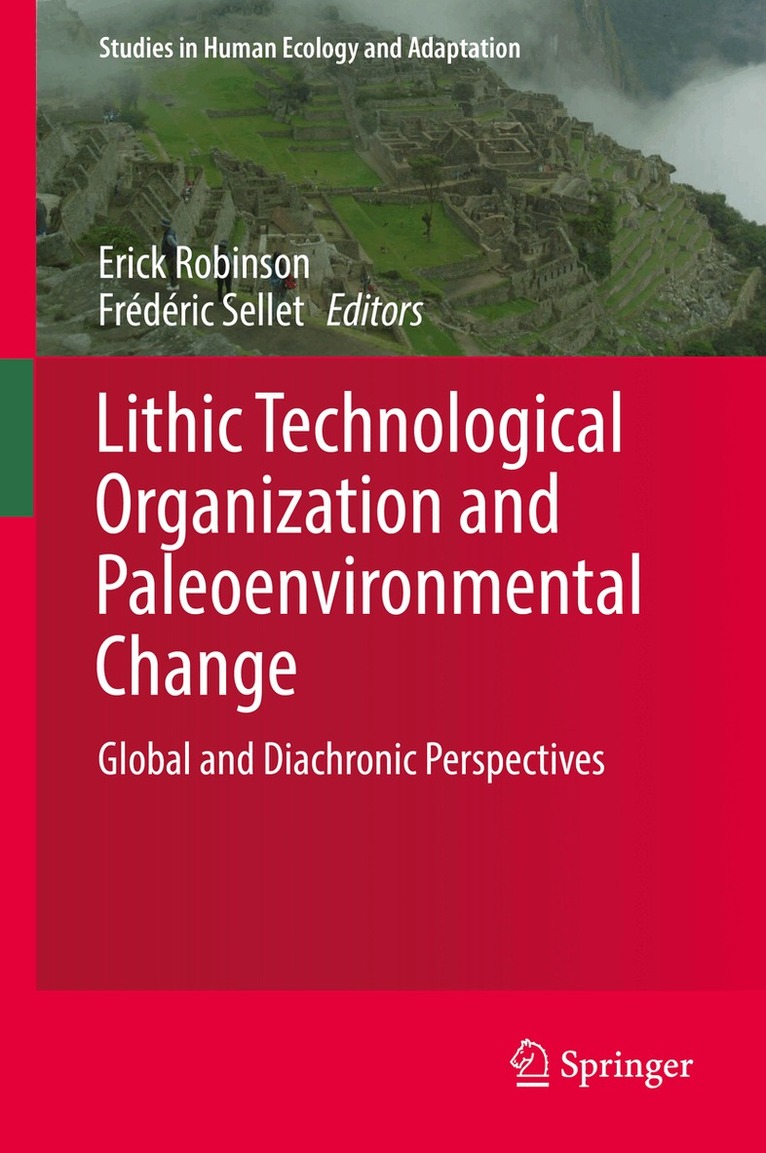
The objective of this edited volume is to bring together a diverse set of analyses to document how small-scale societies responded to paleoenvironmental change based on the evidence of their lithic technologies. The contributions bring together an international forum for interpreting changes in technological organization - embracing a wide range of time periods, geographic regions and methodological approaches. As technology brings more refined information on ancient climates, the research on spatial and temporal variability of paleoenvironmental changes. In turn, this has also broadened considerations of the many ways that prehistoric hunter-gatherers may have responded to fluctuations in resource bases. From an archaeological perspective, stone tools and their associated debitage provide clues to understanding these past choices and decisions, and help to further the investigation into how variable human responses may have been. Despite significant advances in the theory and methodology of lithic technological analysis, there have been few attempts to link these developments to paleoenvironmental research on a global scale.
E-bok
Engelska, 20172 351 kr
Läs direkt efter köp
The objective of this edited volume is to bring together a diverse set of analyses to document how small-scale societies responded to paleoenvironmental change based on the evidence of their lithic technologies. The contributions bring together an international forum for interpreting changes in technological organization - embracing a wide range of time periods, geographic regions and methodological approaches. As technology brings more refined information on ancient climates, the research on spatial and temporal variability of paleoenvironmental changes. In turn, this has also broadened considerations of the many ways that prehistoric hunter-gatherers may have responded to fluctuations in resource bases. From an archaeological perspective, stone tools and their associated debitage provide clues to understanding these past choices and decisions, and help to further the investigation into how variable human responses may have been. Despite significant advances in the theory and methodology of lithic technological analysis, there have been few attempts to link these developments to paleoenvironmental research on a global scale.
Häftad, Engelska, 2018
1 903 kr
Skickas inom 10-15 vardagar
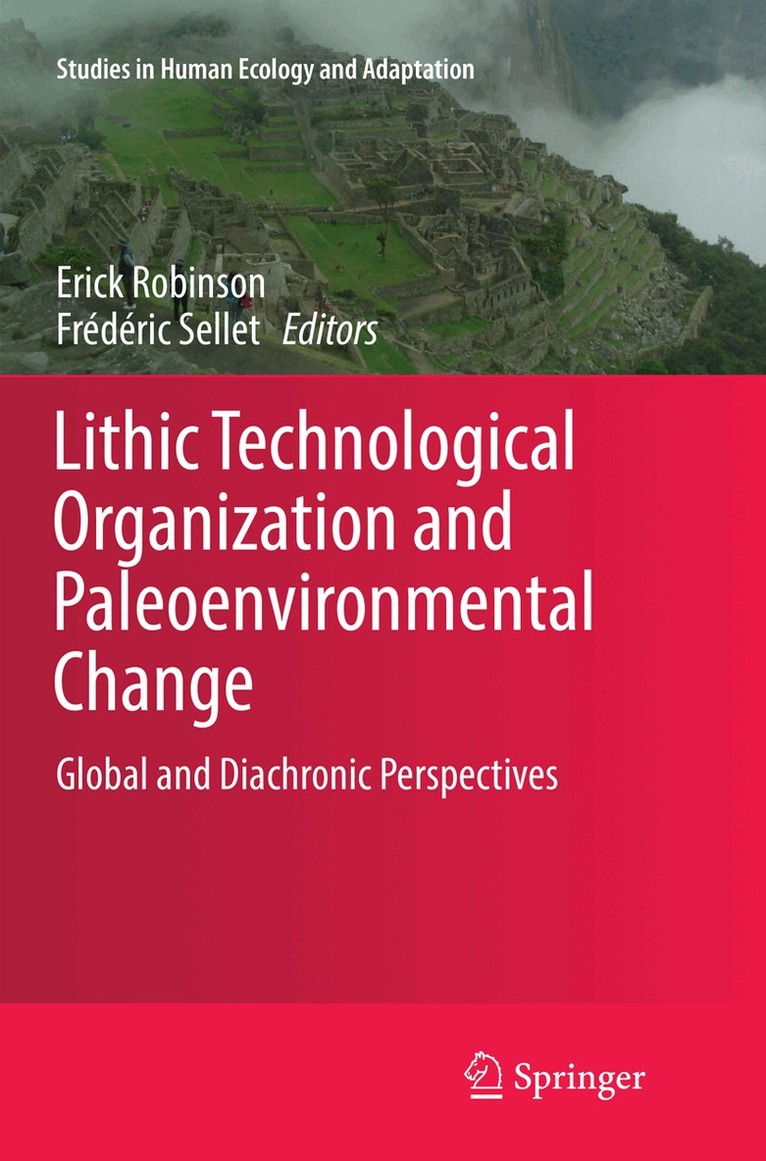
The objective of this edited volume is to bring together a diverse set of analyses to document how small-scale societies responded to paleoenvironmental change based on the evidence of their lithic technologies. The contributions bring together an international forum for interpreting changes in technological organization - embracing a wide range of time periods, geographic regions and methodological approaches. As technology brings more refined information on ancient climates, the research on spatial and temporal variability of paleoenvironmental changes. In turn, this has also broadened considerations of the many ways that prehistoric hunter-gatherers may have responded to fluctuations in resource bases. From an archaeological perspective, stone tools and their associated debitage provide clues to understanding these past choices and decisions, and help to further the investigation into how variable human responses may have been. Despite significant advances in the theory and methodology of lithic technological analysis, there have been few attempts to link these developments to paleoenvironmental research on a global scale.