Frédéric Vallée-Tourangeau - Böcker
Visar alla böcker från författaren Frédéric Vallée-Tourangeau. Handla med fri frakt och snabb leverans.
13 produkter
13 produkter
3 095 kr
Skickas inom 10-15 vardagar
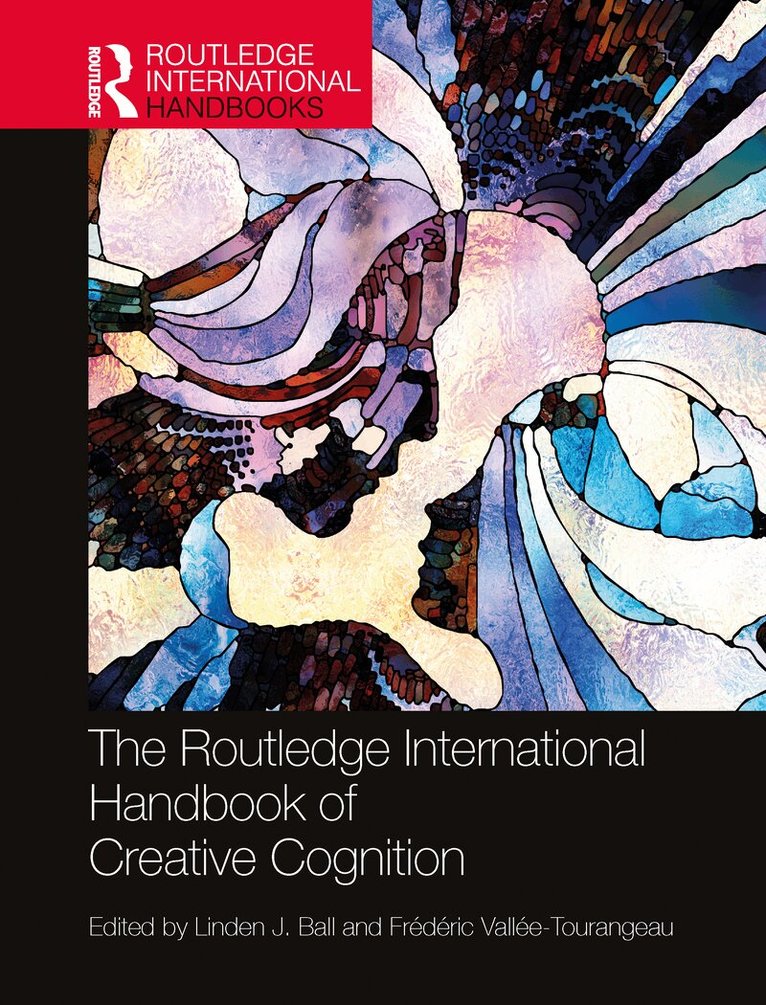
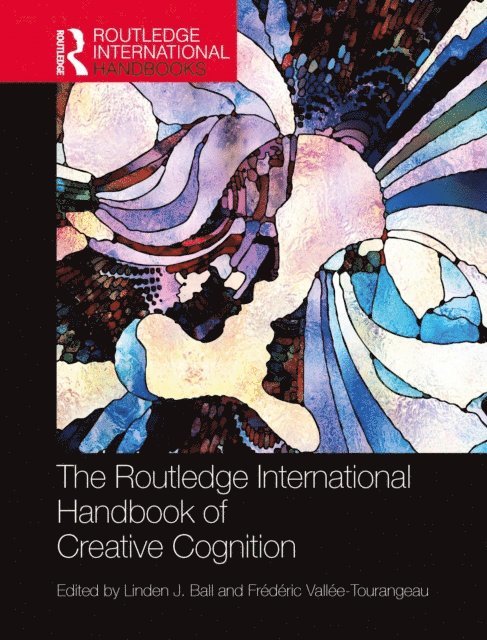
The Routledge International Handbook of Creative Cognition is an authoritative reference work that offers a well-balanced overview of current scholarship across the full breadth of the rapidly expanding field of creative cognition. It contains 43 chapters written by world-leading researchers, covering foundational issues and concepts as well as state-of-the-art research developments.The handbook draws extensively on contemporary work exploring the cognitive representations and processes associated with creativity, whether studied in the laboratory or as it arises in real-world practice in domains such as education, art, science, entrepreneurship, design, and technological innovation. Chapters also examine the sociocognitive and cultural aspects of creativity in teams and organisations, while additionally capturing the latest research on the cognitive neuroscience of creativity.Providing a compelling synopsis of emerging trends and debates in the field of creative cognition and positioning these in relation to established findings and theories, this text provides a clear sense of the way in which new research is challenging traditional viewpoints. It is an essential reading for researchers in the field of creative cognition as well as advanced students wishing to learn more about the latest developments in this important and rapidly growing area of enquiry.
690 kr
Skickas inom 10-15 vardagar
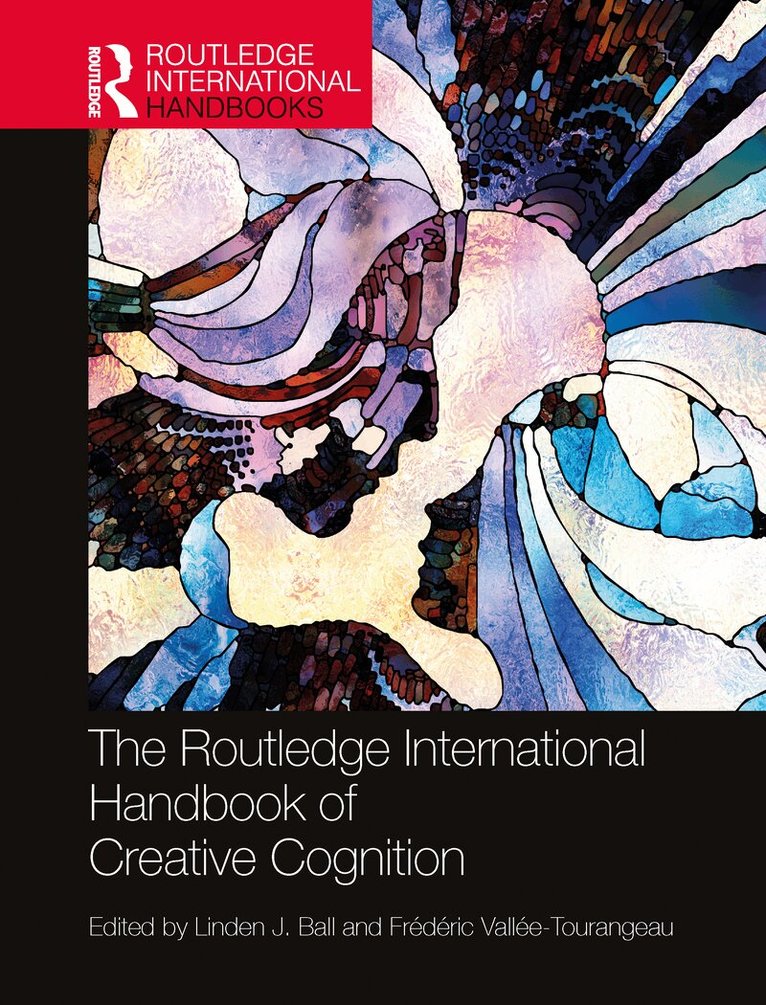
The Routledge International Handbook of Creative Cognition is an authoritative reference work that offers a well-balanced overview of current scholarship across the full breadth of the rapidly expanding field of creative cognition. It contains 43 chapters written by world-leading researchers, covering foundational issues and concepts as well as state-of-the-art research developments.The handbook draws extensively on contemporary work exploring the cognitive representations and processes associated with creativity, whether studied in the laboratory or as it arises in real-world practice in domains such as education, art, science, entrepreneurship, design, and technological innovation. Chapters also examine the sociocognitive and cultural aspects of creativity in teams and organisations, while additionally capturing the latest research on the cognitive neuroscience of creativity.Providing a compelling synopsis of emerging trends and debates in the field of creative cognition and positioning these in relation to established findings and theories, this text provides a clear sense of the way in which new research is challenging traditional viewpoints. It is an essential reading for researchers in the field of creative cognition as well as advanced students wishing to learn more about the latest developments in this important and rapidly growing area of enquiry.
227 kr
Skickas inom 7-10 vardagar
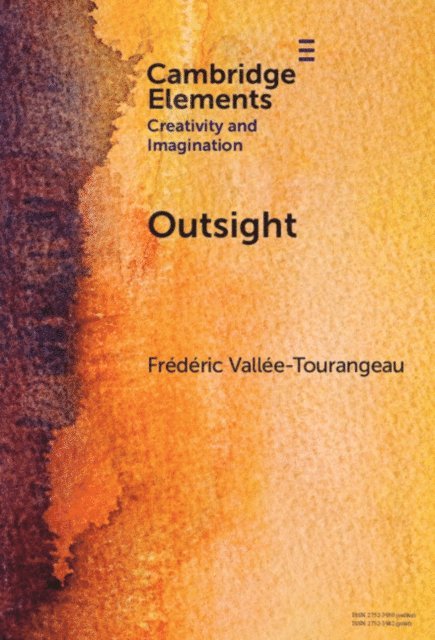
The way we understand creativity in psychology is built on a fundamental asymmetry between people and objects: people have thoughts, intentions, and the ability to act, while objects lack these qualities. However, despite this distinction, objects that are created communicate with their creator. During the process of creation, objects being formed by the creator take on certain characteristics and behave in certain ways, resulting in a kind of conversation between the person working on solving a problem and the results physically produced. In essence, while the traditional view focuses on the person's thoughts and intentions as the driving force of creativity, the dialogue between the creative individual and the evolving product of their work is overlooked. This Element proposes a methodology and theoretical vocabulary that restore the role of objects in the dynamic unfolding of creative problem solving. This title is also available as Open Access on Cambridge Core.
731 kr
Skickas inom 7-10 vardagar
The way we understand creativity in psychology is built on a fundamental asymmetry between people and objects: people have thoughts, intentions, and the ability to act, while objects lack these qualities. However, despite this distinction, objects that are created communicate with their creator. During the process of creation, objects being formed by the creator take on certain characteristics and behave in certain ways, resulting in a kind of conversation between the person working on solving a problem and the results physically produced. In essence, while the traditional view focuses on the person's thoughts and intentions as the driving force of creativity, the dialogue between the creative individual and the evolving product of their work is overlooked. This Element proposes a methodology and theoretical vocabulary that restore the role of objects in the dynamic unfolding of creative problem solving. This title is also available as Open Access on Cambridge Core.
532 kr
Skickas inom 10-15 vardagar
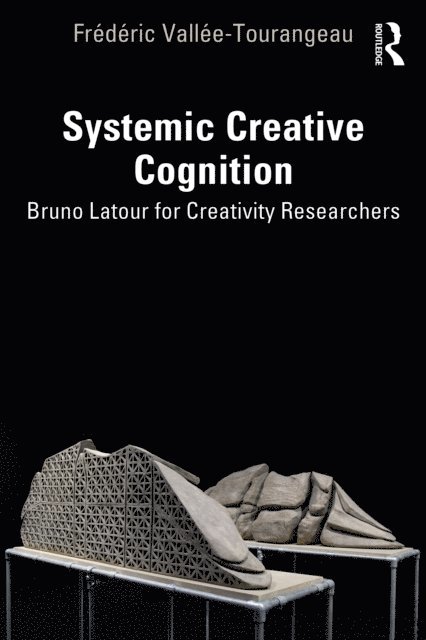
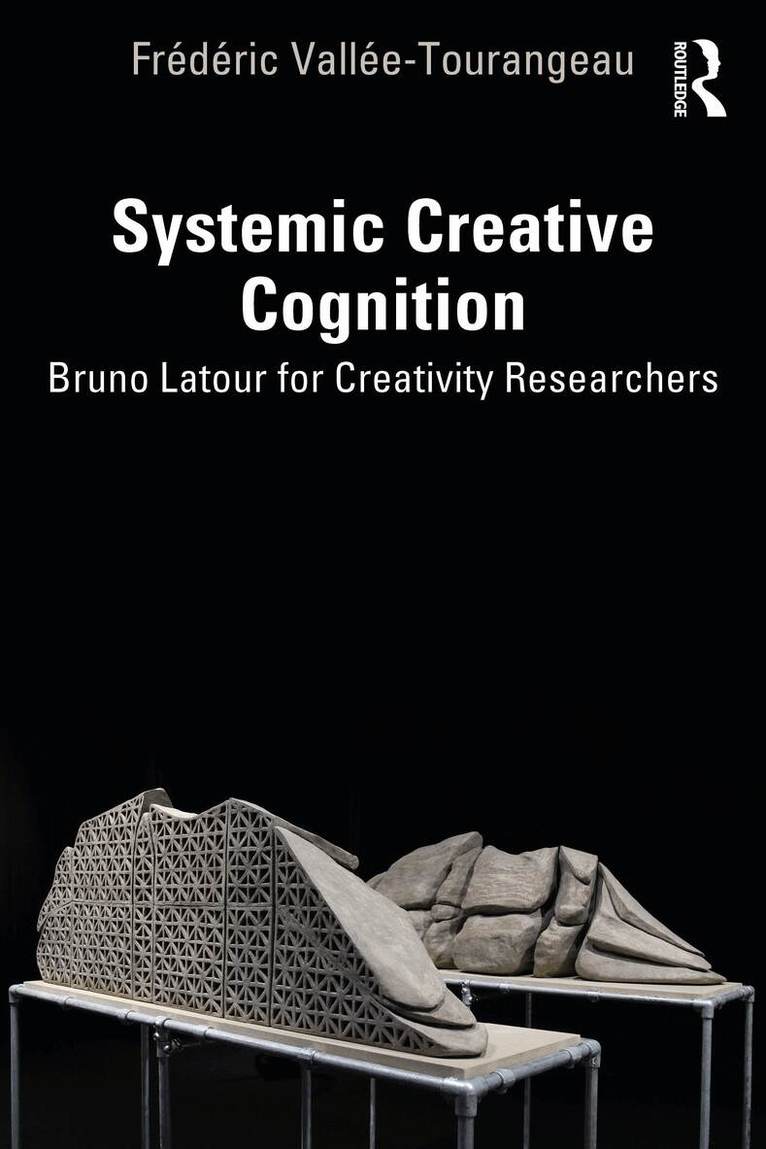
This unique book explores how the conceptual framework of science and technology studies can be applied to creativity and problem-solving research, drawing from and building on the work of Bruno Latour. Using an interdisciplinary approach, the book outlines new research practices to capture the origin of ideas. Latour enjoins researchers to adopt a resolutely ethnographic methodology to trace the process by which a creative product, be it a technological innovation or a work of art, is constructed, or instaured. Creativity is explained in terms of the microprocesses that guide and constrain the development of a new idea. These microprocesses operate on and are triggered by material objects, be they maquettes, models, drafts or data representations. The resulting perspective is systemic, casting creativity as emerging from the interaction among heterogenous elements and actants. The book provides critical reflections on problem-solving research and stresses the importance of William James’s radical empiricism and the primary role of experience. The book redefines the concept of insight as an outcome rather than the cause of a new idea. The book uses the work of Latour to cast a new light on the field of creative cognition and will be an essential read for researchers and students of creativity and cognition. It will also be relevant for anyone interested in understanding the origin of creativity, ideas and thoughts.
2 044 kr
Skickas inom 10-15 vardagar
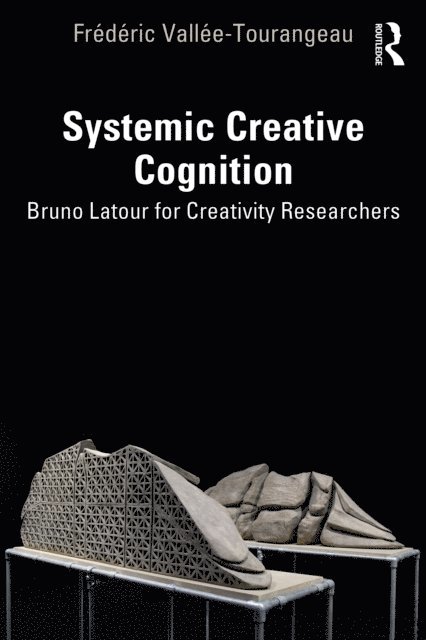
This unique book explores how the conceptual framework of science and technology studies can be applied to creativity and problem-solving research, drawing from and building on the work of Bruno Latour. Using an interdisciplinary approach, the book outlines new research practices to capture the origin of ideas. Latour enjoins researchers to adopt a resolutely ethnographic methodology to trace the process by which a creative product, be it a technological innovation or a work of art, is constructed, or instaured. Creativity is explained in terms of the microprocesses that guide and constrain the development of a new idea. These microprocesses operate on and are triggered by material objects, be they maquettes, models, drafts or data representations. The resulting perspective is systemic, casting creativity as emerging from the interaction among heterogenous elements and actants. The book provides critical reflections on problem-solving research and stresses the importance of William James’s radical empiricism and the primary role of experience. The book redefines the concept of insight as an outcome rather than the cause of a new idea. The book uses the work of Latour to cast a new light on the field of creative cognition and will be an essential read for researchers and students of creativity and cognition. It will also be relevant for anyone interested in understanding the origin of creativity, ideas and thoughts.
2 044 kr
Skickas inom 10-15 vardagar
Research on insight problem solving examines how new ideas are generated to solve problems that initially resist the application of prior knowledge or analogue solutions. In the laboratory, insight problems are designed to create an impasse; overcoming the impasse is sometimes accompanied by a distinctive phenomenological experience, the so-called Aha! moment. Insight: On the Origins of New Ideas presents research that captures these episodes of insight under laboratory conditions and informs models that account for their emergence.Descriptions and analyses of episodes of discovery both in and out of the laboratory are included to provide a general overview of insight. Featuring contributions from leading researchers, the volume debates the relative importance of intelligence and working memory, the development of an alternative interpretation of the problem based on deliberate analyses and heuristics, and unconscious inferences in the emergence of insight. These discussions generate new testable hypotheses to shed light on the cognitive processes underpinning insight, along with concrete methodological recommendations that, together, map a productive programme of future research.This book will be of interest to students and researchers of thinking and reasoning - specifically those interested in insight and creative problem solving.
611 kr
Skickas inom 10-15 vardagar
Research on insight problem solving examines how new ideas are generated to solve problems that initially resist the application of prior knowledge or analogue solutions. In the laboratory, insight problems are designed to create an impasse; overcoming the impasse is sometimes accompanied by a distinctive phenomenological experience, the so-called Aha! moment. Insight: On the Origins of New Ideas presents research that captures these episodes of insight under laboratory conditions and informs models that account for their emergence.Descriptions and analyses of episodes of discovery both in and out of the laboratory are included to provide a general overview of insight. Featuring contributions from leading researchers, the volume debates the relative importance of intelligence and working memory, the development of an alternative interpretation of the problem based on deliberate analyses and heuristics, and unconscious inferences in the emergence of insight. These discussions generate new testable hypotheses to shed light on the cognitive processes underpinning insight, along with concrete methodological recommendations that, together, map a productive programme of future research.This book will be of interest to students and researchers of thinking and reasoning - specifically those interested in insight and creative problem solving.
1 451 kr
Skickas inom 5-8 vardagar
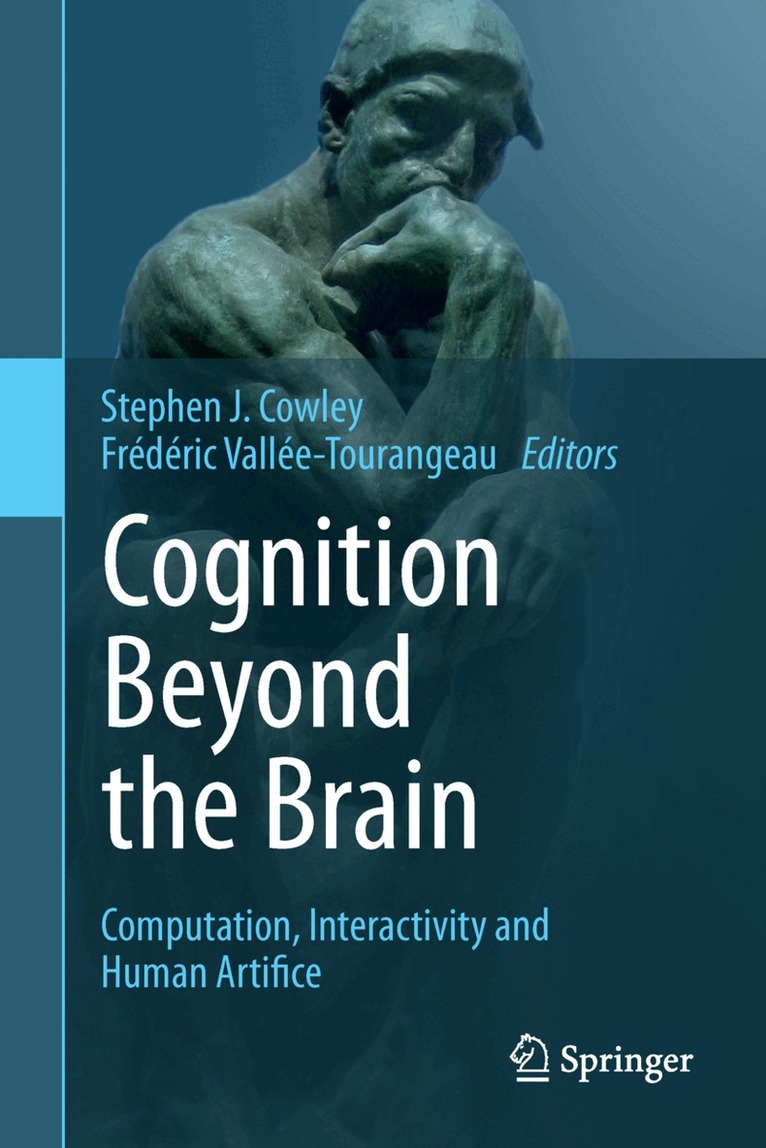
Cognition Beyond the Brain challenges neurocentrism by advocating a systemic view of cognition based on investigating how action shapes the experience of thinking. The systemic view steers between extended functionalism and enactivism by stressing how living beings connect bodies, technologies, language and culture. Since human thinking depends on a cultural ecology, people connect biologically-based powers with extended systems and, by so doing, they constitute cognitive systems that reach across the skin. Biological interpretation exploits extended functional systems.Illustrating distributed cognition, one set of chapters focus on computer mediated trust, work at a construction site, judgement aggregation and crime scene investigation. Turning to how bodies manufacture skills, the remaining chapters focus on interactivity or sense-saturated coordination. The feeling of doing is crucial to solving maths problems, learning about X rays, finding an invoice number, or launching a warhead in a film. People both participate in extended systems and exert individual responsibility. Brains manufacture a now to which selves are anchored: people can act automatically or, at times, vary habits and choose to author actions. In ontogenesis, a systemic view permits rationality to be seen as gaining mastery over world-side resources. Much evidence and argument thus speaks for reconnecting the study of computation, interactivity and human artifice. Taken together, this can drive a networks revolution that gives due cognitive importance to the perceivable world that lies beyond the brain.Cognition Beyond the Brain is a valuable reference for researchers, practitioners and graduate students within the fields of Computer Science, Psychology, Linguistics and Cognitive Science.
1 451 kr
Skickas inom 5-8 vardagar
Cognition Beyond the Brain challenges neurocentrism by advocating a systemic view of cognition based on investigating how action shapes the experience of thinking. The systemic view steers between extended functionalism and enactivism by stressing how living beings connect bodies, technologies, language and culture. Since human thinking depends on a cultural ecology, people connect biologically-based powers with extended systems and, by so doing, they constitute cognitive systems that reach across the skin. Biological interpretation exploits extended functional systems.Illustrating distributed cognition, one set of chapters focus on computer mediated trust, work at a construction site, judgement aggregation and crime scene investigation. Turning to how bodies manufacture skills, the remaining chapters focus on interactivity or sense-saturated coordination. The feeling of doing is crucial to solving maths problems, learning about X rays, finding an invoice number, or launching a warhead in a film. People both participate in extended systems and exert individual responsibility. Brains manufacture a now to which selves are anchored: people can act automatically or, at times, vary habits and choose to author actions. In ontogenesis, a systemic view permits rationality to be seen as gaining mastery over world-side resources. Much evidence and argument thus speaks for reconnecting the study of computation, interactivity and human artifice. Taken together, this can drive a networks revolution that gives due cognitive importance to the perceivable world that lies beyond the brain.Cognition Beyond the Brain is a valuable reference for researchers, practitioners and graduate students within the fields of Computer Science, Psychology, Linguistics and Cognitive Science.
334 kr
Skickas inom 10-15 vardagar
This open access book offers a critical appraisal of psychological research on creativity and insight, challenging the tautology that creative people have creative ideas. Instead, it demonstrates how insights emerge through interactive engagement with manipulable objects—physical or digital.The author outlines an alternative methodology to trace the co-constitutive interaction between people and things. Using video analysis, he reveals creativity as distributed across person-object systems, with participants accomplishing insight through observable practices: moving, constructing, responding to what emerges. The focus shifts from analyzing cognitive processes to exploring how ideas stem from interaction with prototypes. Causal directionality is reversed: through making, ideas are discovered. A groundbreaking reflection on creativity and its dialogue with objects, this short monograph is an essential read for researchers in cognitive psychology, creativity studies, design, business, innovation management, and cognitive ethnography.
1 381 kr
Skickas inom 10-15 vardagar
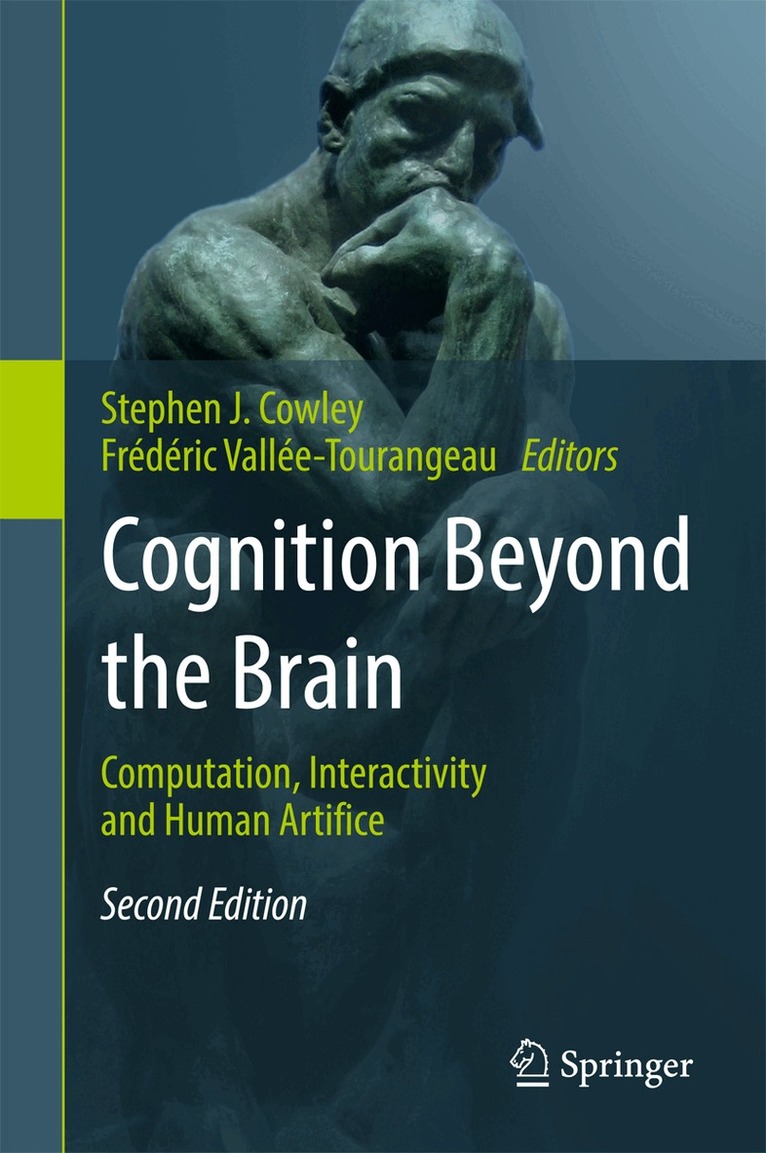
This book challenges neurocentrism by advocating a systemic view of cognition based on investigating how action shapes the experience of thinking, placing interactivity at its heart. This systemic viewpoint makes three main claims. First, that many elaborate cognitive skills like language, problem solving and human-computer interaction (HCI) are based in sense-saturated coordination or interactivity. Second, interactivity produces a tightly woven scaffold of resources, some internal to the agent and others external, that elevates and transforms thinking. Third, human agents entwine brains, bodies and their surroundings as they manage multi-scalar dynamics.This new edition continues to demonstrate how a systemic perspective casts a productive light on thinking in applied domains such as crime scene analysis, the use of information technology in construction, and computer-meditated trusts and presents new studies on the cognitive ecology of the web, multi-scalar temporal and organisational cognition and the importance of interactive material engagement in digital architecture. Authors use various scales of the systemic viewpoint to illustrate how bodies and artefacts shape thinking, but in all cases the experience of materiality is meshed with activity that involves the world beyond the body.Cognition Beyond the Brain is a valuable reference for researchers, practitioners and graduate students within the fields of Computer Science, Psychology, Linguistics and Cognitive Sciences.
1 342 kr
Skickas inom 10-15 vardagar
This book challenges neurocentrism by advocating a systemic view of cognition based on investigating how action shapes the experience of thinking, placing interactivity at its heart. This systemic viewpoint makes three main claims. First, that many elaborate cognitive skills like language, problem solving and human-computer interaction (HCI) are based in sense-saturated coordination or interactivity. Second, interactivity produces a tightly woven scaffold of resources, some internal to the agent and others external, that elevates and transforms thinking. Third, human agents entwine brains, bodies and their surroundings as they manage multi-scalar dynamics.This new edition continues to demonstrate how a systemic perspective casts a productive light on thinking in applied domains such as crime scene analysis, the use of information technology in construction, and computer-meditated trusts and presents new studies on the cognitive ecology of the web, multi-scalar temporal and organisational cognition and the importance of interactive material engagement in digital architecture. Authors use various scales of the systemic viewpoint to illustrate how bodies and artefacts shape thinking, but in all cases the experience of materiality is meshed with activity that involves the world beyond the body.Cognition Beyond the Brain is a valuable reference for researchers, practitioners and graduate students within the fields of Computer Science, Psychology, Linguistics and Cognitive Sciences.