Frederick P. Rivara - Böcker
Visar alla böcker från författaren Frederick P. Rivara. Handla med fri frakt och snabb leverans.
3 produkter
3 produkter
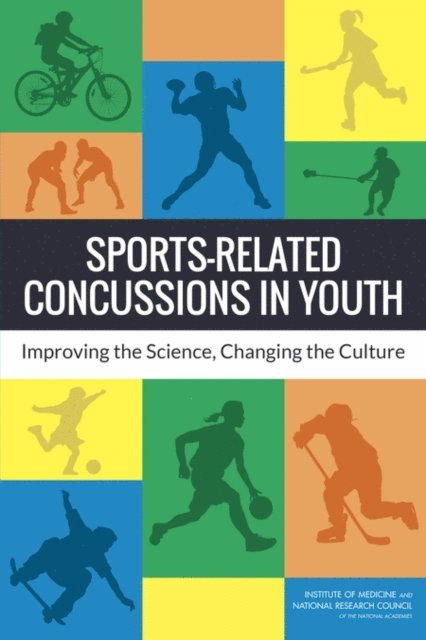
Sports-Related Concussions in Youth
Improving the Science, Changing the Culture
Häftad, Engelska, 2014
773 kr
Tillfälligt slut
In the past decade, few subjects at the intersection of medicine and sports have generated as much public interest as sports-related concussions - especially among youth. Despite growing awareness of sports-related concussions and campaigns to educate athletes, coaches, physicians, and parents of young athletes about concussion recognition and management, confusion and controversy persist in many areas. Currently, diagnosis is based primarily on the symptoms reported by the individual rather than on objective diagnostic markers, and there is little empirical evidence for the optimal degree and duration of physical rest needed to promote recovery or the best timing and approach for returning to full physical activity. Sports-Related Concussions in Youth: Improving the Science, Changing the Culture reviews the science of sports-related concussions in youth from elementary school through young adulthood, as well as in military personnel and their dependents.This report recommends actions that can be taken by a range of audiences - including research funding agencies, legislatures, state and school superintendents and athletic directors, military organizations, and equipment manufacturers, as well as youth who participate in sports and their parents - to improve what is known about concussions and to reduce their occurrence. Sports-Related Concussions in Youth finds that while some studies provide useful information, much remains unknown about the extent of concussions in youth; how to diagnose, manage, and prevent concussions; and the short- and long-term consequences of concussions as well as repetitive head impacts that do not result in concussion symptoms. The culture of sports negatively influences athletes' self-reporting of concussion symptoms and their adherence to return-to-play guidance. Athletes, their teammates, and, in some cases, coaches and parents may not fully appreciate the health threats posed by concussions. Similarly, military recruits are immersed in a culture that includes devotion to duty and service before self, and the critical nature of concussions may often go unheeded.According to Sports-Related Concussions in Youth, if the youth sports community can adopt the belief that concussions are serious injuries and emphasize care for players with concussions until they are fully recovered, then the culture in which these athletes perform and compete will become much safer. Improving understanding of the extent, causes, effects, and prevention of sports-related concussions is vitally important for the health and well-being of youth athletes. The findings and recommendations in this report set a direction for research to reach this goal.
785 kr
Skickas inom 7-10 vardagar
In the twentieth-century, evidence-based injury prevention and control strategies have contributed to a substantial decline in the number of deaths associated with injury. However, researchers in the field of injury prevention have often gathered their study methods from other disciplines; it can be difficult for injury investigators to locate all of the research tools that can be applied to problems related to injury. Injury Control: A Guide to Research and Program Evaluation addresses the growing need for a comprehensive source of knowledge on all research designs available for injury control and research. Included in this accessible guidebook is information about choices in study design, details about study execution and discussion of specific tools such as injury severity scales, programme evaluations and systematic reviews. Epidemiologists, health service investigators, trauma surgeons and emergency medicine physicians will find this a useful source for understanding, reviewing and conducting research related to injuries.
2 159 kr
Skickas inom 7-10 vardagar
In the twentieth-century, evidence-based injury prevention and control strategies have contributed to a substantial decline in the number of deaths associated with injury. However, researchers in the field of injury prevention have often gathered their study methods from other disciplines; it can be difficult for injury investigators to locate all of the research tools that can be applied to problems related to injury. Injury Control: A Guide to Research and Program Evaluation addresses the growing need for a comprehensive source of knowledge on all research designs available for injury control and research. Included in this accessible guidebook is information about choices in study design, details about study execution and discussion of specific tools such as injury severity scales, programme evaluations and systematic reviews. Epidemiologists, health service investigators, trauma surgeons and emergency medicine physicians will find this a useful source for understanding, reviewing and conducting research related to injuries.