Frederick Rauscher – författare
Visar alla böcker från författaren Frederick Rauscher. Handla med fri frakt och snabb leverans.
15 produkter
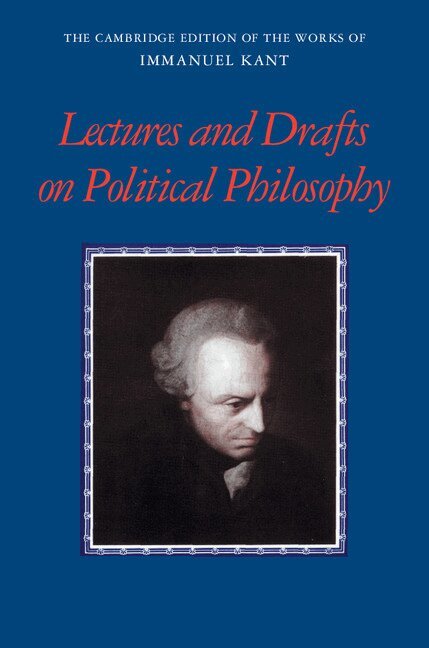
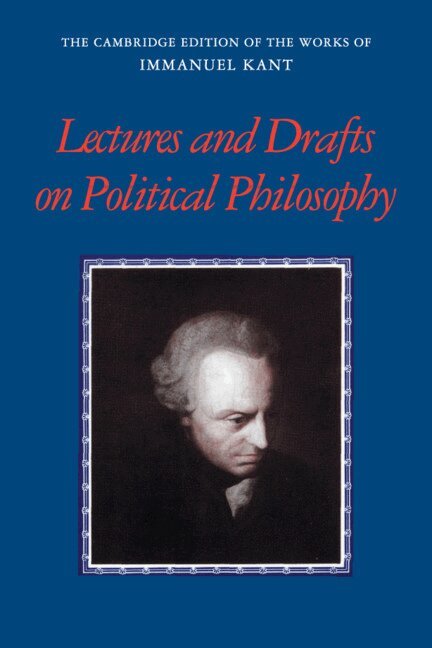
Kant: Lectures and Drafts on Political Philosophy
Inbunden, 2016
2203 kr
Lägg i varukorg
This book is the first translation into English of the Reflections which Kant wrote whilst formulating his ideas in political philosophy: the preparatory drafts for Theory and Practice, Toward Perpetual Peace, the Doctrine of Right, and Conflict of the Faculties; and the only surviving student …
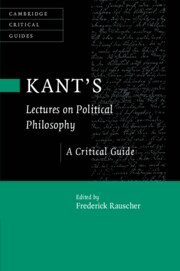
Kant's Lectures on Political Philosophy
A Critical Guide
Inbunden, 2025
1450 kr
Lägg i varukorg
A decade prior to his main publications in political philosophy, Kant presented his views on the topic in his 1784 course lectures on natural right. This Critical Guide examines this only surviving student transcript of these lectures, which shows how Kant's political philosophy developed in …
Kant's Lectures on Political Philosophy
A Critical Guide
Häftad, 2026
420 kr
Kommande
A decade prior to his main publications in political philosophy, Kant presented his views on the topic in his 1784 course lectures on natural right. This Critical Guide examines this only surviving student transcript of these lectures, which shows how Kant's political philosophy developed in …
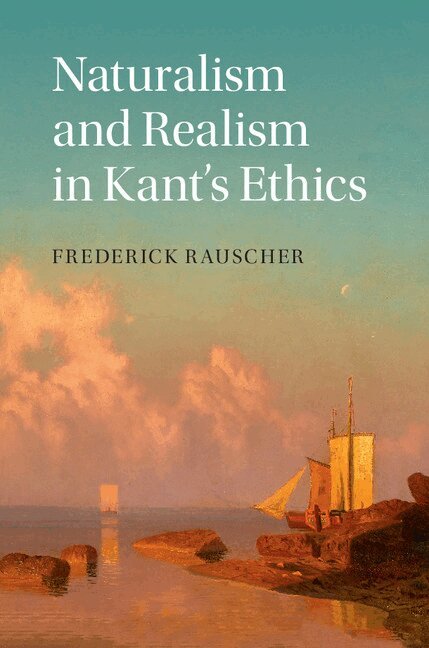
Naturalism and Realism in Kant's Ethics
Inbunden, 2015
1481 kr
Lägg i varukorg
In this comprehensive assessment of Kant's metaethics, Frederick Rauscher shows that Kant is a moral idealist rather than a moral realist and argues that Kant's ethics does not require metaphysical commitments that go beyond nature. Rauscher frames the argument in the context of Kant's …
Naturalism and Realism in Kant's Ethics
Häftad, 2018
569 kr
Lägg i varukorg
In this comprehensive assessment of Kant's metaethics, Frederick Rauscher shows that Kant is a moral idealist rather than a moral realist and argues that Kant's ethics does not require metaphysical commitments that go beyond nature. Rauscher frames the argument in the context of Kant's …
Kant: Lectures and Drafts on Political Philosophy
Häftad, 2020
716 kr
Lägg i varukorg
This book is the first translation into English of the Reflections which Kant wrote whilst formulating his ideas in political philosophy: the preparatory drafts for Theory and Practice, Toward Perpetual Peace, the Doctrine of Right, and Conflict of the Faculties; and the only surviving student …
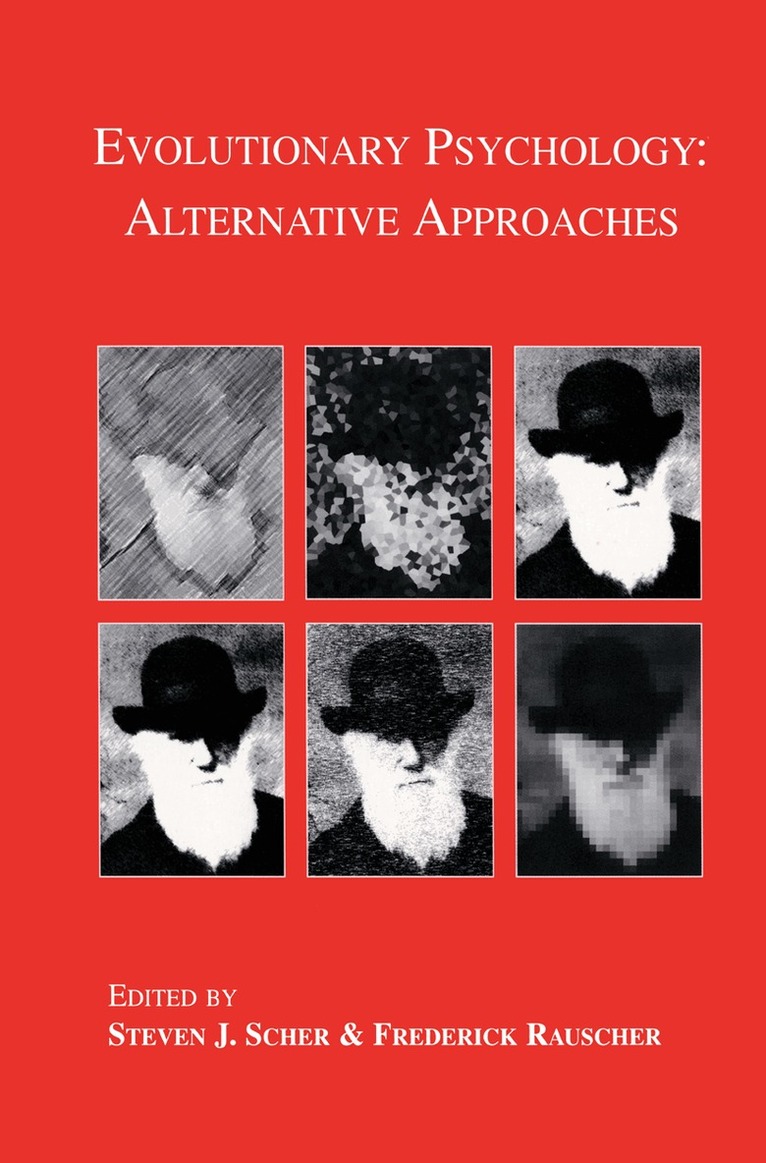
Evolutionary Psychology
Alternative Approaches
Av Steven J. Scher, Frederick Rauscher
Inbunden, 2002
1067 kr
Lägg i varukorg
Evolutionary psychology has been dominated by one particular method for studying the mind and behavior. This is the first book to both question that monopoly and suggest a broad range of particular alternatives. Psychologists, philosophers, biologists, anthropologists, and others offer different …
Evolutionary Psychology
Alternative Approaches
Av Steven J. Scher, Frederick Rauscher
Häftad, 2012
1067 kr
Lägg i varukorg
Evolutionary psychology has been dominated by one particular method for studying the mind and behavior. This is the first book to both question that monopoly and suggest a broad range of particular alternatives. Psychologists, philosophers, biologists, anthropologists, and others offer different …
Evolutionary Psychology
Alternative Approaches
Av Frederick Rauscher, Steven J. Scher
E-bok, 2012
1418 kr
Lägg i varukorg
Evolutionary psychology has been dominated by one particular method for studying the mind and behavior. This is the first book to both question that monopoly and suggest a broad range of particular alternatives. Psychologists, philosophers, biologists, anthropologists, and others offer different …
Kant in Brazil
Av Frederick Rauscher, Daniel Omar Perez
Häftad, 2012
465 kr
Lägg i varukorg
A selection of the best papers written by Brazilian Kant scholars.Kant in Brazil is a collected volume of essays conceived at the 2005 International Kant Congress in Sao Paulo as a way to make accessible to Anglophone Kant scholars some of the best work on Kant produced by Brazilian scholars. The …
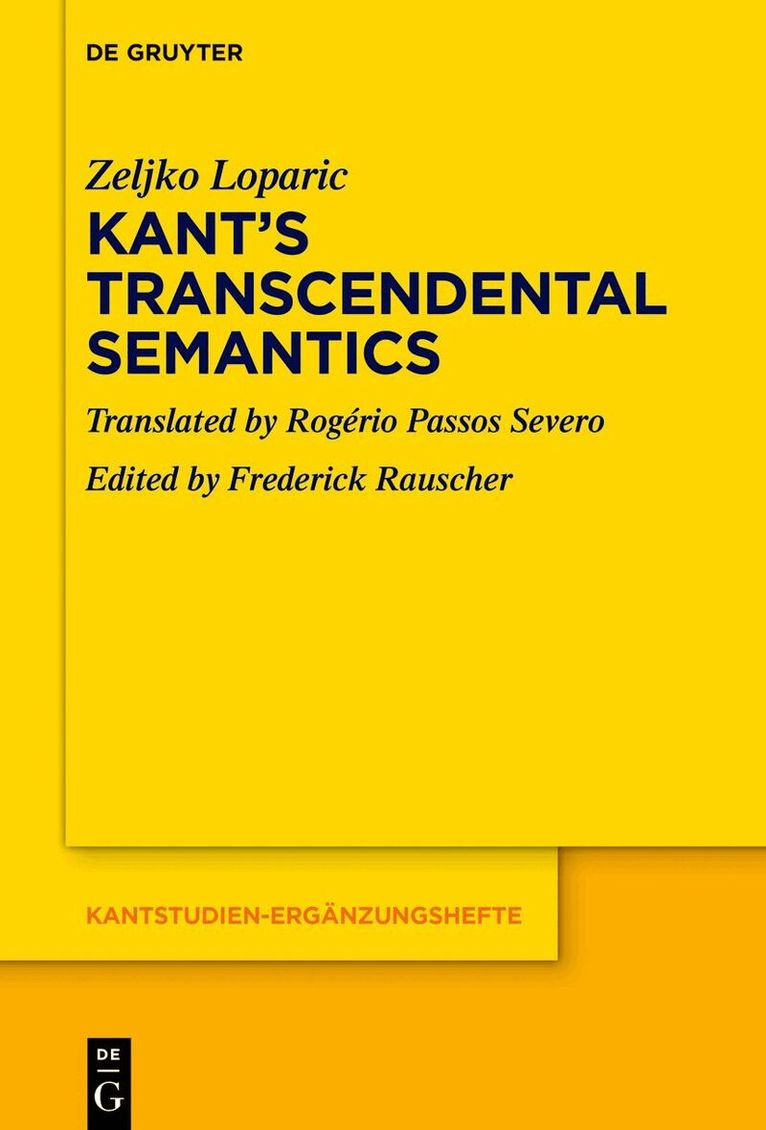
Kant’s Transcendental Semantics
Av Zeljko Loparic, Frederick Rauscher
Inbunden, 2024
1829 kr
Lägg i varukorg
Kant’s Transcendental Semantics is a translation of the most influential monograph on Kant published in Brazil, one that launched the “Semantic School” in a country with a thriving tradition of Kant scholarship. Zeljko Loparic differs from most interpreters of the Critique of Pure Reason in …
Kant's Transcendental Semantics
Av Zeljko Loparic, Frederick Rauscher
E-bok, 2024
1526 kr
Lägg i varukorg
Kant’s Transcendental Semantics is a translation of the most influential monograph on Kant published in Brazil, one that launched the “Semantic School” in a country with a thriving tradition of Kant scholarship. Zeljko Loparic differs from most interpreters of the Critique of Pure Reason in …
Kant's Transcendental Semantics
Av Zeljko Loparic, Frederick Rauscher
E-bok, 2024
1526 kr
Lägg i varukorg
Kant’s Transcendental Semantics is a translation of the most influential monograph on Kant published in Brazil, one that launched the “Semantic School” in a country with a thriving tradition of Kant scholarship. Zeljko Loparic differs from most interpreters of the Critique of Pure Reason in …