Frederick Swanson – författare
Visar alla böcker från författaren Frederick Swanson. Handla med fri frakt och snabb leverans.
3 produkter
3 produkter
Häftad, Engelska, 2002
504 kr
Skickas inom 5-8 vardagar
A central goal of transportation is the delivery of safe and efficient services with minimal environmental impact. In practice, though, human mobility has flourished while nature has suffered. Awarness of the environmental impacts of roads is increasing, yet information remains scarce for those interested in studying, understanding, or minimizing the ecological effects of roads and vehicles. Road Ecology addresses that shortcoming by elevating previously localized and fragmented knowledge into a broad and inclusive framework for understanding and developing solutions. The book brings together fourteen leading ecologists and transportation experts to articulate state-of-the-science road ecology principles and presents specific examples that demonstrate the application of those principles.
Inbunden, Engelska, 2011
356 kr
Skickas inom 5-8 vardagar
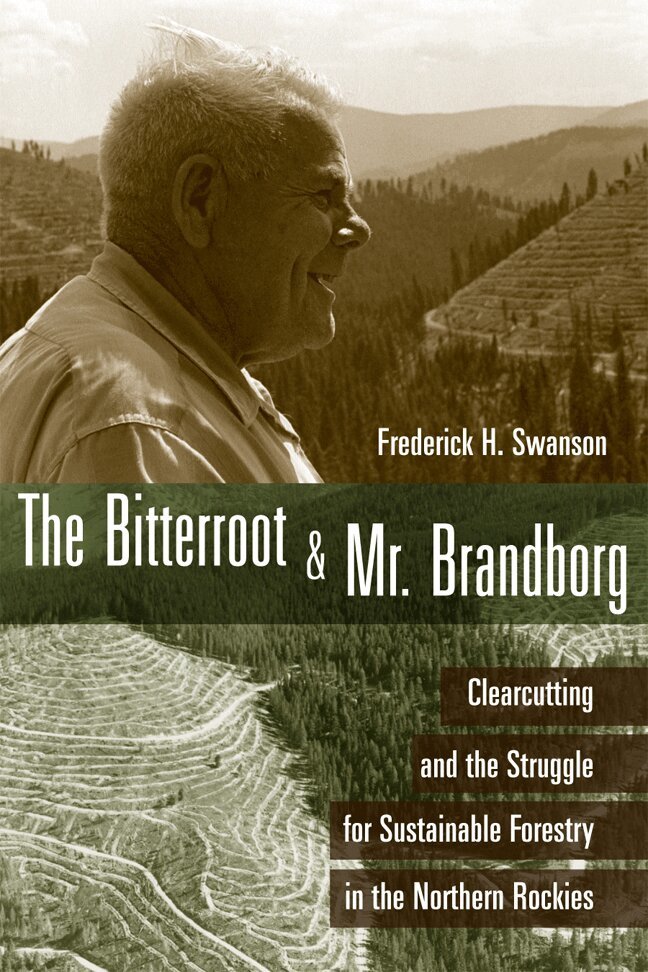
Fredrick Swanson tells the story of Guy M. Brandborg and his impact on the practices of the U.S. Forest Service. As supervisor of Montana's Bitterroot National Forest from 1935 to 1955, Brandborg engaged in a management style that promoted not only the well-being of the forest community but also the social and economic welfare of the local people. By relying on selective cutting, his goal was to protect the watersheds and wildlife habitats that are devastated by clear-cutting, and to prevent the job losses that follow such practices. Following his retirement, he became concerned that his agency was deviating from the practice of sustained-yield management of the forest's timber lands, and led a highly visible public outcry that became known as the Bitterroot controversy. Brandborg's behind-the-scenes lobbying contributed materially to the passage of the National Forest Management Act of 1976, the single most important law affecting public forestry since the creation of the Forest Service. Meticulously written, The Bitterroot and Mr. Brandborg articulates Brandborg's Progressive-era idealism and is based on extensive archival research in collections throughout the Rockies and the Northwest, including the Brandborg family papers. Swanson's crisp narration of how one national forest supervisor understood the intricate connection between the grasslands and forests under his care and the communities that were so dependent on these invaluable resources, opens a much larger story about the meaning of public lands in a democratic society.
Häftad, Engelska, 2026
321 kr
Kommande
Winner of the Wallace Stegner Prize in American Environmental or Western History Frederick Swanson tells the story of Guy M. Brandborg and his impact on the practices of the U.S. Forest Service. As supervisor of Montana's Bitterroot National Forest from 1935 to 1955, Brandborg engaged in a management style that promoted not only the well-being of the forest community but also the social and economic welfare of the local people. By relying on selective cutting, his goal was to protect the watersheds and wildlife habitats that are devastated by clear-cutting, and to prevent the job losses that follow such practices. Following his retirement, he became concerned that his agency was deviating from the practice of sustained-yield management of the forest's timber lands, and led a highly visible public outcry that became known as the Bitterroot controversy. Brandborg's behind-the-scenes lobbying contributed materially to the passage of the National Forest Management Act of 1976, the single most important law affecting public forestry since the creation of the Forest Service.Meticulously written, The Bitterroot and Mr. Brandborg articulates Brandborg's Progressive-era idealism and is based on extensive archival research in collections throughout the Rockies and the Northwest, including the Brandborg family papers. Swanson's crisp narration of how one national forest supervisor understood the intricate connection between the grasslands and forests under his care and the communities that were so dependent on these invaluable resources, opens a much larger story about the meaning of public lands in a democratic society. Winner of the Western Writers of America Spur Award for Best Western Nonfiction-Contemporary.