Frederick T. Wallenberger - Böcker
Visar alla böcker från författaren Frederick T. Wallenberger. Handla med fri frakt och snabb leverans.
4 produkter
4 produkter
1 588 kr
Skickas inom 10-15 vardagar
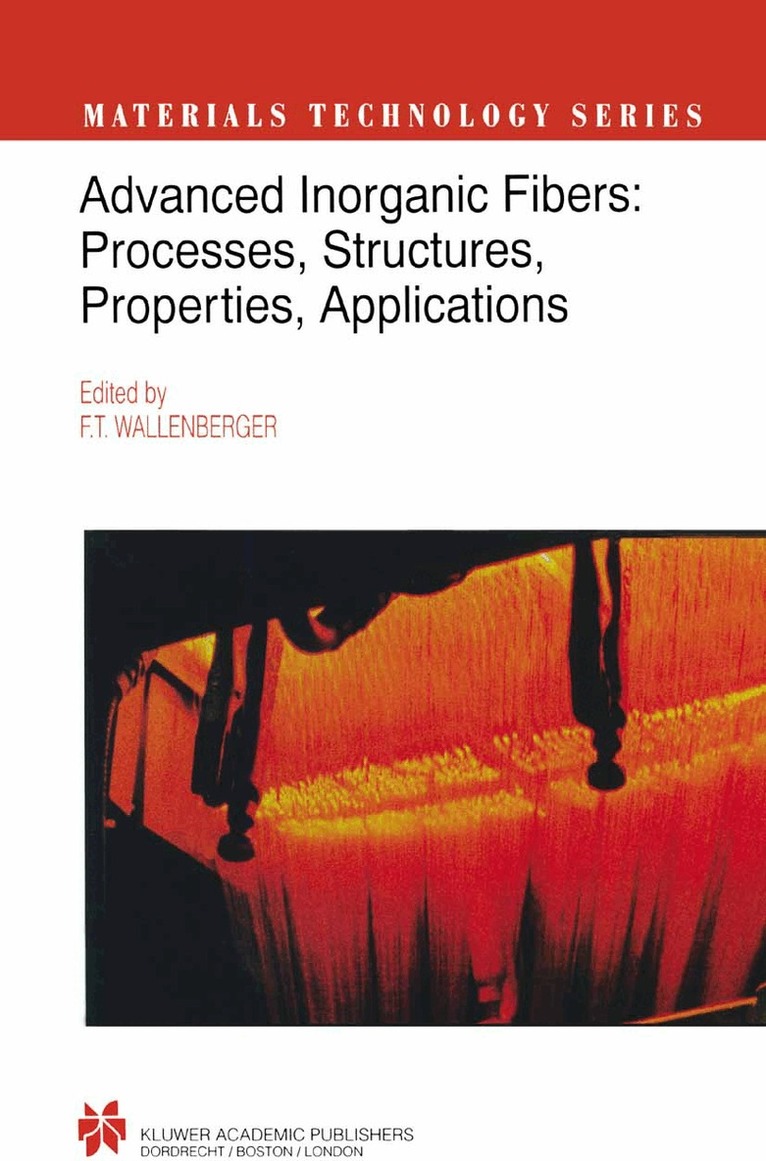
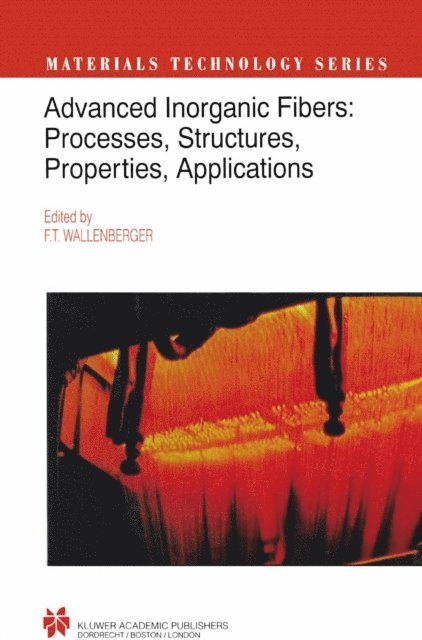
This text describes the fabrication, structures, properties and applications of advanced inorganic glass, glass-ceramic, ceramic and metal fibres for the researcher, industrial scientist and product designer. The text is divided into sections highlighting the commonalities of the three main fabrication routes. The section on vapour phase processes includes the production of silicon and silicon-carbide whiskers, and silicon-carbide, boron, diamond, and ultrasong fibres using a variety of techniques including physical, conventional chemical, and laser assisted chemical vapour deposition. The melt process section deals with glass, metal and single crystal sapphire fibres, using processes such as strong silicate and fragile supercooled melts, inviscid melts, and edge defined film fed growth or laser heated pedestal growth. The final section describes creating fibres from precursor fibres. PAN, pitch and other precursors are used to make carbon fibres, orgonometallic precursors for silicon nitride fibres, and the slurry process for alumina fibres.The text describes fibre testing, the economics of experimental processes, and highlights recent experimental and commerical breakthroughs with a strong emphasis on the conceptual relationship between commercial and advanced experimental processes. It offers a presentation of the state of inorganic fibre technology today, whilst offering insights into the progress of the future. It should be of interest to university libraries, industrial and university research groups in physics, materials science, chemistry, mechanical engineering and surface engineering.
1 588 kr
Skickas inom 10-15 vardagar
2. NANOPARTICLES IN A POLYMERIC MATRIX 346 2. 1 Classical Methods to Prepare Nanocomposites 348 2. 2 Other Methods to Prepare Nanocomposite Materials 350 3. NANOCOMPOSITES WITH NATURAL POLYMERS 351 3. 1 Materials and Processes 352 3. 2 Nanocomposites for Bioplastic Applications 353 3. 2. 1 Clay Modification 354 3. 2. 2 Processing 354 3. 2. 3 Analysis 355 3. 2. 4 Manufacturing and Properties of Thin Films 355 3. 2. 5 Conclusions 357 4. BIOMEDICAL APPLICATIONS 358 4. 1 Chitosan as a Matrix for Biomedical Applications 358 4. 2 Chitosan-Clay Nanocomposites 359 4. 3 Nanocomposites Based on Hydroxyapatite 360 5. SUMMARY 362 ACKNOWLEDGEMENTS 363 REFERENCES 363 Index 365 Contributing Authors Author Affiliation Chapter P. Aldred Christian Doppler Laboratory, Dornbirn, Austria 9 A. Bockarie PhiladelphiaUniversity, School of Science & Health 5 T. Bunik Philadelphia University, School of Science & Health 5 S. 1. Eichhorn 16 Univ. of Manchester, Manchester Materials Sci. Ctr. D. Eichinger Lenzing AG, Austria, Marketing Department 9 E. Evazynajad PhiladelphiaUniv. , School of Textiles & Mater. Tech. 5 S. Fischer Eindhoven Univ. of Technology, TNO Industrial Tech. 19 H.Firgo Lenzing AG, Research & Development Department 9 E. FroIIini Univ. ofSiio Paulo, Chemical Institure of Sao Carlos 12 T. Fujii Doshisha University, Dept. of Mechanical Engineering 17 B. R. George Philadelphia Univ. , School of Textiles& Mater. Tech. 5 A. Guo Pittsburg State Univ. , Kansas Polymer Research Ctr. 11 S. lavasundera U. S. Dept. of Agriculture, Agricultural Res.
Fiberglass and Glass Technology
Energy-Friendly Compositions and Applications
Inbunden, Engelska, 2009
1 588 kr
Skickas inom 10-15 vardagar
Fiberglass and Glass Technology: Energy-Friendly Compositions and Applications provides a detailed overview of fiber, float and container glass technology with special emphasis on energy- and environmentally-friendly compositions, applications and manufacturing practices which have recently become available and continue to emerge. Energy-friendly compositions are variants of incumbent fiberglass and glass compositions that are obtained by the reformulation of incumbent compositions to reduce the viscosity and thereby the energy demand. Environmentally-friendly compositions are variants of incumbent fiber, float and container glass compositions that are obtained by the reformulation of incumbent compositions to reduce environmentally harmful emissions from their melts. Energy- and environmentally-friendly compositions are expected to become a key factor in the future for the fiberglass and glass industries. This book consists of two complementary sections: continuous glass fiber technology and soda-lime-silica glass technology. Important topics covered include:o Commercial and experimental compositions and productso Design of energy- and environmentally-friendly compositionso Emerging glass melting technologies including plasma meltingo Fiberglass composite design and engineeringo Emerging fiberglass applications and marketsFiberglass and Glass Technology: Energy-Friendly Compositions and Applications is written for researchers and engineers seeking a modern understanding of glass technology and the development of future products that are more energy- and environmentally-friendly than current products.
1 588 kr
Skickas inom 10-15 vardagar
Fiberglass and Glass Technology: Energy-Friendly Compositions and Applications provides a detailed overview of fiber, float and container glass technology with special emphasis on energy- and environmentally-friendly compositions, applications and manufacturing practices which have recently become available and continue to emerge. Energy-friendly compositions are variants of incumbent fiberglass and glass compositions that are obtained by the reformulation of incumbent compositions to reduce the viscosity and thereby the energy demand. Environmentally-friendly compositions are variants of incumbent fiber, float and container glass compositions that are obtained by the reformulation of incumbent compositions to reduce environmentally harmful emissions from their melts. Energy- and environmentally-friendly compositions are expected to become a key factor in the future for the fiberglass and glass industries. This book consists of two complementary sections: continuous glass fiber technology and soda-lime-silica glass technology. Important topics covered include:o Commercial and experimental compositions and productso Design of energy- and environmentally-friendly compositionso Emerging glass melting technologies including plasma meltingo Fiberglass composite design and engineeringo Emerging fiberglass applications and marketsFiberglass and Glass Technology: Energy-Friendly Compositions and Applications is written for researchers and engineers seeking a modern understanding of glass technology and the development of future products that are more energy- and environmentally-friendly than current products.