Frédérique Spill – författare
Visar alla böcker från författaren Frédérique Spill. Handla med fri frakt och snabb leverans.
5 produkter
5 produkter
Inbunden, Engelska, 2024
1 396 kr
Skickas inom 5-8 vardagar
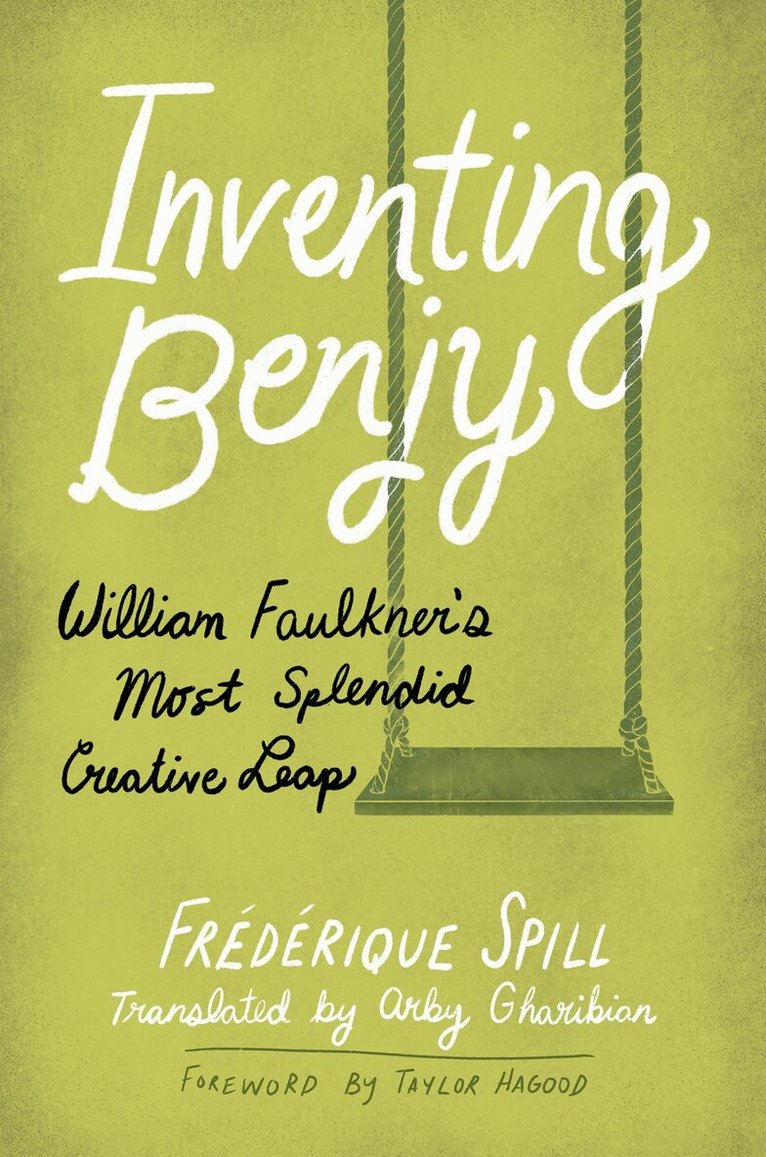
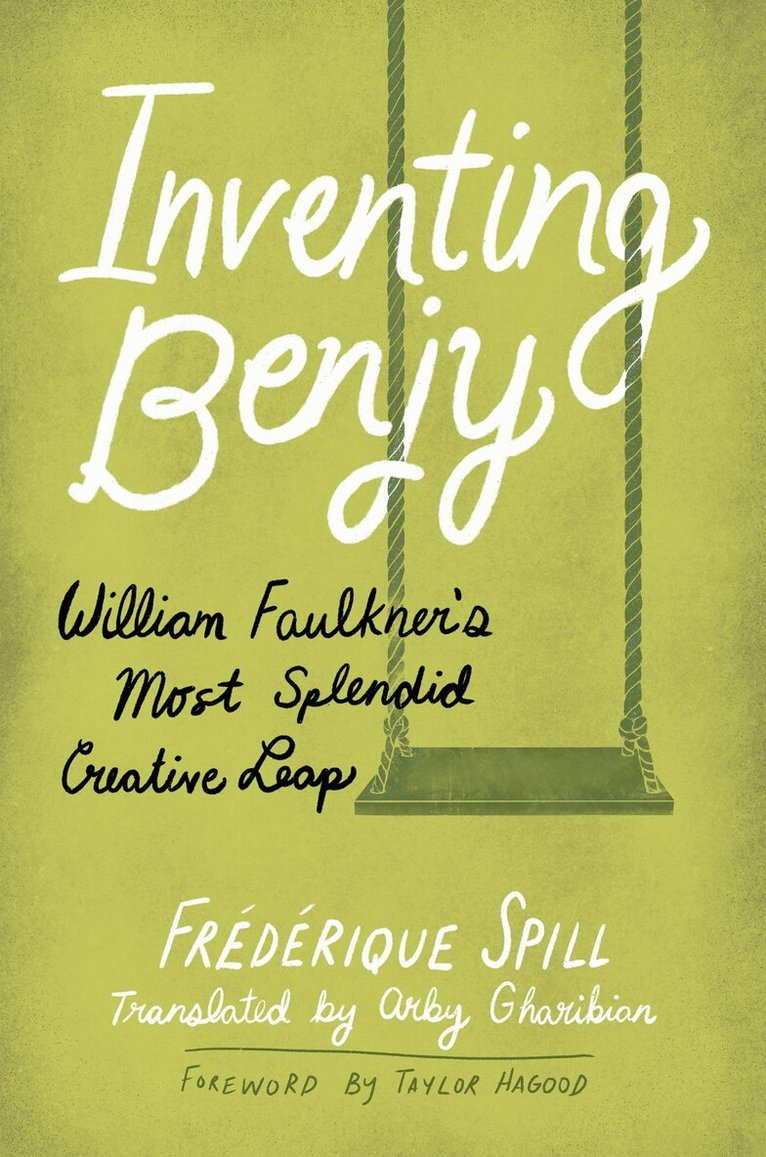
Inventing Benjy: William Faulkner’s Most Splendid Creative Leap is a groundbreaking work at the intersection of Faulkner studies and disability studies. Originally published in 2009 by Presses de la Sorbonne Nouvelle as L’Idiotie dans l’œuvre de Faulkner, this translation brings the book to English-language readers for the first time. Author Frédérique Spill begins with a sustained look at the monologue of Benjy Compson, the initial first-person narrator in Faulkner’s The Sound and the Fury. Spill questions the reasons for this narrative choice, bringing readers to consider Benjy’s monologue, which is told by a narrator who is deaf and cognitively disabled, as an impossible discourse. This paradoxical discourse, which relies mostly on senses and sensory perception, sets the foundation of a sophisticated poetics of idiocy. Using this form of writing, Faulkner shaped perspective from a disabled character, revealing a certain depth to characters that were previously only portrayed on a shallow level. This style encompasses some of the most striking forms and figures of his leap into modern(ist) writing. In that respect, Inventing Benjy thoroughly examines Benjy’s discourse as an experimental workshop in which objects and words are exclusively modelled by the senses. This study regards Faulkner’s decision to place a disabled character at the center of perception as the inaugural and emblematic gesture of his writing. Closely examining excerpts from Faulkner’s novels and a few short stories, Spill emphasizes how the corporal, temporal, sensorial, and narrative figures of "idiocy" are reflected throughout Faulkner’s work. These writing choices underlie some of his most compelling inventions and certainly contribute to his unmistakable writing style. In the process, Faulkner’s writing takes on a phenomenological dimension, simultaneously dismantling and reinventing the intertwined dynamics of perception and language.
Häftad, Engelska, 2024
434 kr
Skickas inom 5-8 vardagar
Inventing Benjy: William Faulkner’s Most Splendid Creative Leap is a groundbreaking work at the intersection of Faulkner studies and disability studies. Originally published in 2009 by Presses de la Sorbonne Nouvelle as L’Idiotie dans l’œuvre de Faulkner, this translation brings the book to English-language readers for the first time. Author Frédérique Spill begins with a sustained look at the monologue of Benjy Compson, the initial first-person narrator in Faulkner’s The Sound and the Fury. Spill questions the reasons for this narrative choice, bringing readers to consider Benjy’s monologue, which is told by a narrator who is deaf and cognitively disabled, as an impossible discourse. This paradoxical discourse, which relies mostly on senses and sensory perception, sets the foundation of a sophisticated poetics of idiocy. Using this form of writing, Faulkner shaped perspective from a disabled character, revealing a certain depth to characters that were previously only portrayed on a shallow level. This style encompasses some of the most striking forms and figures of his leap into modern(ist) writing. In that respect, Inventing Benjy thoroughly examines Benjy’s discourse as an experimental workshop in which objects and words are exclusively modelled by the senses. This study regards Faulkner’s decision to place a disabled character at the center of perception as the inaugural and emblematic gesture of his writing. Closely examining excerpts from Faulkner’s novels and a few short stories, Spill emphasizes how the corporal, temporal, sensorial, and narrative figures of "idiocy" are reflected throughout Faulkner’s work. These writing choices underlie some of his most compelling inventions and certainly contribute to his unmistakable writing style. In the process, Faulkner’s writing takes on a phenomenological dimension, simultaneously dismantling and reinventing the intertwined dynamics of perception and language.
E-bok
Engelska, 2024444 kr
Läs direkt efter köp
Inventing Benjy: William Faulkner’s Most Splendid Creative Leap is a groundbreaking work at the intersection of Faulkner studies and disability studies. Originally published in 2009 by Presses de la Sorbonne Nouvelle as L’Idiotie dans l’œuvre de Faulkner, this translation brings the book to English-language readers for the first time. Author Frédérique Spill begins with a sustained look at the monologue of Benjy Compson, the initial first-person narrator in Faulkner’s The Sound and the Fury. Spill questions the reasons for this narrative choice, bringing readers to consider Benjy’s monologue, which is told by a narrator who is deaf and cognitively disabled, as an impossible discourse. This paradoxical discourse, which relies mostly on senses and sensory perception, sets the foundation of a sophisticated poetics of idiocy. Using this form of writing, Faulkner shaped perspective from a disabled character, revealing a certain depth to characters that were previously only portrayed on a shallow level. This style encompasses some of the most striking forms and figures of his leap into modern(ist) writing. In that respect, Inventing Benjy thoroughly examines Benjy’s discourse as an experimental workshop in which objects and words are exclusively modelled by the senses. This study regards Faulkner’s decision to place a disabled character at the center of perception as the inaugural and emblematic gesture of his writing. Closely examining excerpts from Faulkner’s novels and a few short stories, Spill emphasizes how the corporal, temporal, sensorial, and narrative figures of "idiocy" are reflected throughout Faulkner’s work. These writing choices underlie some of his most compelling inventions and certainly contribute to his unmistakable writing style. In the process, Faulkner’s writing takes on a phenomenological dimension, simultaneously dismantling and reinventing the intertwined dynamics of perception and language.
E-bok
PDF, Engelska, 2024444 kr
Läs direkt efter köp
Inventing Benjy: William Faulkner’s Most Splendid Creative Leap is a groundbreaking work at the intersection of Faulkner studies and disability studies. Originally published in 2009 by Presses de la Sorbonne Nouvelle as L’Idiotie dans l’œuvre de Faulkner, this translation brings the book to English-language readers for the first time. Author Frédérique Spill begins with a sustained look at the monologue of Benjy Compson, the initial first-person narrator in Faulkner’s The Sound and the Fury. Spill questions the reasons for this narrative choice, bringing readers to consider Benjy’s monologue, which is told by a narrator who is deaf and cognitively disabled, as an impossible discourse. This paradoxical discourse, which relies mostly on senses and sensory perception, sets the foundation of a sophisticated poetics of idiocy. Using this form of writing, Faulkner shaped perspective from a disabled character, revealing a certain depth to characters that were previously only portrayed on a shallow level. This style encompasses some of the most striking forms and figures of his leap into modern(ist) writing. In that respect, Inventing Benjy thoroughly examines Benjy’s discourse as an experimental workshop in which objects and words are exclusively modelled by the senses. This study regards Faulkner’s decision to place a disabled character at the center of perception as the inaugural and emblematic gesture of his writing. Closely examining excerpts from Faulkner’s novels and a few short stories, Spill emphasizes how the corporal, temporal, sensorial, and narrative figures of "idiocy" are reflected throughout Faulkner’s work. These writing choices underlie some of his most compelling inventions and certainly contribute to his unmistakable writing style. In the process, Faulkner’s writing takes on a phenomenological dimension, simultaneously dismantling and reinventing the intertwined dynamics of perception and language.
E-bok
Engelska, 2024129 kr
Läs direkt efter köp
This collection of essays brings together an international group of scholars who discuss various facets of the American South in popular culture, literature, the arts, and throughout history. It includes reflections on place, on the importance of memory in shaping individual identity, and on race, class and gender. All the contributions confirm Howard''s Zinn''s idea that the South "is not damnable, but marvelously useful, as a mirror in which the nation can see its blemishes magnified, so that it will hurry to correct them." This volume sheds light on the "marvelous" sides of the South though it does not overlook its darker ones, thus making it possible to better understand this peculiar region.