Freerk A. Lootsma - Böcker
Visar alla böcker från författaren Freerk A. Lootsma. Handla med fri frakt och snabb leverans.
4 produkter
4 produkter
1 064 kr
Skickas inom 10-15 vardagar
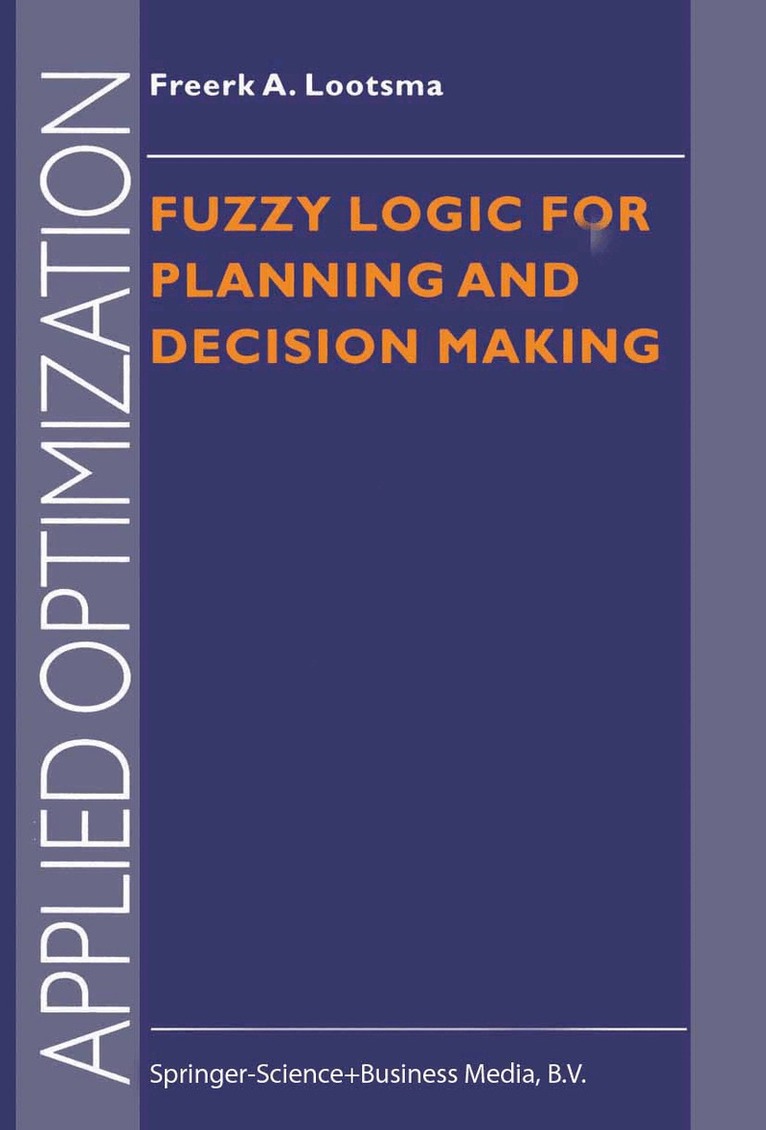
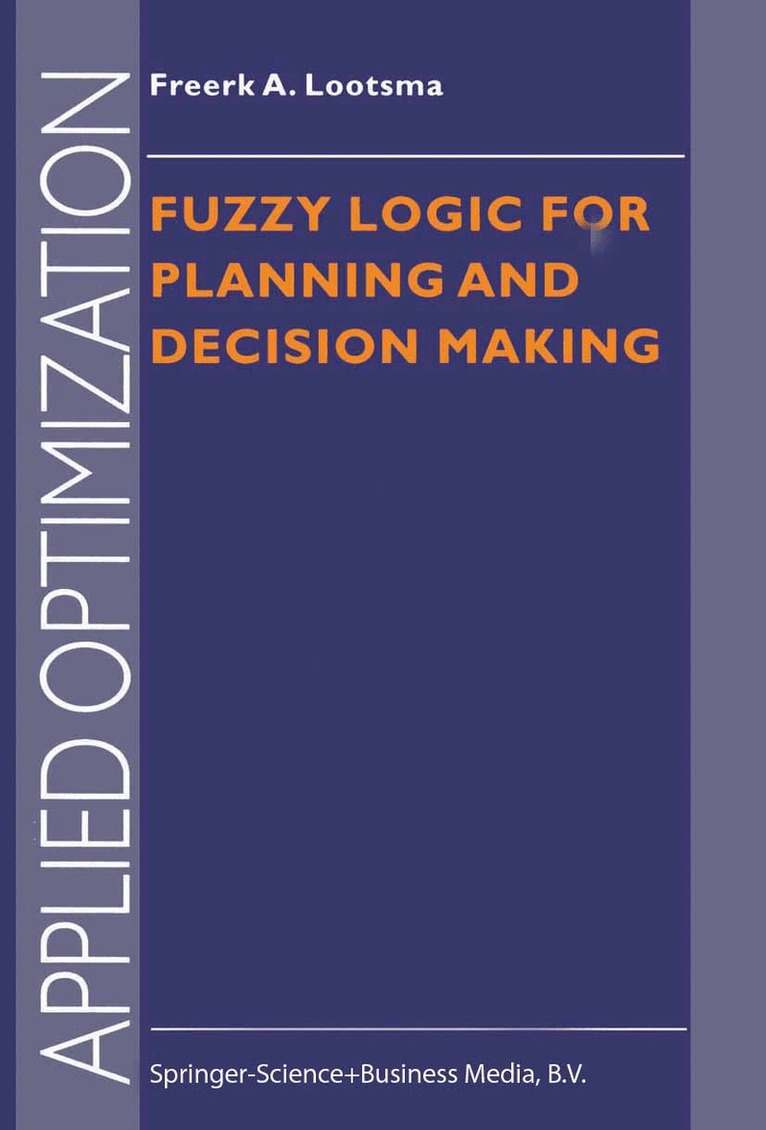
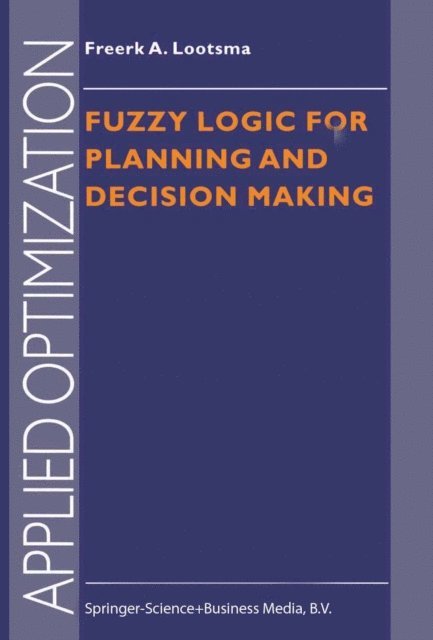
Thisvolume starts with the basicconceptsof FuzzyLogic: the membership function, the intersection and the union of fuzzy sets, fuzzy numbers, and the extension principle underlying the algorithmic operations. Several chapters are devoted to applications of FuzzyLogic in various branches of Operations Research: PERT planning with uncertain activity durations, SMART and the AHP for Multi-Criteria Decision Analysis (MCDA) with vague preferential statements, ELECTRE usingthe ideasof the AHP and SMART, and Multi-Objective Optimization (MOO) with weighted degrees of satisfaction. Finally, earlierstudiesof colour perception illustrate the attemptsto find a physiological basisfor the set-theoretical and the algorithmic operations in Fuzzy Logic. The last chapter also discusses somekey issues in linguistic categorization and the prospectsof FuzzyLogicas a multi-disciplinary research activity.I am greatly indebted to the Department of Mechanical Engineering and Applied Mechanics, College of Engineering, University of Michigan, Ann Arbor, for the splendid opportunity to start the actual work on this book during my sabbatical leavefrom Delft (1993 - 1994); to LAMSADE, Universite de Paris-Dauphine, where many ideas emerged duringtwo winter visits (1989, 1990); to the International Institute for Applied Systems Analysis, Laxenburg, Austria, whereI got further inspiration duringa number of summer visits (1992, 1995, and 1996); and to the NISSAN Foundation in The Netherlands who enabled me to visit several Japanese universities (June 1996). Moreover, I gratefully acknowledge the stimulating supportgiven by many colleagues inthe International Society on Multi-Criteria Decision Making and in the European Working Group "Aide Multicritere Ii la Decision".
1 064 kr
Skickas inom 10-15 vardagar
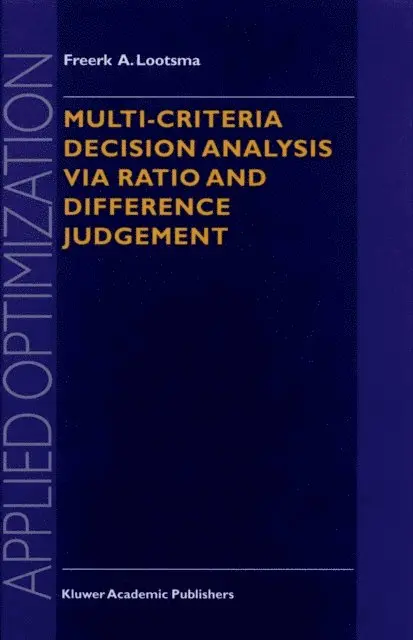
The point of departure in this book is that the decision-makers involved in the evaluation of alternatives under conflicting criteria express their preferential judgement by estimating ratios of subjective values or differences of the corresponding logarithms, the so-called grades. Three MCDA methods are studied in detail; the Simple Multi-Attribute Rating Technique SMART, and the Additive and the Multiplicative AHP, both pairwise-comparison methods which do not suffer from the well-known shortcomings of the original Analytic Hierarchy Process. Context-related preference modelling on the basis of psychophysical research in visual perception and motor skills is extensively discussed in the introductory chapters. Thereafter many extensions of the ideas are presented via case studies in university administration, health care, environmental assessment, budget allocation, and energy planning at the national and the European level. The book presents methods for decision support and their applications in the fields of university administration, health care, environmental assessment, budget allocation, and strategic energy planning.
1 064 kr
Skickas inom 10-15 vardagar
Thisvolume starts with the basicconceptsof FuzzyLogic: the membership function, the intersection and the union of fuzzy sets, fuzzy numbers, and the extension principle underlying the algorithmic operations. Several chapters are devoted to applications of FuzzyLogic in various branches of Operations Research: PERT planning with uncertain activity durations, SMART and the AHP for Multi-Criteria Decision Analysis (MCDA) with vague preferential statements, ELECTRE usingthe ideasof the AHP and SMART, and Multi-Objective Optimization (MOO) with weighted degrees of satisfaction. Finally, earlierstudiesof colour perception illustrate the attemptsto find a physiological basisfor the set-theoretical and the algorithmic operations in Fuzzy Logic. The last chapter also discusses somekey issues in linguistic categorization and the prospectsof FuzzyLogicas a multi-disciplinary research activity.I am greatly indebted to the Department of Mechanical Engineering and Applied Mechanics, College of Engineering, University of Michigan, Ann Arbor, for the splendid opportunity to start the actual work on this book during my sabbatical leavefrom Delft (1993 - 1994); to LAMSADE, Universite de Paris-Dauphine, where many ideas emerged duringtwo winter visits (1989, 1990); to the International Institute for Applied Systems Analysis, Laxenburg, Austria, whereI got further inspiration duringa number of summer visits (1992, 1995, and 1996); and to the NISSAN Foundation in The Netherlands who enabled me to visit several Japanese universities (June 1996). Moreover, I gratefully acknowledge the stimulating supportgiven by many colleagues inthe International Society on Multi-Criteria Decision Making and in the European Working Group "Aide Multicritere Ii la Decision".
Del 29 - Applied Optimization
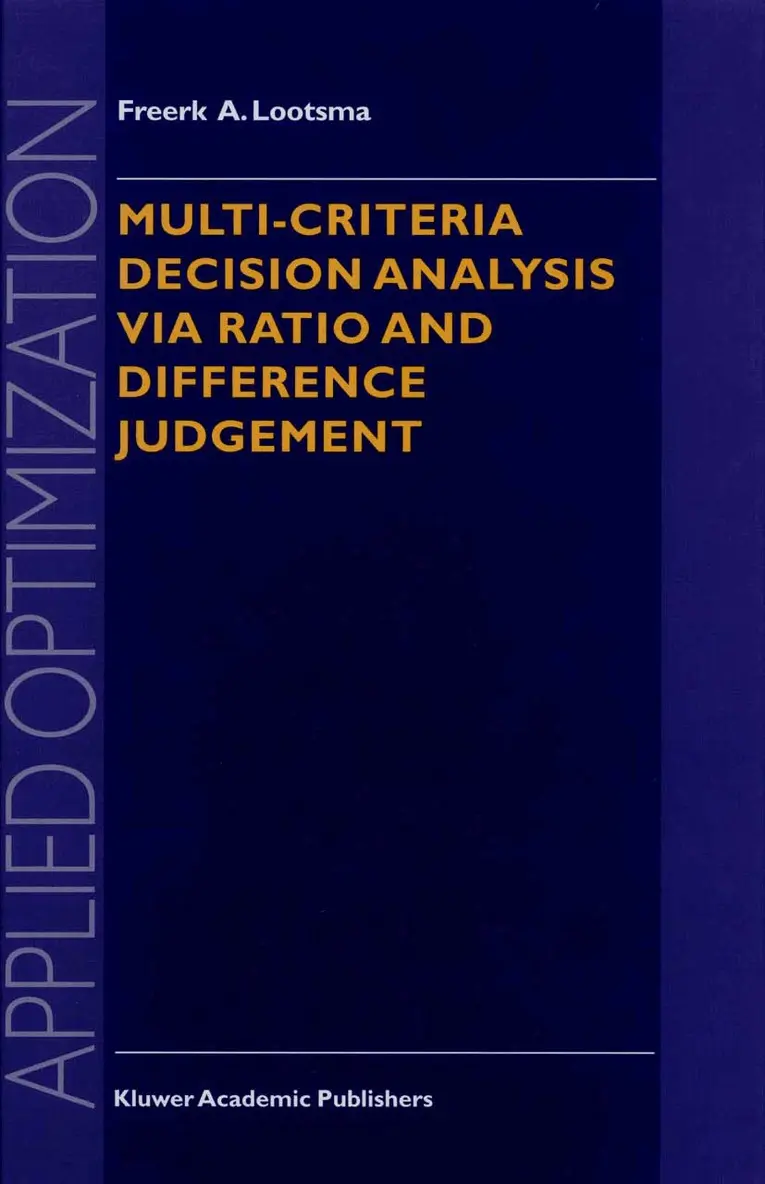
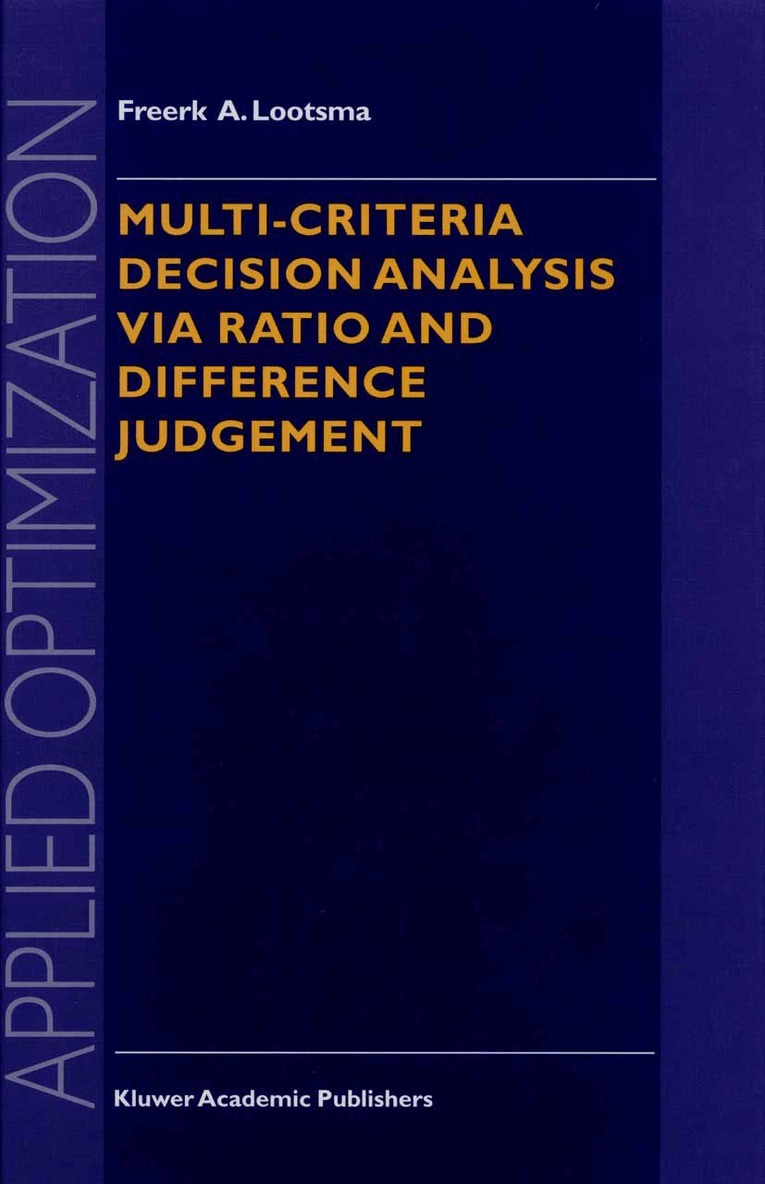
Multi-Criteria Decision Analysis via Ratio and Difference Judgement
Häftad, Engelska, 2011
1 064 kr
Skickas inom 10-15 vardagar
The point of departure in the present book is that the decision-makers involved in the evaluation of alternatives under conflicting criteria express their preferential judgement by estimating ratios of subjective values or differences of the corresponding logarithms, the so-called grades. Three MCDA methods are studied in detail; the Simple Multi-Attribute Rating Technique SMART, and the Additive and the Multiplicative AHP, both pairwise-comparison methods which do not suffer from the well-known shortcomings of the original Analytic Hierarchy Process. Context-related preference modeling on the basis of psychophysical research in visual perception and motor skills is extensively discussed in the introductory chapters. Thereafter many extensions of the ideas are presented via case studies in university administration, health care, environmental assessment, budget allocation, and energy planning at the national and the European level.The issues under consideration are: group decision-making with inhomogeneous power distributions, the search for a compromise solution, resource allocation and fair distribution, scenario analysis in long-term planning, conflict analysis via the pairwise comparison of concessions and multi-objective optimization. The final chapters are devoted to the fortunes of MCDA in the hands of its designers. Audience: The book presents methods for decision support and their applications in the fields of university administration, health care, environmental assessment, budget allocation, and strategic energy planning and will be of value to practitioners, students and researchers in these and related fields.