The study of animal behaviour has become one of the fastest growing b- logical disciplines in recent decades. This development can be easily - ferred, for example, from the steady increase in the total number of pub- cations on any aspect of animal behaviour, in particular also in journals with a more general readership (e. g. Nature, Proceedings of the Royal - ciety or Current Biology), the ever-increasing number of participants at - ternational conferences (e. g. IEC or ISBE), and from the growing numbers of students choosing courses in this field. This development has several causes, of which I find three particularly compelling. First, it is incre- ingly being appreciated that behaviour is the crucial level at which an in- vidual's genotype and phenotype interface with the environment. Rec- nising behaviour as the main mechanism animals employ to ascertain their homeostasis, growth, survival and reproduction therefore provides a deep understanding of organismal integration and adaptation.Second, the ast- ishing success of the study of animal behaviour also has importantly to do with the intellectual flexibility and methodological inter-disciplinarity - quired for comprehensive analyses of behaviour. Today, students of beh- iour are jacks-of-all-trades; importing, applying and improving methods from many neighbouring disciplines, such as molecular genetics, physi- ogy or micro-electronics, as well as concepts and theories from less ob- ous sources, such as economics or sociology, for example.
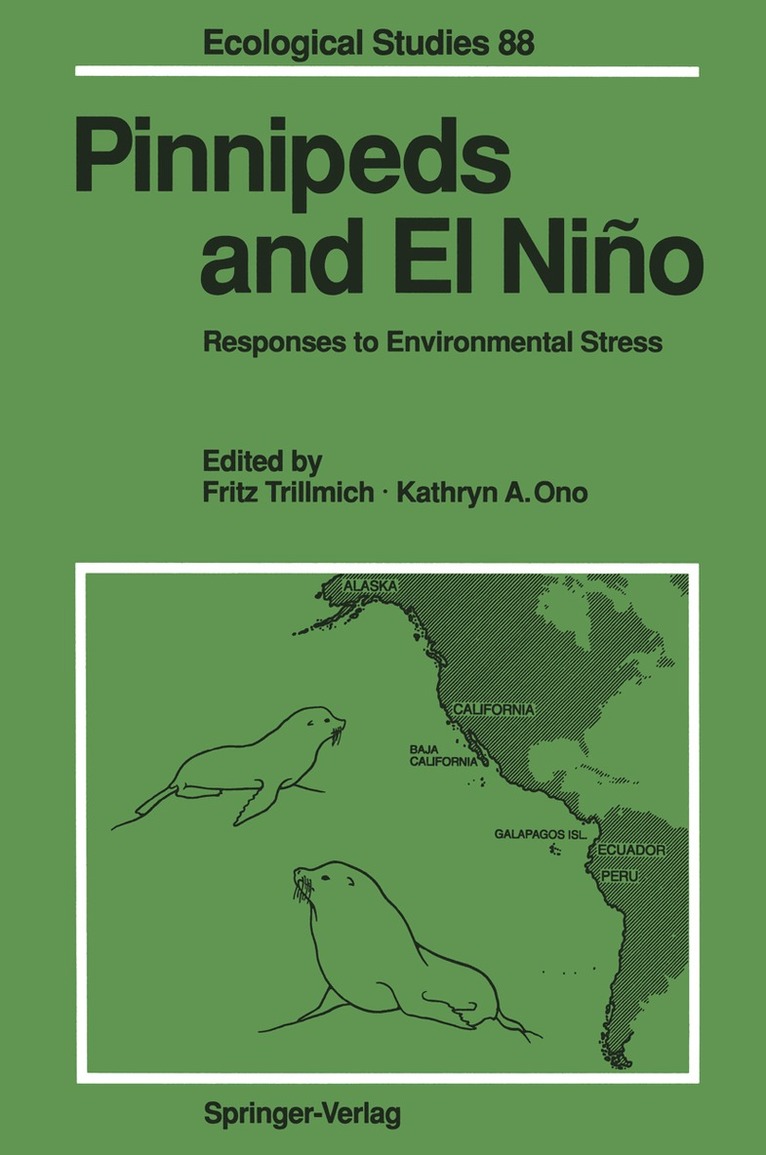
El Niño is a meteorological and oceanographic phenomenon, which occurs at irregular intervals in the eastern tropical Pacific. Its most obvious characteristic is the warming of surface waters, which causes enormous disturbances of the marine environment. A severe Niño may also affect continental systems worldwide. This book gathers in a comprehensive way the information available on the effects of the exceptionally strong 1982-83 Niño on a group of marine mammals, the pinnipeds. It presents an analysis of the effects of environmental stress on the populations of top predators. Data and interpretations are based on a most unusual collection of long-term studies of pinniped population dynamics, behavior and ecology which spanned the El Niño event. The responses of pinniped populations to the El Niño disturbance of the marine ecosystem also has important implications for the management and conservation of marine mammal populations.
Communication and cognition.- Visual communication: evolution, ecology, and functional mechanisms.- Vocal communication in social groups.- Kin recognition: an overview of conceptual issues, mechanisms and evolutionary theory.- Honeybee cognition.- Individual performance in complex social systems: the greylag goose example.- Conflict and cooperation.- Conflict and conflict resolution in social insects.- Social insects, major evolutionary transitions and multilevel selection.- Cooperation between unrelated individuals - a game theoretic approach.- Group decision-making in animal societies.- Parental care: adjustments to conflict and cooperation.- Sex and reproduction.- The quantitative study of sexual and natural selection in the wild and in the laboratory.- Mate choice and reproductive conflict in simultaneous hermaphrodites.- Extra-pair behaviour.- Extreme polyandry in social Hymenoptera: evolutionary causes and consequences for colony organisation.- Monogynous mating strategies in spiders.- Mating systems, social behaviour and hormones.- Behavioural variation.- The social modulation of behavioural development.- Alternative reproductive tactics and life history phenotypes.- Animal personality and behavioural syndromes.- Social learning and culture in animals.- Levels and mechanisms of behavioural variability.