Fuad Aleskerov – författare
Visar alla böcker från författaren Fuad Aleskerov. Handla med fri frakt och snabb leverans.
12 produkter
New Centrality Measures in Networks
How to Take into Account the Parameters of the Nodes and Group Influence of Nodes to Nodes
Av Natalia Meshcheryakova, Sergey Shvydun m. fl.
E-bok, 2021
424 kr
Lägg i varukorg
Over the last number of years there has been a growing interest in the analysis of complex networks which describe a wide range of real-world systems in nature and society. Identification of the central elements in such networks is one of the key research areas. Solutions to this problem are …
New Centrality Measures in Networks
How to Take into Account the Parameters of the Nodes and Group Influence of Nodes to Nodes
Av Natalia Meshcheryakova, Sergey Shvydun m. fl.
E-bok, 2021
424 kr
Lägg i varukorg
Over the last number of years there has been a growing interest in the analysis of complex networks which describe a wide range of real-world systems in nature and society. Identification of the central elements in such networks is one of the key research areas. Solutions to this problem are …
New Centrality Measures in Networks
How to Take into Account the Parameters of the Nodes and Group Influence of Nodes to Nodes
Av Fuad Aleskerov, Sergey Shvydun m. fl.
Inbunden, 2021
1026 kr
Lägg i varukorg
Over the last number of years there has been a growing interest in the analysis of complex networks which describe a wide range of real-world systems in nature and society. Identification of the central elements in such networks is one of the key research areas. Solutions to this problem are …
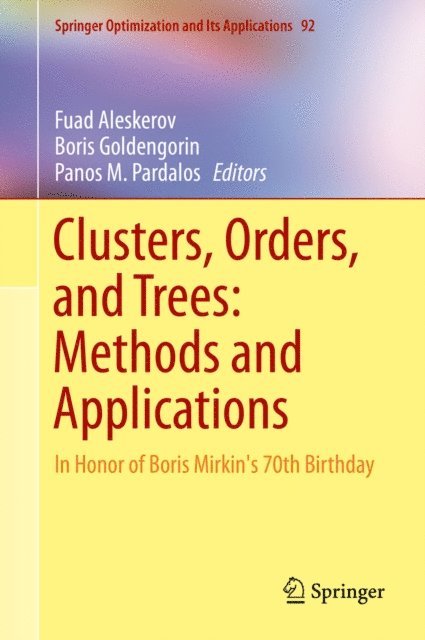
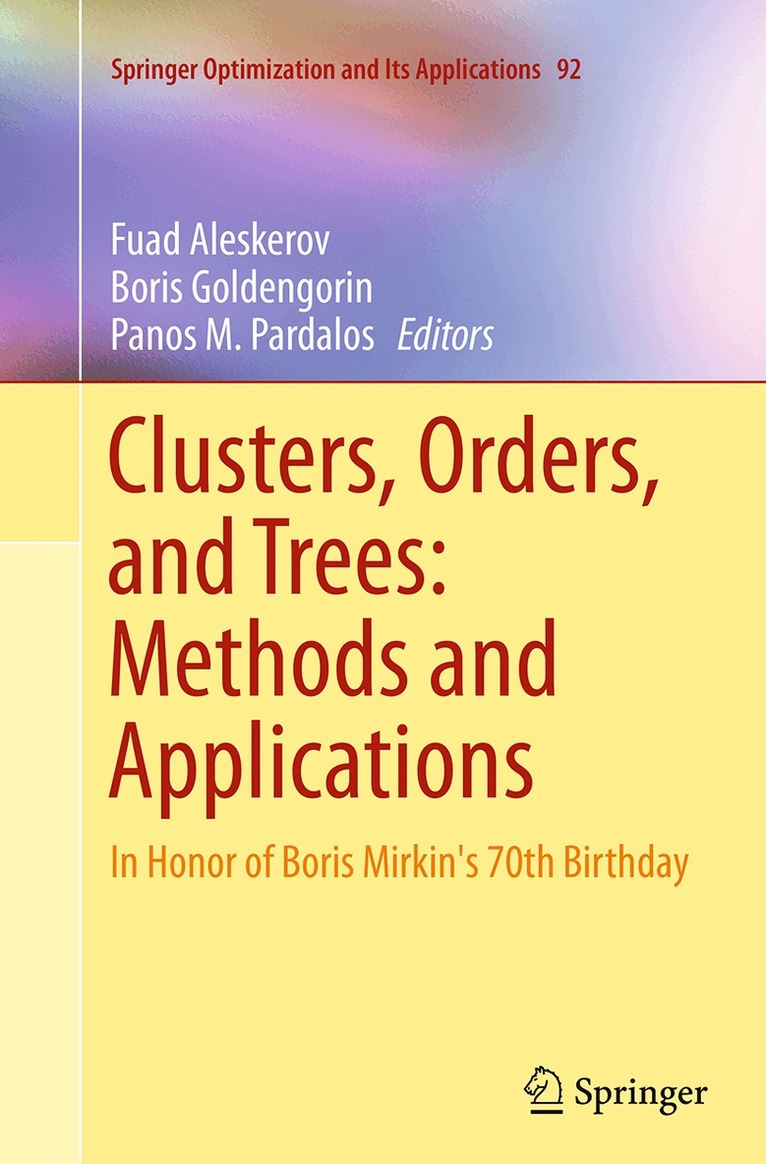
Clusters, Orders, and Trees: Methods and Applications
In Honor of Boris Mirkin's 70th Birthday
Av Fuad Aleskerov, Boris Goldengorin m. fl.
Inbunden, 2014
1093 kr
Lägg i varukorg
The volume is dedicated to Boris Mirkin on the occasion of his 70th birthday. In addition to his startling PhD results in abstract automata theory, Mirkin’s ground breaking contributions in various fields of decision making and data analysis have marked the fourth quarter of the 20th century and …
Clusters, Orders, and Trees: Methods and Applications
In Honor of Boris Mirkin''s 70th Birthday
Av Panos M. Pardalos, Boris Goldengorin m. fl.
E-bok, 2014
1459 kr
Lägg i varukorg
The volume is dedicated to Boris Mirkin on the occasion of his 70th birthday. In addition to his startling PhD results in abstract automata theory, Mirkin’s ground breaking contributions in various fields of decision making and data analysis have marked the fourth quarter of the 20th century and …
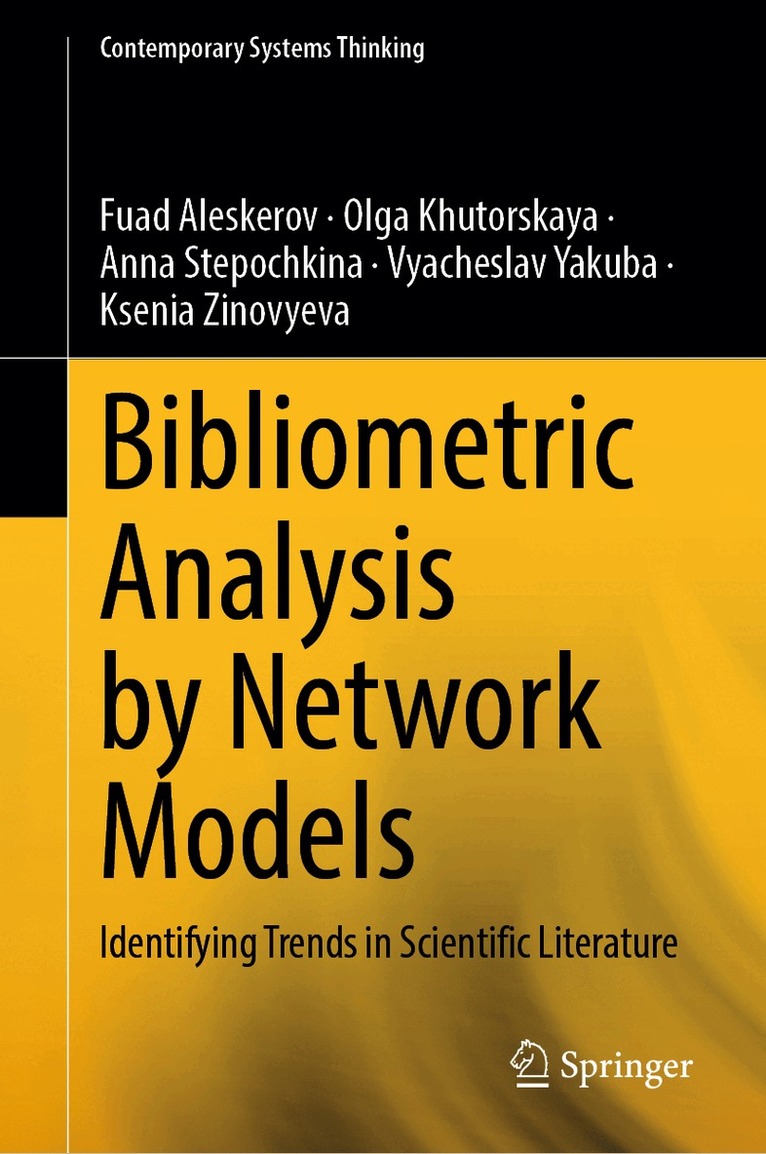
Bibliometric Analysis by Network Models
Identifying Trends in Scientific Literature
Av Fuad Aleskerov, Olga Khutorskaya m. fl.
Inbunden, 2026
1532 kr
Lägg i varukorg
The book contains new models of bibliometric analysis based on centrality measures in network analysis, pattern analysis and stability analysis. A distinctive feature of these centrality measures is that they account for the parameters of vertices and group influence of vertices to a vertex. This …
Bibliometric Analysis by Network Models
Identifying Trends in Scientific Literature
Av Ksenia Zinovyeva, Vyacheslav Yakuba m. fl.
E-bok, 2026
1948 kr
Lägg i varukorg
The book contains new models of bibliometric analysis based on centrality measures in network analysis, pattern analysis and stability analysis. A distinctive feature of these centrality measures is that they account for the parameters of vertices and group influence of vertices to a vertex. This …
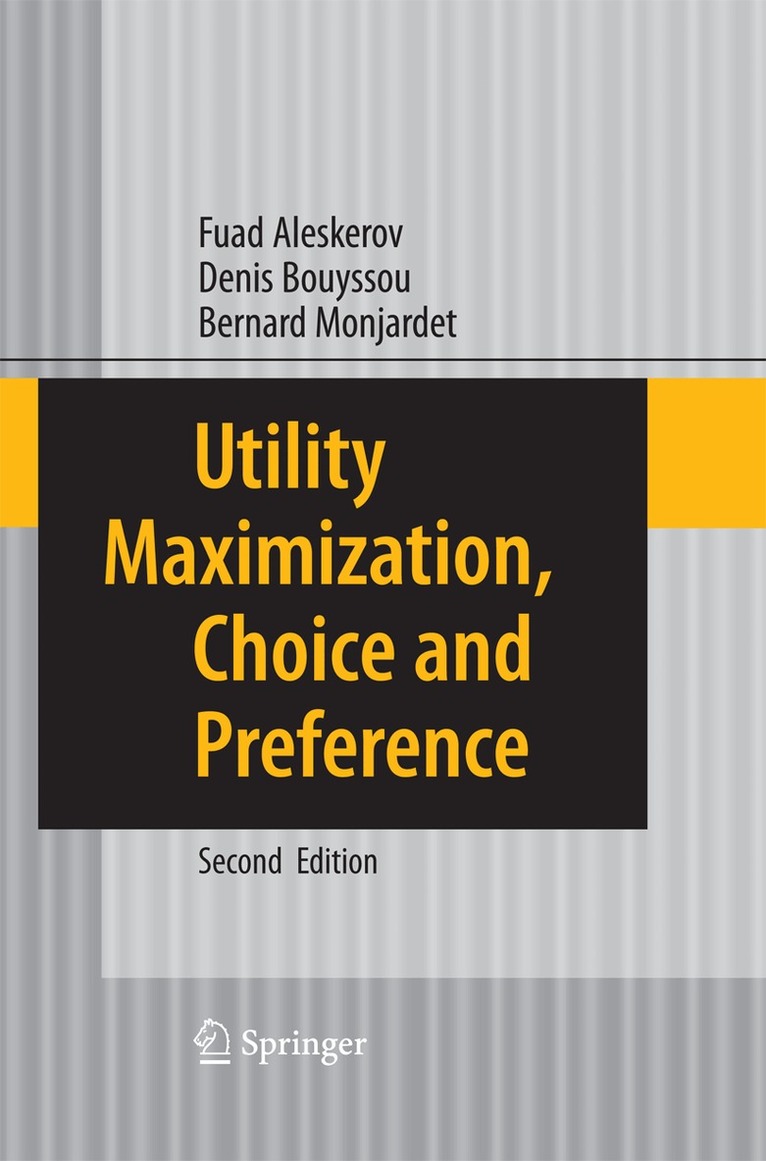
Utility Maximization, Choice and Preference
Av Fuad Aleskerov, Denis Bouyssou m. fl.
Inbunden, 2007
1126 kr
Lägg i varukorg
The utility maximization paradigm forms the basis of many economic, psychological, cognitive and behavioral models. Since it was first devised in the eighteenth century, numerous examples have revealed the deficiencies of the concept. This book makes a contribution to overcome those deficiencies by …
Utility Maximization, Choice and Preference
Av Bernard Monjardet, Denis Bouyssou m. fl.
E-bok, 2007
1459 kr
Lägg i varukorg
The utility maximization paradigm forms the basis of many economic, psychological, cognitive and behavioral models. Since it was first devised in the eighteenth century, numerous examples have revealed the deficiencies of the concept. This book makes a contribution to overcome those deficiencies by …
Utility Maximization, Choice and Preference
Av Fuad Aleskerov, Denis Bouyssou m. fl.
Häftad, 2014
1093 kr
Lägg i varukorg
The utility maximization paradigm forms the basis of many economic, psychological, cognitive and behavioral models. Since it was first devised in the eighteenth century, numerous examples have revealed the deficiencies of the concept. This book makes a contribution to overcome those deficiencies by …
Utility Maximization, Choice and Preference
Av Bernard Monjardet, Fuad Aleskerov
E-bok, 2013
1174 kr
Lägg i varukorg
A classically rational subject is a maximiser: he chooses the best alternative(s) according to some utility function, a paradigm going back to the eighteenth century. One of the ways to overcome its well-known deficiences is to extend it to take into account insenitivity threshold as well as the …
Clusters, Orders, and Trees: Methods and Applications
In Honor of Boris Mirkin's 70th Birthday
Av Fuad Aleskerov, Boris Goldengorin m. fl.
Häftad, 2016
1481 kr
Tillfälligt slut
The volume is dedicated to Boris Mirkin on the occasion of his 70th birthday. In addition to his startling PhD results in abstract automata theory, Mirkin’s ground breaking contributions in various fields of decision making and data analysis have marked the fourth quarter of the 20th century and …