G. Gordon Gibson – Författare
Visar alla böcker från författaren G. Gordon Gibson. Handla med fri frakt och snabb leverans.
3 produkter
3 produkter
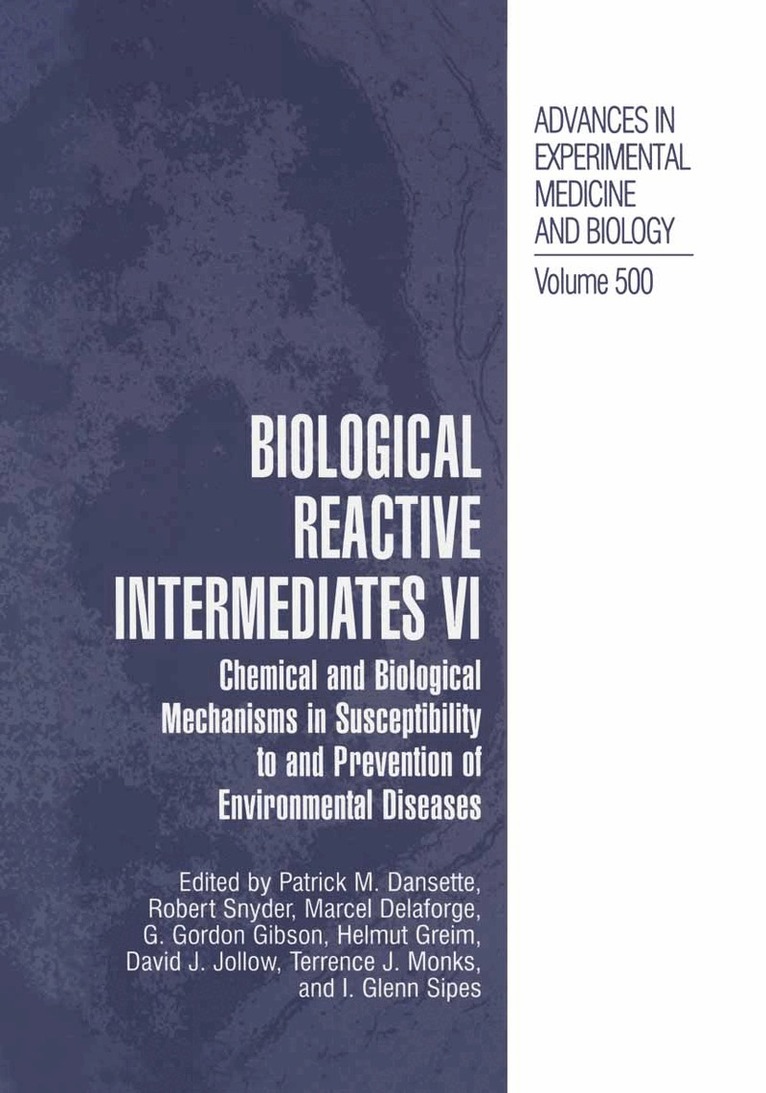
Biological Reactive Intermediates Vi
Chemical and Biological Mechanisms in Susceptibility to and Prevention of Environmental Diseases
Inbunden, Engelska, 2001
2 180 kr
Skickas inom 10-15 vardagar
Historically we have separated the disciplines of Chemistry and Biochemistry by recognizing that the distinguishing characteristic of Biochemistry is the catalysis of reactions by enzymes. Enzymes permit metabolic reactions which would otherwise require extremes of temperature, pressure or pH, often associated with Chemistry, to proceed under ambient conditions of the body. Under some conditions chemical reactions occur in vivo in which products of enzymatic reactions proceed to undergo further reactions non- enzymatically with cellular macromolecules. The results can often be seen as toxic or carcinogenic responses. The chemicals that initiate these reactions are termed "biological reactive intermediates. " The International Symposia on Biological Reactive Intermediates (BRI) began in 1975 at the University of Turku, Finland and have since convened at the University of Surrey, Guildford, The United Kingdom (1980), the University of Maryland, College Park, Maryland (1985), the University of Arizona, Tucson, Arizona (1990), the GSF Forschungszentrum and Technical University of Munich (1995) and, most recently, at the Universite Rene Descartes, Paris, France (2000).The Symposium was organized by an International Planning Committee co-chaired by P. Dansette (Paris, France) and TJ. Monks (Austin, Texas). The committee included: P. H. Beaune (Paris, France), M. De\aforge (Saclay, France), G. P. Gervasi (Pisa, Italy), G. G. Gibson (Guildford, UK), H. Greim (Munich, Germany), DJ. Jollow (Charleston, South Carolina), P. Moldeus (Sodertalje, Sweden), I. G. Sipes (Tucson, Arizona), R. Snyder PJ. van Bladderen (Zeist, The Netherlands). They were (Piscataway, New Jersey), and assisted by an International Scientific Program Advisory Committee which included: TJ.
1 094 kr
Skickas inom 10-15 vardagar
Although the scientific literature on drug metabolism is extensive, it suffers from the disadvantage that the material is diffuse and consists largely of specialist monographs dealing with particular aspects of the subject. In addi tion, although there are a few excellent texts on drug metabolism in print, these tend to be earlier publications and hence do not take into account the many recent advances in this area. Our motivations for writing this book therefore arose from the clear need for a recent and cohesive introductory text on this subject, specifically designed to cater for the needs of undergraduate and postgraduate students. Much of the subject matter in this text is derived from various courses on drug metabolism given at the University of Surrey and the University of Glasgow to basic science students in pharmacology, biochemistry, nutrition and nursing studies, to pre-clinical medical students and to under graduate and post-graduate students in toxicology. Therefore, it is our inten tion that this text will serve as a primer in drug metabolism to a variety of students in the life sciences taking courses in this subject. The term 'drug metabolism' in its broadest sense may be considered as the absorption, distribution, biotransformation and excretion of drugs. To cover all these facets of drug metabolism in a single text is a voluminous task and therefore we have focused primarily on the biotransformation aspects of the subject.
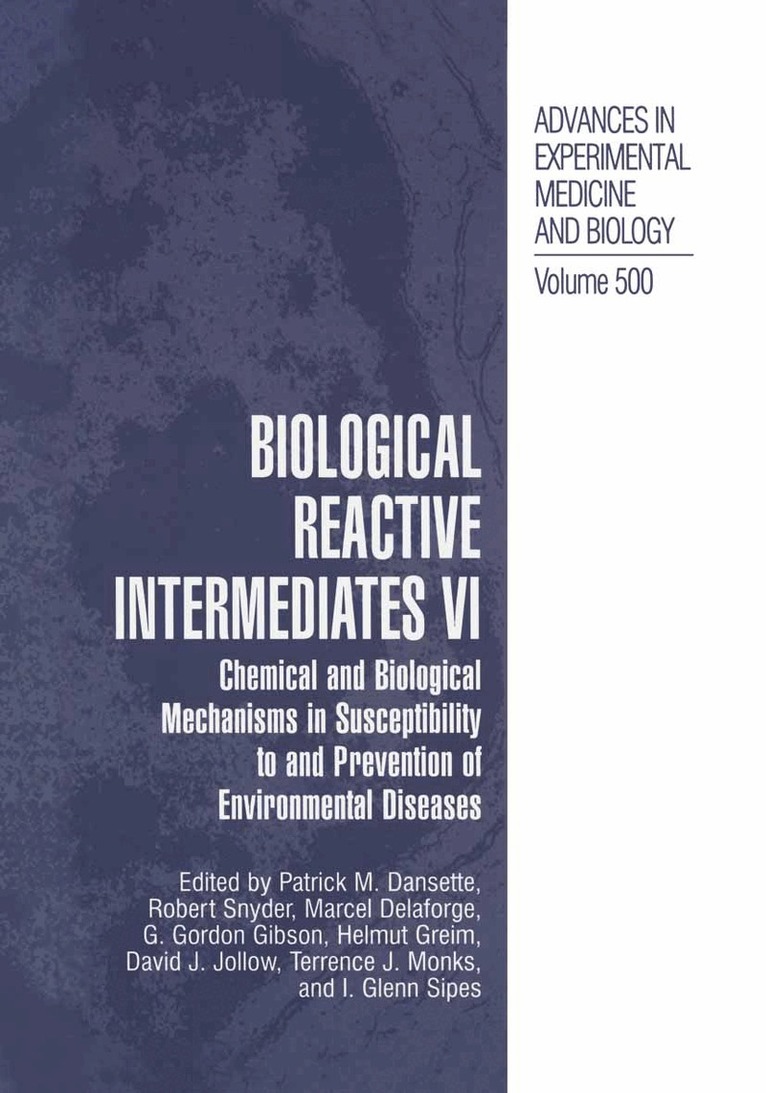
Biological Reactive Intermediates Vi
Chemical and Biological Mechanisms in Susceptibility to and Prevention of Environmental Diseases
Häftad, Engelska, 2012
2 180 kr
Skickas inom 10-15 vardagar
Historically we have separated the disciplines of Chemistry and Biochemistry by recognizing that the distinguishing characteristic of Biochemistry is the catalysis of reactions by enzymes. Enzymes permit metabolic reactions which would otherwise require extremes of temperature, pressure or pH, often associated with Chemistry, to proceed under ambient conditions of the body. Under some conditions chemical reactions occur in vivo in which products of enzymatic reactions proceed to undergo further reactions non- enzymatically with cellular macromolecules. The results can often be seen as toxic or carcinogenic responses. The chemicals that initiate these reactions are termed "biological reactive intermediates. " The International Symposia on Biological Reactive Intermediates (BRI) began in 1975 at the University of Turku, Finland and have since convened at the University of Surrey, Guildford, The United Kingdom (1980), the University of Maryland, College Park, Maryland (1985), the University of Arizona, Tucson, Arizona (1990), the GSF Forschungszentrum and Technical University of Munich (1995) and, most recently, at the Universite Rene Descartes, Paris, France (2000).The Symposium was organized by an International Planning Committee co-chaired by P. Dansette (Paris, France) and TJ. Monks (Austin, Texas). The committee included: P. H. Beaune (Paris, France), M. De\aforge (Saclay, France), G. P. Gervasi (Pisa, Italy), G. G. Gibson (Guildford, UK), H. Greim (Munich, Germany), DJ. Jollow (Charleston, South Carolina), P. Moldeus (Sodertalje, Sweden), I. G. Sipes (Tucson, Arizona), R. Snyder PJ. van Bladderen (Zeist, The Netherlands). They were (Piscataway, New Jersey), and assisted by an International Scientific Program Advisory Committee which included: TJ.