G. Lutjering – författare
Visar alla böcker från författaren G. Lutjering. Handla med fri frakt och snabb leverans.
2 produkter
2 produkter
E-bok
PDF, Engelska, 19964 656 kr
Läs direkt efter köp
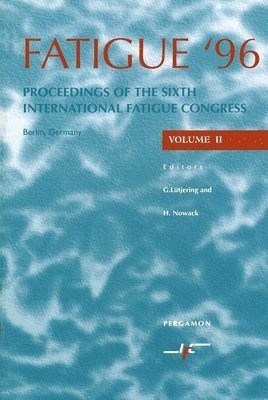
The aim of the 6th International Fatigue Congress, besides covering the entire field of fatigue, was to promote the intimate connection between basic science and engineering application by the selection of appropriate session topics.Fatigue is the main cause of failure of engineering structures and components. Making reliable fatigue predictions is highly difficult because knowledge about fatigue mechanisms in all stages of the fatigue process must be developed much further. In addition, the decreasing availability of raw materials and energy resources forces engineers to continually reduce the weight of constructions. This congress presents research results also particularly for new materials, including composites. Researchers, on the other hand, are confronted with the engineering demands. Futhermore, the overwhelming development which is presently taking place in the field of computer software and hardware dealing with fatigue problems is outlined along with the directions of future developments in all areas of fatigue.Close to 300 fully peer-reviewed papers are published in the proceedings, including nearly 30 overview and keynote papers covering the various session topics. The proceedings should therefore serve as a comprehensive review of the fatigue field at the present state-of-the-art, suitable for scientists, engineers and students.
Inbunden, Engelska, 2000
1 696 kr
Tillfälligt slut
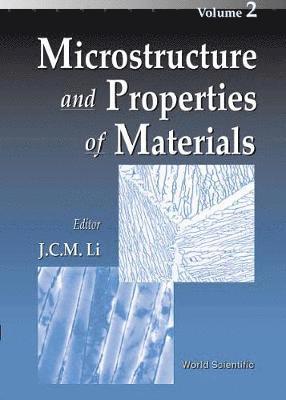
This is the second volume of an advanced textbook on microstructure and properties of materials. (The first volume is on aluminum alloys, nickel-based superalloys, metal matrix composites, polymer matrix composites, ceramics matrix composites, inorganic glasses, superconducting materials and magnetic materials). It covers titanium alloys, titanium aluminides, iron aluminides, iron and steels, iron-based bulk amorphous alloys and nanocrystalline materials.There are many elementary materials science textbooks, but one can find very few advanced texts suitable for graduate school courses. The contributors to this volume are experts in the subject, and hence, together with the first volume, it is a good text for graduate microstructure courses. It is a rich source of design ideas and applications, and will provide a good understanding of how microstructure affects the properties of materials.Chapter 1, on titanium alloys, covers production, thermomechanical processing, microstructure, mechanical properties and applications. Chapter 2, on titanium aluminides, discusses phase stability, bulk and defect properties, deformation mechanisms of single phase materials and polysynthetically twinned crystals, and interfacial structures and energies between phases of different compositions. Chapter 3, on iron aluminides, reviews the physical and mechanical metallurgy of Fe3Al and FeAl, the two important structural intermetallics. Chapter 4, on iron and steels, presents methodology, microstructure at various levels, strength, ductility and strengthening, toughness and toughening, environmental cracking and design against fracture for many different kinds of steels. Chapter 5, on bulk amorphous alloys, covers the critical cooling rate and the effect of composition on glass formation and the accompanying mechanical and magnetic properties of the glasses. Chapter 6, on nanocrystalline materials, describes the preparation from vapor, liquid and solid states, microstructure including grain boundaries and their junctions, stability with respect to grain growth, particulate consolidation while maintaining the nanoscale microstructure, physical, chemical, mechanical, electric, magnetic and optical properties and applications in cutting tools, superplasticity, coatings, transformers, magnetic recordings, catalysis and hydrogen storage.