G. Marquis – författare
Visar alla böcker från författaren G. Marquis. Handla med fri frakt och snabb leverans.
6 produkter
6 produkter
Del 22 - European Structural Integrity Society
Fatigue Design of Components
Inbunden, Engelska, 1997
1 209 kr
Skickas inom 10-15 vardagar
This volume contains a selection of papers presented at Fatigue Design 95 held in Helsinki, Finland from 5-8 September 1995. The papers have been peer reviewed and present practical aspects for the design of components and structures to avoid fatigue failure. Topics covered include: fatigue design experiences, ground vehicle components, component reliability, multiaxial fatigue, notch analysis, service loading, welded structures, probabilistics aspects in fatigue, fatigue design optimization.
E-bok
PDF, Engelska, 19971 527 kr
Läs direkt efter köp
This volume contains a selection of papers presented at Fatigue Design 95 held in Helsinki, Finland from 5-8 September 1995. The papers have been peer reviewed and present practical aspects for the design of components and structures to avoid fatigue failure. Topics covered include: fatigue design experiences, ground vehicle components, component reliability, multiaxial fatigue, notch analysis, service loading, welded structures, probabilistics aspects in fatigue, fatigue design optimization.
E-bok
PDF, Engelska, 19991 804 kr
Läs direkt efter köp
This volume represents a selection of papers presented at the Third International Symposium on Fatigue Design, Fatigue Design 1998, held in Espoo, Finland, 26-29 May, 1998.One objective of this symposium series was to help bridge the gap that sometimes exists between researchers and engineers responsible for designing components against fatigue failure. The 21 selected papers provide an up-to-date survey of engineering practice and a preview of design methods that are advancing toward application.Reliability was selected as a key theme for FD''98. During the design of components and structures, it is not sufficient to combine mean material properties, average usage parameters, and pre-selected safety factors. The engineer must also consider potential scatter in material properties, different end users, manufacturing tolerances and uncertainties in fatigue damage models. Judgement must also be made about the consequences of potential failure and the required degree of reliability for the structure or component during its service life.Approaches to ensuring reliability may vary greatly depending on the structure being designed. Papers in this volume intentionally provide a multidisciplinary perspective on the issue. Authors represent the ground vehicle, heavy equipment, power generation, ship building and other industries. Identical solutions cannot be used in all cases because design methods must always provide a balance between accuracy and simplicity. The point of balance will shift depending on the type of input data available and the component being considered.
Inbunden, Engelska, 2016
1 306 kr
Skickas inom 10-15 vardagar
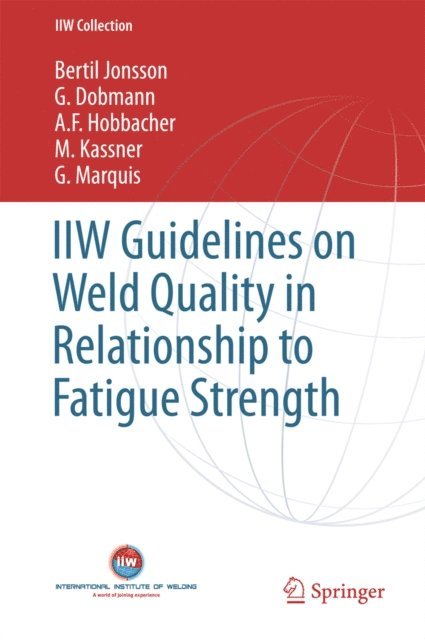
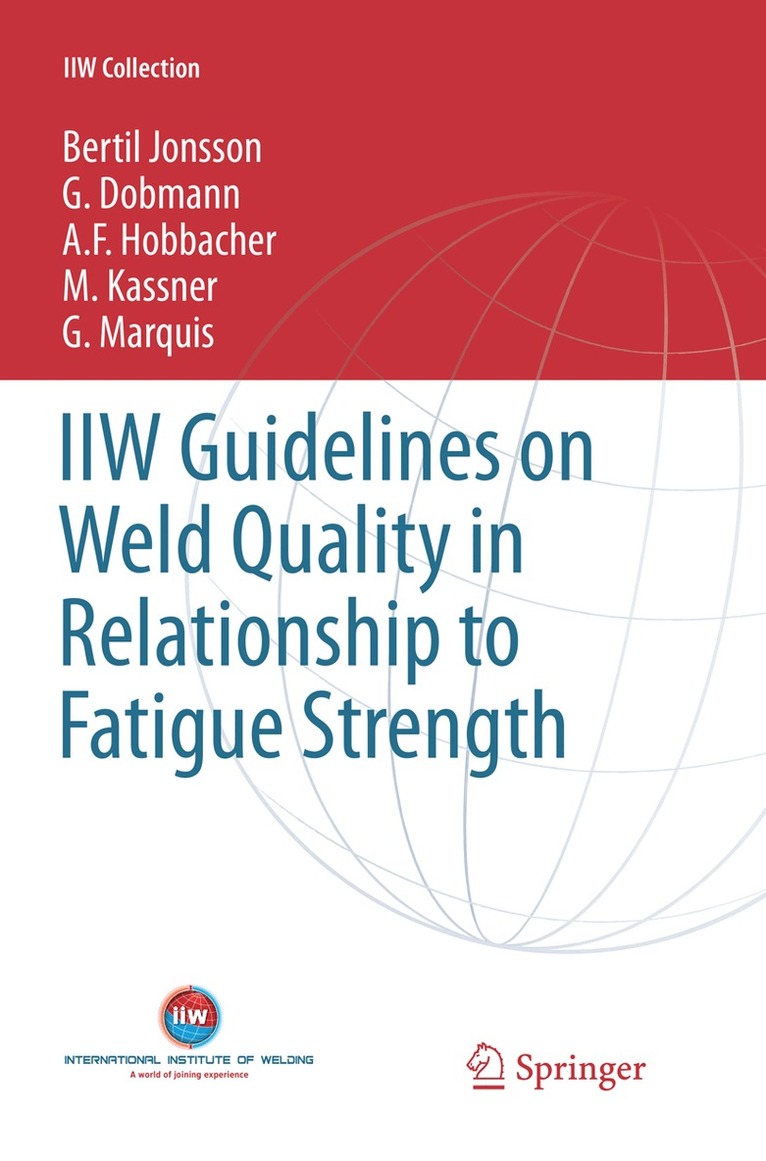
This book presents guidelines on quantitative and qualitative measures of the geometric features and imperfections of welds to ensure that it meets the fatigue strength requirements laid out in the recommendations of the IIW (International Institute of Welding). Welds that satisfy these quality criteria can be assessed in accordance with existing IIW recommendations based on nominal stress, structural stress, notch stress or linear fracture mechanics. Further, the book defines more restrictive acceptance criteria based on weld geometry features and imperfections with increased fatigue strength. Fatigue strength for these welds is defined as S-N curves expressed in terms of nominal applied stress or hot spot stress. Where appropriate, reference is made to existing quality systems for welds.In addition to the acceptance criteria and fatigue assessment curves, the book also provides guidance on their inspection and quality control. The successful implementation of these methods depends on adequate training for operators and inspectors alike. As such, the publication of the present IIW Recommendations is intended to encourage the production of appropriate training aids and guidelines for educating, training and certifying operators and inspectors.
E-bok
PDF, Engelska, 20161 148 kr
Läs direkt efter köp
This book presents guidelines on quantitative and qualitative measures of the geometric features and imperfections of welds to ensure that it meets the fatigue strength requirements laid out in the recommendations of the IIW (International Institute of Welding). Welds that satisfy these quality criteria can be assessed in accordance with existing IIW recommendations based on nominal stress, structural stress, notch stress or linear fracture mechanics. Further, the book defines more restrictive acceptance criteria based on weld geometry features and imperfections with increased fatigue strength. Fatigue strength for these welds is defined as S-N curves expressed in terms of nominal applied stress or hot spot stress. Where appropriate, reference is made to existing quality systems for welds.In addition to the acceptance criteria and fatigue assessment curves, the book also provides guidance on their inspection and quality control. The successful implementation of these methods depends on adequate training for operators and inspectors alike. As such, the publication of the present IIW Recommendations is intended to encourage the production of appropriate training aids and guidelines for educating, training and certifying operators and inspectors.
Häftad, Engelska, 2018
927 kr
Skickas inom 10-15 vardagar
This book presents guidelines on quantitative and qualitative measures of the geometric features and imperfections of welds to ensure that it meets the fatigue strength requirements laid out in the recommendations of the IIW (International Institute of Welding). Welds that satisfy these quality criteria can be assessed in accordance with existing IIW recommendations based on nominal stress, structural stress, notch stress or linear fracture mechanics. Further, the book defines more restrictive acceptance criteria based on weld geometry features and imperfections with increased fatigue strength. Fatigue strength for these welds is defined as S-N curves expressed in terms of nominal applied stress or hot spot stress. Where appropriate, reference is made to existing quality systems for welds.In addition to the acceptance criteria and fatigue assessment curves, the book also provides guidance on their inspection and quality control. The successful implementation of these methods depends on adequate training for operators and inspectors alike. As such, the publication of the present IIW Recommendations is intended to encourage the production of appropriate training aids and guidelines for educating, training and certifying operators and inspectors.