G. Nicolis – författare
Visar alla böcker från författaren G. Nicolis. Handla med fri frakt och snabb leverans.
4 produkter
4 produkter
Häftad, Engelska, 1995
710 kr
Skickas inom 7-10 vardagar
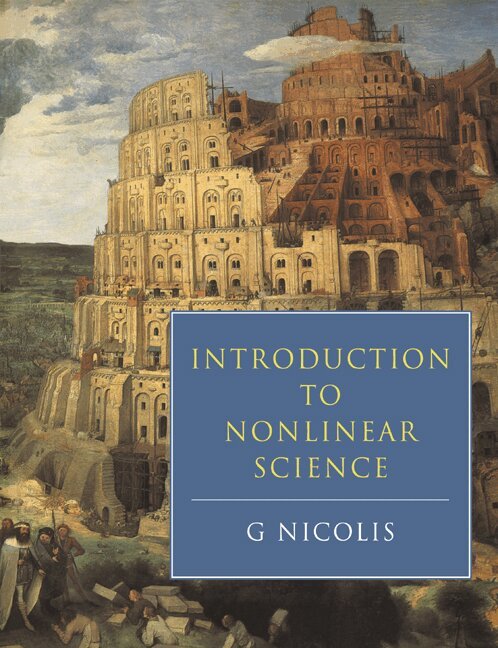
The aim of this book is to develop a unified approach to nonlinear science, which does justice to its multiple facets and to the diversity and richness of the concepts and tools developed in this field over the years. Nonlinear science emerged in its present form following a series of closely related and decisive analytic, numerical and experimental developments that took place over the past three decades. It appeals to an extremely large variety of subject areas, but, at the same time, introduces into science a new way of thinking based on a subtle interplay between qualitative and quantitative techniques, topological and metric considerations and deterministic and statistical views. Special effort has been made throughout the book to illustrate both the development of the subject and the mathematical techniques, by reference to simple models. Each chapter concludes with a set of problems. This book will be of great value to graduate students in physics, applied mathematics, chemistry, engineering and biology taking courses in nonlinear science and its applications.
Inbunden, Engelska, 1983
2 174 kr
Skickas inom 10-15 vardagar
On March 14-18, 1983 a workshop on "Chemical Instabilities: Applications in Chemistry, Engineering, Geology, and Materials Science" was held in Austin, Texas, U.S.A. It was organized jointly by the University of Texas at Austin and the Universite Libre de Bruxelles and sponsored qy NATO, NSF, the University of Texas at Austin, the International Solvay Institutes and the Ex xon Corporation. The present Volume includes most of the material of the in vited lectures delivered in the workshop as well as material from some posters, whose content was directly related to the themes of the invited lectures. In ,recent years, problems related to the stability and the nonlinear dynamics of nonequilibrium systems invaded a great num ber of fields ranging from abstract mathematics to biology. One of the most striking aspects of this development is that subjects reputed to be "classical" and "well-established" like chemistry, turned out to give rise to a rich variety of phenomena leading to multiple steady states and hysteresis, oscillatory behavior in time, spatial patterns, or propagating wave fronts. The primary objective of the workshop was to bring together researchers actively engaged in fields in which instabilities and nonlinear phenomena similar to those observed in chemistry are of current and primary concern : chemical engineering (especially surface catalysis), combustion (dynamics of ignition, flame sta bili t;y), interfaces (emulsification, dendritic growth), geology (regularly repeated patterns of mineralization 1n a variety of spabe scales), and materials science (dynamical solidification, behavior of matter under irradiation).
E-bok
PDF, Engelska, 20122 741 kr
Läs direkt efter köp
On March 14-18, 1983 a workshop on "Chemical Instabilities: Applications in Chemistry, Engineering, Geology, and Materials Science" was held in Austin, Texas, U.S.A. It was organized jointly by the University of Texas at Austin and the Universite Libre de Bruxelles and sponsored qy NATO, NSF, the University of Texas at Austin, the International Solvay Institutes and the Ex xon Corporation. The present Volume includes most of the material of the in vited lectures delivered in the workshop as well as material from some posters, whose content was directly related to the themes of the invited lectures. In ,recent years, problems related to the stability and the nonlinear dynamics of nonequilibrium systems invaded a great num ber of fields ranging from abstract mathematics to biology. One of the most striking aspects of this development is that subjects reputed to be "classical" and "well-established" like chemistry, turned out to give rise to a rich variety of phenomena leading to multiple steady states and hysteresis, oscillatory behavior in time, spatial patterns, or propagating wave fronts. The primary objective of the workshop was to bring together researchers actively engaged in fields in which instabilities and nonlinear phenomena similar to those observed in chemistry are of current and primary concern : chemical engineering (especially surface catalysis), combustion (dynamics of ignition, flame sta bili t;y), interfaces (emulsification, dendritic growth), geology (regularly repeated patterns of mineralization 1n a variety of spabe scales), and materials science (dynamical solidification, behavior of matter under irradiation).
Häftad, Engelska, 2012
2 174 kr
Skickas inom 10-15 vardagar
On March 14-18, 1983 a workshop on "Chemical Instabilities: Applications in Chemistry, Engineering, Geology, and Materials Science" was held in Austin, Texas, U.S.A. It was organized jointly by the University of Texas at Austin and the Universite Libre de Bruxelles and sponsored qy NATO, NSF, the University of Texas at Austin, the International Solvay Institutes and the Ex xon Corporation. The present Volume includes most of the material of the in vited lectures delivered in the workshop as well as material from some posters, whose content was directly related to the themes of the invited lectures. In ,recent years, problems related to the stability and the nonlinear dynamics of nonequilibrium systems invaded a great num ber of fields ranging from abstract mathematics to biology. One of the most striking aspects of this development is that subjects reputed to be "classical" and "well-established" like chemistry, turned out to give rise to a rich variety of phenomena leading to multiple steady states and hysteresis, oscillatory behavior in time, spatial patterns, or propagating wave fronts. The primary objective of the workshop was to bring together researchers actively engaged in fields in which instabilities and nonlinear phenomena similar to those observed in chemistry are of current and primary concern : chemical engineering (especially surface catalysis), combustion (dynamics of ignition, flame sta bili t;y), interfaces (emulsification, dendritic growth), geology (regularly repeated patterns of mineralization 1n a variety of spabe scales), and materials science (dynamical solidification, behavior of matter under irradiation).