G. Randy Keller - Böcker
Visar alla böcker från författaren G. Randy Keller. Handla med fri frakt och snabb leverans.
3 produkter
3 produkter
863 kr
Tillfälligt slut
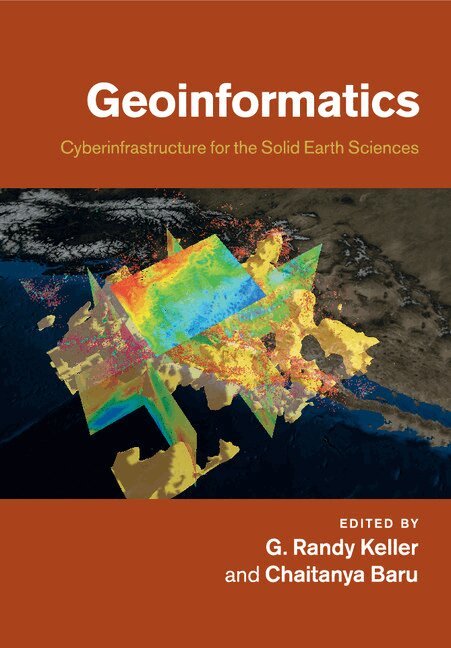
Advanced information technology infrastructure is increasingly being employed in the Earth sciences to provide researchers with efficient access to massive central databases and to integrate diversely formatted information from a variety of sources. These geoinformatics initiatives enable manipulation, modeling and visualization of data in a consistent way, and are helping to develop integrated Earth models at various scales, and from the near surface to the deep interior. This book uses a series of case studies to demonstrate computer and database use across the geosciences. Chapters are thematically grouped into sections that cover data collection and management; modeling and community computational codes; visualization and data representation; knowledge management and data integration; and web services and scientific workflows. Geoinformatics is a fascinating and accessible introduction to this emerging field for readers across the solid Earth sciences and an invaluable reference for researchers interested in initiating new cyberinfrastructure projects of their own.
Del 154 - Geophysical Monograph Series
Rocky Mountain Region: An Evolving Lithosphere
Tectonics, Geochemistry, and Geophysics
2005
966 kr
Tillfälligt slut
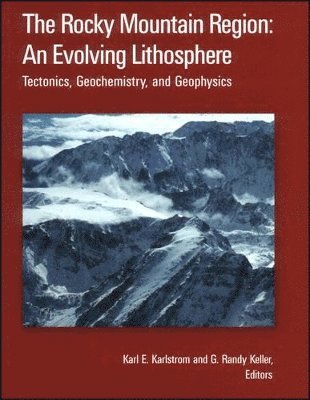
Published by the American Geophysical Union as part of the Geophysical Monograph Series, Volume 154.The Rocky Mountains provide a key region for understanding the evolution of the western North American continent and processes that shape continents in general.As a result, the region has prompted intense and pioneering geologic investigations for over a century, offering scientists an exceptionally rich field laboratory in which to gather data and to make and test interpretations. The Continental Dynamics of the Rocky Mountain (CD-ROM) experiment (1995-2004), from which this book derives, follows in this tradition, motivated by three leading questions: how are continents initially formed and stabilized; how do old lithospheric structures and boundaries influence younger tectonic events; and how did processes related to the plate boundary affect the evolution of the Cenozoic Rocky Mountains? To successfully answer such questions requires integrated studies focused from the surface, through the crust, into the mantle, and with a four-dimensional approach that also encompasses the time dimension.
634 kr
Skickas
Advanced information technology infrastructure is increasingly being employed in the Earth sciences to provide researchers with efficient access to massive central databases and to integrate diversely formatted information from a variety of sources. These geoinformatics initiatives enable manipulation, modeling and visualization of data in a consistent way, and are helping to develop integrated Earth models at various scales, and from the near surface to the deep interior. This book uses a series of case studies to demonstrate computer and database use across the geosciences. Chapters are thematically grouped into sections that cover data collection and management; modeling and community computational codes; visualization and data representation; knowledge management and data integration; and web services and scientific workflows. Geoinformatics is a fascinating and accessible introduction to this emerging field for readers across the solid Earth sciences and an invaluable reference for researchers interested in initiating new cyberinfrastructure projects of their own.