
G. Roskam – författare
Visar alla böcker från författaren . Handla med fri frakt och snabb leverans.
2 produkter
2 produkter
Del 19 - Collection d'Études Classiques
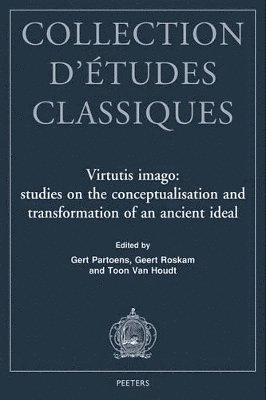
Virtutis Imago: Studies on the Conceptualisation and Transformation of an Ancient Ideal
Häftad, Engelska, 2004
1 053 kr
Skickas inom 3-6 vardagar
Manliness, prowess, deeds of valour, excellence: «virtus» is a term which has a broad semantic range, which differs significantly from the meanings attached to such modern notions as the English «virtue» or the French «vertu». Although deeply rooted in a system of practices and discourses aimed at continuing the «mos maiorum», the traditional concept of «virtus» underwent serious changes in the course of time: it was reconsidered, reassessed, and even replaced with new definitions of moral excellence. The editors of the present volume have sought to gather contributions which shed new light on the ancient representation of moral excellence or discuss relevant aspects of the rich but complex «Wirkungsgeschichte» of the Roman concept of «virtus». Thematically coherent, the book testifies to the rich variety of approaches currently adopted in classical philology, ancient history, Early Christian and Byzantine Studies, and the study of Latin texts from the Middle Ages and the Early Modern Period.
Del 25 - Collection d'Études Classiques
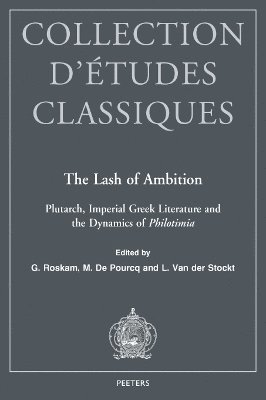
Lash of Ambition
Plutarch, Imperial Greek Literature and the Dynamics of Philotimia
Häftad, Engelska, 2012
1 087 kr
Tillfälligt slut
In this volume, various aspects of Plutarch’s view of ‘philotimia’ are analysed in detail and compared with the position of several authors of the ‘Second Sophistic’. This confrontation challenges the often implicit and unquestioned consensus that Plutarch occupies as a singular figure ‘his own space’ apart from the ‘Second Sophistic’. The broad approach and focus of this volume includes problems of textual criticism, comparative analysis, careful semantic studies of the occurrences of the term ‘philotimia’ in the different authors, moral-philosophical reflection on ambition, a study of philosophy as a field of honour, and the dynamics of the author’s own ‘philotimia’ placed in the contemporary cultural context. The novel assessments of the different authors that are presented in this collection contribute to a proper understanding of their own (rhetorical/philosophical) culture and of their cultural environment. As a result, the monograph will be of interest to those studying Plutarch and the history of philosophy, rhetoric and the ‘Second Sophistic'.