G. Schneider – författare
Visar alla böcker från författaren G. Schneider. Handla med fri frakt och snabb leverans.
5 produkter
5 produkter
1 062 kr
Skickas inom 10-15 vardagar
This text brings together scholars from economic and political sciences to study the interactions within the European Union from a strategic or rational choice perspective. The contributors seek to understand the relationship between member states and competing European institutions, focusing on the horizontal, countervailing forces of legislative, regulatory, bureaucratic and constitutional decision making. Other examinations analyze the vertical structures, in particular the impact of the federal distribution of power on policy choices and on their implementation.
489 kr
Skickas inom 5-8 vardagar
1 507 kr
Skickas inom 7-10 vardagar
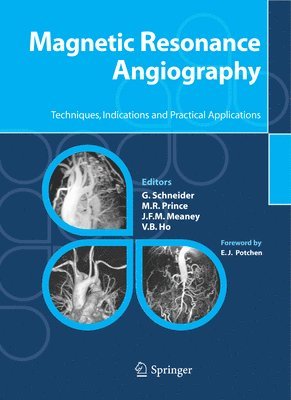
Magnetic Resonance Angiography
Techniques, Indications and Practical Applications
Inbunden, Engelska, 2005
1 637 kr
Skickas inom 10-15 vardagar
The advent of contrast-enhanced MRA in the early to mid 1990s revolutionized the clinical approach to vascular imaging: an accurate non-invasive imaging modality, not requiring ionizing radiation or potentially nephrotoxic iodinated contrast media, was able to compete with the more hazardous and invasive catheter angiography. Today, MRA is a safe, easy-to-perform procedure routinely used in most imaging centers, and the continued development of faster, more powerful magnets and more effective contrast agents is increasingly helping to overcome many of the early limitations of the technique. Subdivided into three sections (technique, indications and practical applications) and written by internationally renowned experts in the field, this volume stands out in the current literature on MRA by providing:- detailed information on sequence parameters for different magnets and vascular territories for the optimization of the MRA technique;- a broad overview of the principal indications for which contrast-enhanced MR angiography is ideally suited;- the typical MR imaging findings associated with various pathologies;- the appropriateness of contrast-enhanced MRA as compared with other modalities, such as CTA and CEUS;- the potential pitfalls and limitations of the technique in clinical routine.The volume will prove invaluable to radiologists and clinicians wishing to expand, improve, or consolidate their routine approach to vascular MR imaging.