G. Staerck – författare
Visar alla böcker från författaren G. Staerck. Handla med fri frakt och snabb leverans.
4 produkter
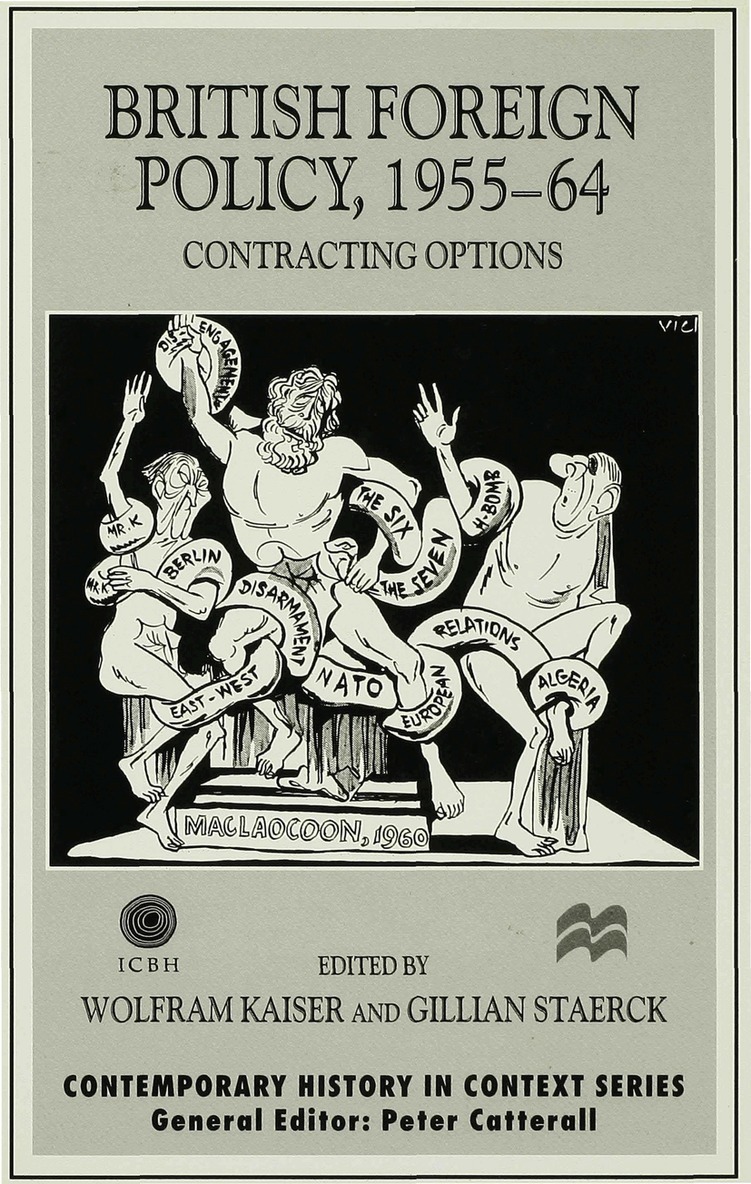
British Foreign Policy, 1955-64
Contracting Options
Inbunden, 2000
1971 kr
Lägg i varukorg
In 1945 Britain was still a world power. Increasingly, however, it had to adapt its international commitments to the financial limitations, technological progress and external challenges of the bipolar postwar world, especially during the premierships of Eden, Macmillan and Douglas-Hume from 1955 …
Cold War Britain
Av M. Hopkins, M. Kandiah m. fl.
Häftad, 2003
569 kr
Lägg i varukorg
Britain and the Cold War, 1945-1964 offers new perspectives on ways in which Britain fought the Cold War, and illuminates key areas of the policy formulation process. It argues that in many ways Britain and the United States perceived and handled the threat posed by the Communist bloc in similar …
Cold War Britain
Av M. Hopkins, M. Kandiah m. fl.
Inbunden, 2002
569 kr
Lägg i varukorg
Britain and the Cold War, 1945-1964 offers new perspectives on ways in which Britain fought the Cold War, and illuminates key areas of the policy formulation process. It argues that in many ways Britain and the United States perceived and handled the threat posed by the Communist bloc in similar …
Cold War Britain
Av G. Staerck, M. Kandiah m. fl.
E-bok, 2002
803 kr
Lägg i varukorg
Britain and the Cold War, 1945-1964 offers new perspectives on ways in which Britain fought the Cold War, and illuminates key areas of the policy formulation process. It argues that in many ways Britain and the United States perceived and handled the threat posed by the Communist bloc in similar …