G. Suseendran – författare
2 738 kr
Skickas inom 10-15 vardagar
850 kr
Skickas inom 10-15 vardagar
952 kr
Läs direkt efter köp
This book provides insights into contemporary issues and challenges in soft computing applications and techniques in healthcare. It will be a useful guide to identify, categorise and assess the role of different soft computing techniques for disease, diagnosis and prediction due to technological advancements.
The book explores applications in soft computing and covers empirical properties of artificial neural network (ANN), evolutionary computing, fuzzy logic and statistical techniques. It presents basic and advanced concepts to help beginners and industry professionals get up to speed on the latest developments in soft computing and healthcare systems. It incorporates the latest methodologies and challenges facing soft computing, examines descriptive, predictive and social network techniques and discusses analytics tools and their role in providing effective solutions for science and technology.
The primary users for the book include researchers, academicians, postgraduate students, specialists and practitioners.
Dr. Ashish Mishra is a professor in the Department of Computer Science and Engineering, Gyan Ganga Institute of Technology and Sciences, Jabalpur, Madhya Pradesh, India. He has contributed in organising the INSPIRE Science Internship Camp. He is a member of the Institute of Electrical and Electronics Engineers and is a life member of the Computer Society of India. His research interests include the Internet of Things, data mining, cloud computing, image processing and knowledge-based systems. He holds nine patents in Intellectual Property, India. He has authored four books in the areas of data mining, image processing and LaTex.
Dr. G. Suseendran is an assistant professor, Department of Information Technology, School of Computing Sciences, Vels Institute of Science, Technology & Advanced Studies (VISTAS), Chennai, Tamil Nadu, India. His research interests include ad-hoc networks, the Internet of Things, data mining, cloud computing, image processing, knowledge-based systems, and Web information exploration. He has published more than 75 research papers in various international journals such as Science Citation Index, Springer Book Chapter, Scopus, IEEE Access and UGC-referred journals.
Prof. Trung-Nghia Phung is an associate professor and Head of Academic Affairs, Thai Nguyen University of Information and Communication Technology (ICTU). He has published more than 60 research papers. His main research interest lies in the field of speech, audio, and biomedical signal processing. He serves as a technical committee program member, track chair, session chair, and reviewer of many international conferences and journals. He was a co-Chair of the International Conference on Advances in Information and Communication Technology 2016 (ICTA 2016) and a Session Chair of the 4th International Conference on Information System Design and Intelligent Applications (INDIA 2017).
919 kr
Läs direkt efter köp
This book provides insights into contemporary issues and challenges in soft computing applications and techniques in healthcare. It will be a useful guide to identify, categorise and assess the role of different soft computing techniques for disease, diagnosis and prediction due to technological advancements.
The book explores applications in soft computing and covers empirical properties of artificial neural network (ANN), evolutionary computing, fuzzy logic and statistical techniques. It presents basic and advanced concepts to help beginners and industry professionals get up to speed on the latest developments in soft computing and healthcare systems. It incorporates the latest methodologies and challenges facing soft computing, examines descriptive, predictive and social network techniques and discusses analytics tools and their role in providing effective solutions for science and technology.
The primary users for the book include researchers, academicians, postgraduate students, specialists and practitioners.
Dr. Ashish Mishra is a professor in the Department of Computer Science and Engineering, Gyan Ganga Institute of Technology and Sciences, Jabalpur, Madhya Pradesh, India. He has contributed in organising the INSPIRE Science Internship Camp. He is a member of the Institute of Electrical and Electronics Engineers and is a life member of the Computer Society of India. His research interests include the Internet of Things, data mining, cloud computing, image processing and knowledge-based systems. He holds nine patents in Intellectual Property, India. He has authored four books in the areas of data mining, image processing and LaTex.
Dr. G. Suseendran is an assistant professor, Department of Information Technology, School of Computing Sciences, Vels Institute of Science, Technology & Advanced Studies (VISTAS), Chennai, Tamil Nadu, India. His research interests include ad-hoc networks, the Internet of Things, data mining, cloud computing, image processing, knowledge-based systems, and Web information exploration. He has published more than 75 research papers in various international journals such as Science Citation Index, Springer Book Chapter, Scopus, IEEE Access and UGC-referred journals.
Prof. Trung-Nghia Phung is an associate professor and Head of Academic Affairs, Thai Nguyen University of Information and Communication Technology (ICTU). He has published more than 60 research papers. His main research interest lies in the field of speech, audio, and biomedical signal processing. He serves as a technical committee program member, track chair, session chair, and reviewer of many international conferences and journals. He was a co-Chair of the International Conference on Advances in Information and Communication Technology 2016 (ICTA 2016) and a Session Chair of the 4th International Conference on Information System Design and Intelligent Applications (INDIA 2017).
2 621 kr
Skickas inom 5-8 vardagar
3 101 kr
Läs direkt efter köp
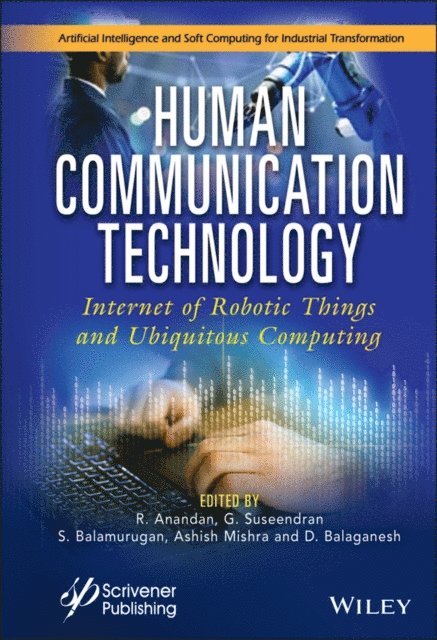
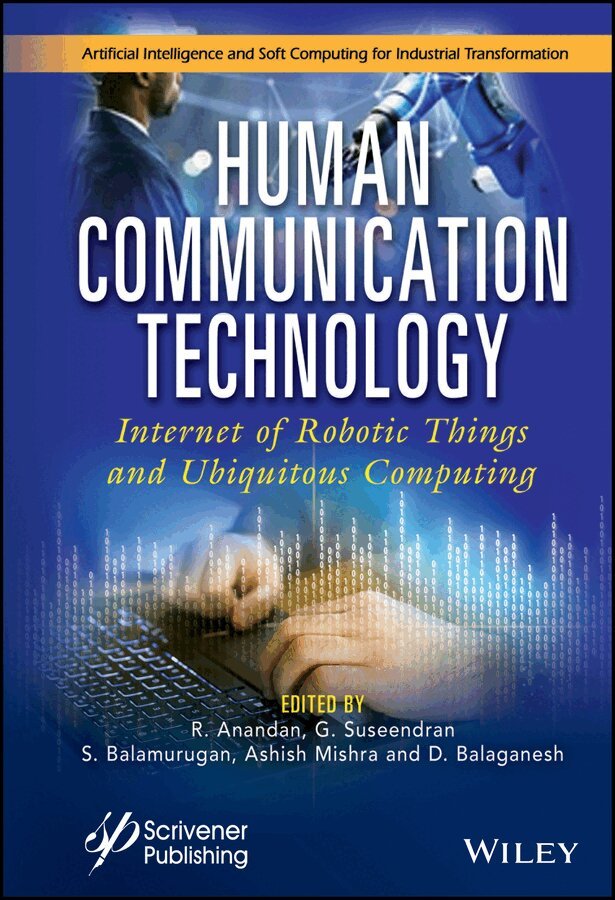
A unique book explaining how perception, location, communication, cognition, computation, networking, propulsion, integration of federated Internet of Robotic Things (IoRT) and digital platforms are important components of new-generation IoRT applications through continuous, real-time interaction with the world.
The 16 chapters in this book discuss new architectures, networking paradigms, trustworthy structures, and platforms for the integration of applications across various business and industrial domains that are needed for the emergence of intelligent things (static or mobile) in collaborative autonomous fleets. These new apps speed up the progress of paradigms of autonomous system design and the proliferation of the Internet of Robotic Things (IoRT). Collaborative robotic things can communicate with other things in the IoRT, learn independently, interact securely with the world, people, and other things, and acquire characteristics that make them self-maintaining, self-aware, self-healing, and fail-safe operational. Due to the ubiquitous nature of collaborative robotic things, the IoRT, which binds together the sensors and the objects of robotic things, is gaining popularity. Therefore, the information contained in this book will provide readers with a better understanding of this interdisciplinary field.
Audience
Researchers in various fields including computer science, IoT, artificial intelligence, machine learning, and big data analytics.
3 101 kr
Läs direkt efter köp
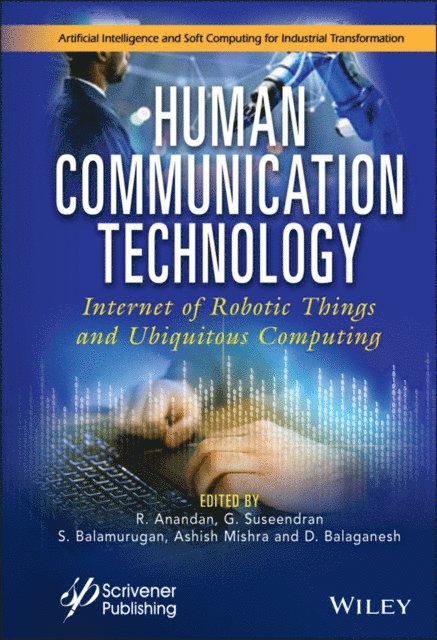
A unique book explaining how perception, location, communication, cognition, computation, networking, propulsion, integration of federated Internet of Robotic Things (IoRT) and digital platforms are important components of new-generation IoRT applications through continuous, real-time interaction with the world.
The 16 chapters in this book discuss new architectures, networking paradigms, trustworthy structures, and platforms for the integration of applications across various business and industrial domains that are needed for the emergence of intelligent things (static or mobile) in collaborative autonomous fleets. These new apps speed up the progress of paradigms of autonomous system design and the proliferation of the Internet of Robotic Things (IoRT). Collaborative robotic things can communicate with other things in the IoRT, learn independently, interact securely with the world, people, and other things, and acquire characteristics that make them self-maintaining, self-aware, self-healing, and fail-safe operational. Due to the ubiquitous nature of collaborative robotic things, the IoRT, which binds together the sensors and the objects of robotic things, is gaining popularity. Therefore, the information contained in this book will provide readers with a better understanding of this interdisciplinary field.
Audience
Researchers in various fields including computer science, IoT, artificial intelligence, machine learning, and big data analytics.
2 815 kr
Skickas inom 11-20 vardagar
3 097 kr
Läs direkt efter köp
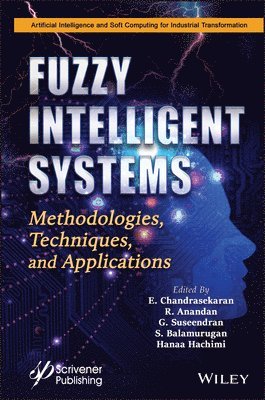
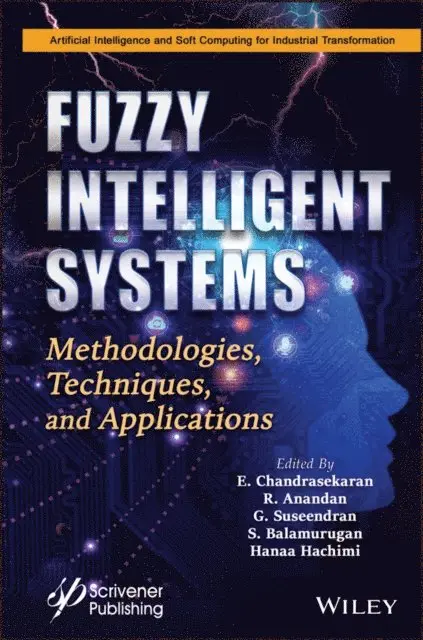
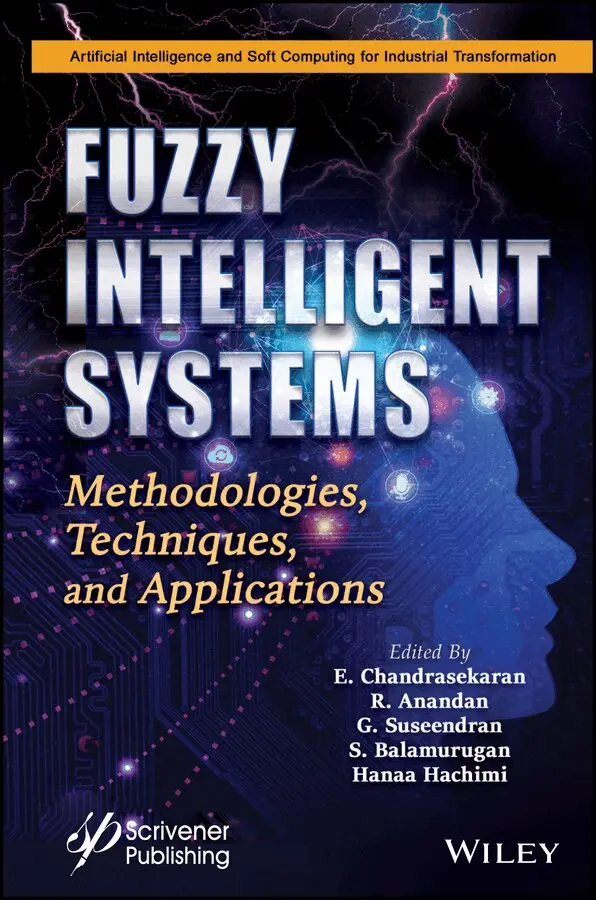
A comprehensive guide to Expert Systems and Fuzzy Logic that is the backbone of artificial intelligence.
The objective in writing the book is to foster advancements in the field and help disseminate results concerning recent applications and case studies in the areas of fuzzy logic, intelligent systems, and web-based applications among working professionals and those in education and research covering a broad cross section of technical disciplines.
Fuzzy Intelligent Systems: Methodologies, Techniques, and Applications comprises state-of-the-art chapters detailing how expert systems are built and how the fuzzy logic resembling human reasoning, powers them. Engineers, both current and future, need systematic training in the analytic theory and rigorous design of fuzzy control systems to keep up with and advance the rapidly evolving field of applied control technologies. As a consequence, expert systems with fuzzy logic capabilities make for a more versatile and innovative handling of problems. This book showcases the combination of fuzzy logic and neural networks known as a neuro-fuzzy system, which results in a hybrid intelligent system by combining a human-like reasoning style of neural networks.
Audience
Researchers and students in computer science, Internet of Things, artificial intelligence, machine learning, big data analytics and information and communication technology-related fields. Students will gain a thorough understanding of fuzzy control systems theory by mastering its contents.
3 209 kr
Läs direkt efter köp
A comprehensive guide to Expert Systems and Fuzzy Logic that is the backbone of artificial intelligence.
The objective in writing the book is to foster advancements in the field and help disseminate results concerning recent applications and case studies in the areas of fuzzy logic, intelligent systems, and web-based applications among working professionals and those in education and research covering a broad cross section of technical disciplines.
Fuzzy Intelligent Systems: Methodologies, Techniques, and Applications comprises state-of-the-art chapters detailing how expert systems are built and how the fuzzy logic resembling human reasoning, powers them. Engineers, both current and future, need systematic training in the analytic theory and rigorous design of fuzzy control systems to keep up with and advance the rapidly evolving field of applied control technologies. As a consequence, expert systems with fuzzy logic capabilities make for a more versatile and innovative handling of problems. This book showcases the combination of fuzzy logic and neural networks known as a neuro-fuzzy system, which results in a hybrid intelligent system by combining a human-like reasoning style of neural networks.
Audience
Researchers and students in computer science, Internet of Things, artificial intelligence, machine learning, big data analytics and information and communication technology-related fields. Students will gain a thorough understanding of fuzzy control systems theory by mastering its contents.
1 620 kr
Skickas inom 10-15 vardagar
2 049 kr
Läs direkt efter köp
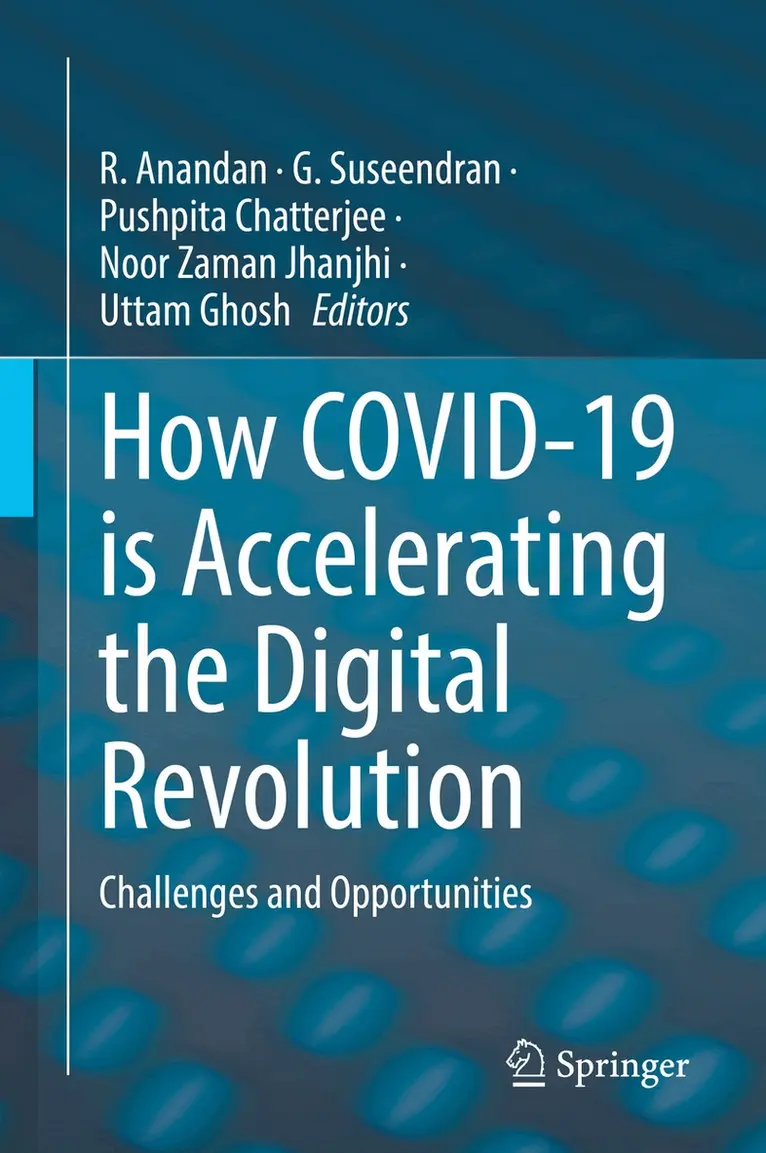
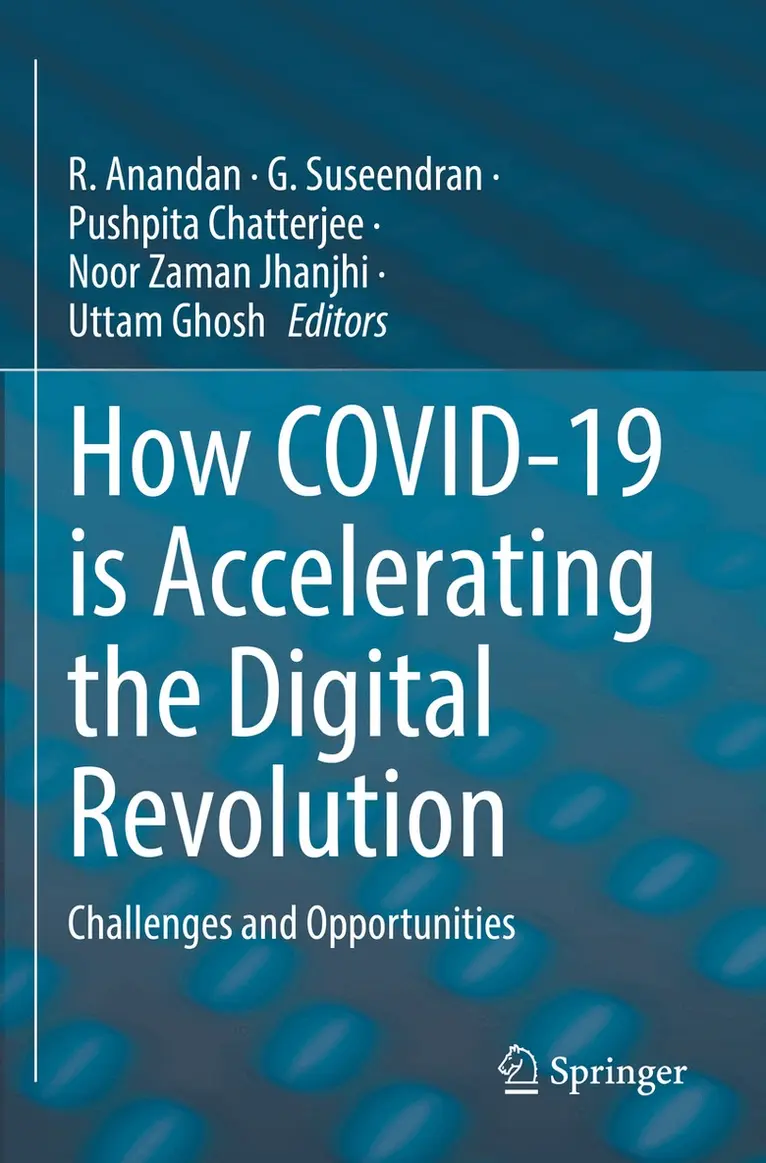
This book explores how digital technologies have proved to be a useful and necessary tool to help ensure that local and regional governments on the frontline of the emergency can continue to provide essential public services during the COVID-19 crisis. Indeed, as the demand for digital technologies grows, local and regional governments are increasingly committed to improving the lives of their citizens under the principles of privacy, freedom of expression and democracy.
The Digital Revolution began between the late 1950s and 1970s and represents the evolution of technology from the mechanical and analog to the digital. The advent of digital technology has also changed how humans communicate – today using computers, smartphones and the internet. Further, the digital revolution has made a tremendous wealth of information accessible to virtually everyone.
In turn, the book focuses on key challenges for local and regional governments concerning digitaltechnologies during this crisis, e.g. the balance between privacy and security, the digital divide, and accessibility. Privacy is a challenge in the mitigation of COVID-19, as governments rely on digital technologies like contact-tracking apps and big data to help trace peoples’ patterns and movements. While these methods are controversial and may infringe on rights to privacy, they also appear to be effective measures for rapidly controlling and limiting the spread of the virus. Next, the book discusses the 10 technology trends that can help build a resilient society, as well as their effects on how we do business, how we work, how we produce goods, how we learn, how we seek medical services and how we entertain ourselves. Lastly, the book addresses a range of diversified technologies, e.g. Online Shopping and Robot Deliveries, Digital and Contactless Payments, Remote Work, Distance Learning, Telehealth, Online Entertainment, Supply Chain 4.0, 3D Printing, Robotics and Drones, 5G, andInformation and Communications Technology (ICT).
1 620 kr
Skickas inom 10-15 vardagar
1 669 kr
Skickas inom 3-6 vardagar
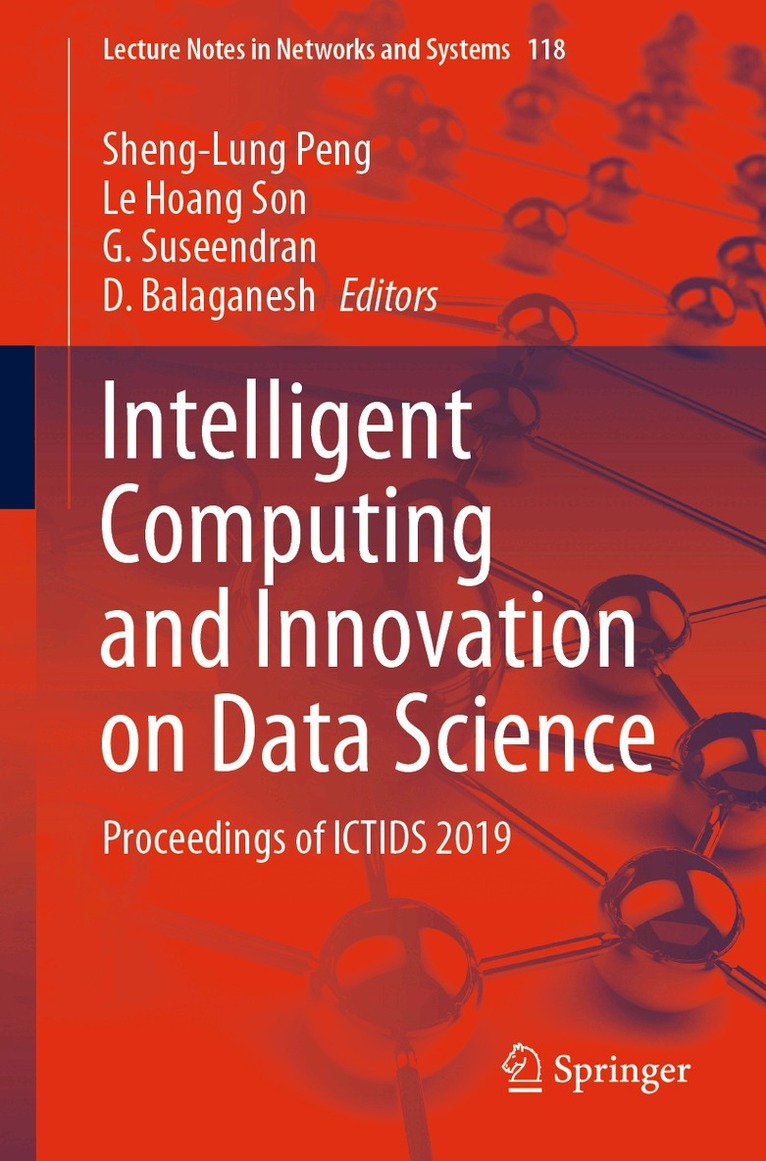
Intelligent Computing and Innovation on Data Science
Proceedings of ICTIDS 2019
1 668 kr
Skickas inom 10-15 vardagar
2 110 kr
Läs direkt efter köp
This book covers both basic and high-level concepts relating to the intelligent computing paradigm and data sciences in the context of distributed computing, big data, data sciences, high-performance computing and Internet of Things.
It is becoming increasingly important to develop adaptive, intelligent computing-centric, energy-aware, secure and privacy-aware systems in high-performance computing and IoT applications. In this context, the book serves as a useful guide for industry practitioners, and also offers beginners a comprehensive introduction to basic and advanced areas of intelligent computing. Further, it provides a platform for researchers, engineers, academics and industrial professionals around the globe to showcase their recent research concerning recent trends. Presenting novel ideas and stimulating interesting discussions, the book appeals to researchers and practitioners working in the field of information technology and computer science.