G Walter Hansen - Böcker
Visar alla böcker från författaren G Walter Hansen. Handla med fri frakt och snabb leverans.
3 produkter
3 produkter
191 kr
Skickas inom 7-10 vardagar
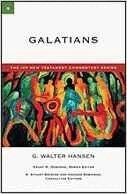
"Wherever ethnic rivalries are destroying societies, the book of Galatians calls Christians to express the truth of the gospel in communities where there are no ethnic or social or gender divisions." With this strong admonition, Walter Hansen introduces his IVP New Testament Commentary on Galatians.Unlike many other commentaries, Hansen's volume highlights not only the individual dimensions of justification by faith but also its social implications. His bold, careful interpretation challenges students and teachers of this important Pauline letter to move beyond merely the question "How can I, a sinner, be right before a just and holy God?" and to find in Galatians a healing word addressed to the ongoing tensions of race, class and gender--a word worked out in the life of the whole church.
301 kr
Skickas inom 3-6 vardagar
1 833 kr
Skickas inom 10-15 vardagar
This book offers a fresh perspective on Paul's use of the Abraham story in Galatians by providing a thorough analysis of its epistolary and rhetorical contexts. In Part I, parallels in Galatians to rebuke-request letters in Greek papyri serve as a basis for dividing the letter into two major sections: Rebuke (1.6-4.11) and Request (3.12-6.10), the request formula in 4.12 indicating a major turning point in the letter. The Abraham argument (3.6-29) and the Hagar-Sarah allegory (4.12-31) should be viewed as Paul's biblical rebuke and biblical appeal respectively. Rhetorical analysis classifies 1.1-4.11 as forensic rhetoric, characterized by defence and accusations regarding past actions, and 4.12-6.18 as deliberative rhetoric, marked by exhortation and dissuasion regarding future actions. In Part II, exegetical analysis of 3.1-29 stresses the subordination of the Abraham argument to the framework provided by Paul's expressions of the rebuke. Within this framework, the autobiographical section and the Abraham argument section are parallel developments of the thesis statement (1.11-12). Both sections emphasize Paul's missiological concern to preserve the truth of the Gospel for the freedom of Gentile believers. Analysis of 4.21-31 shows how the allegory functions within the request section of the letter as biblical support for the call to resist the troublemakers, setting the stage for the authoritative appeal of 5.13-6.10. From the perspective provided by this analysis, significant implications which relate to broader theological issues in Pauline theology are set forth; the function of Paul's doctrine of justification by faith as the basis for his Gentile mission, Paul's view of the Gentile church as the Israel of God, and the covenantal structure of Paul's ethics which relates to the response of faith to obedience in the divine will. Three appendices evaluate recent discussion of important background issues: The Opponent's Use of the Abraham Tradition, Abraham in Jewish Literature, and Paul and Jewish Exegesis.