Gábor Ágoston - Böcker
Visar alla böcker från författaren Gábor Ágoston. Handla med fri frakt och snabb leverans.
3 produkter
3 produkter
441 kr
Skickas inom 7-10 vardagar
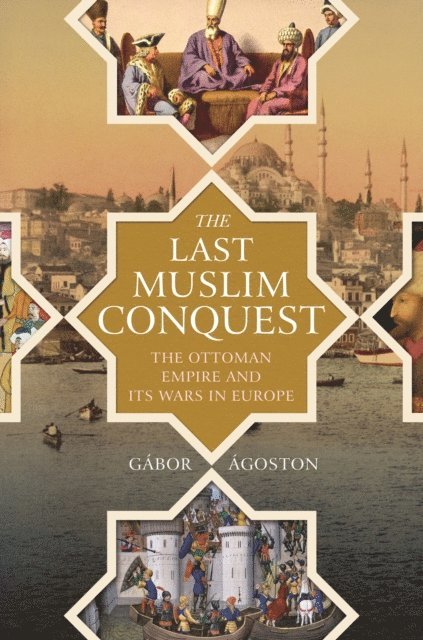
A monumental work of history that reveals the Ottoman dynasty's important role in the emergence of early modern EuropeThe Ottomans have long been viewed as despots who conquered through sheer military might, and whose dynasty was peripheral to those of Europe. The Last Muslim Conquest transforms our understanding of the Ottoman Empire, showing how Ottoman statecraft was far more pragmatic and sophisticated than previously acknowledged, and how the Ottoman dynasty was a crucial player in the power struggles of early modern Europe.In this panoramic and multifaceted book, Gábor Ágoston captures the grand sweep of Ottoman history, from the dynasty's stunning rise to power at the turn of the fourteenth century to the Siege of Vienna in 1683, which ended Ottoman incursions into central Europe. He discusses how the Ottoman wars of conquest gave rise to the imperial rivalry with the Habsburgs, and brings vividly to life the intrigues of sultans, kings, popes, and spies. Ágoston examines the subtler methods of Ottoman conquest, such as dynastic marriages and the incorporation of conquered peoples into the Ottoman administration, and argues that while the Ottoman Empire was shaped by Turkish, Iranian, and Islamic influences, it was also an integral part of Europe and was, in many ways, a European empire.Rich in narrative detail, The Last Muslim Conquest looks at Ottoman military capabilities, frontier management, law, diplomacy, and intelligence, offering new perspectives on the gradual shift in power between the Ottomans and their European rivals and reframing the old story of Ottoman decline.
252 kr
Skickas inom 7-10 vardagar
A monumental work of history that reveals the Ottoman dynasty's important role in the emergence of early modern EuropeThe Ottomans have long been viewed as despots who conquered through sheer military might, and whose dynasty was peripheral to those of Europe. The Last Muslim Conquest transforms our understanding of the Ottoman Empire, showing how Ottoman statecraft was far more pragmatic and sophisticated than previously acknowledged, and how the Ottoman dynasty was a crucial player in the power struggles of early modern Europe.In this panoramic and multifaceted book, Gábor Ágoston captures the grand sweep of Ottoman history, from the dynasty's stunning rise to power at the turn of the fourteenth century to the Siege of Vienna in 1683, which ended Ottoman incursions into central Europe. He discusses how the Ottoman wars of conquest gave rise to the imperial rivalry with the Habsburgs, and brings vividly to life the intrigues of sultans, kings, popes, and spies. Ágoston examines the subtler methods of Ottoman conquest, such as dynastic marriages and the incorporation of conquered peoples into the Ottoman administration, and argues that while the Ottoman Empire was shaped by Turkish, Iranian, and Islamic influences, it was also an integral part of Europe and was, in many ways, a European empire.Rich in narrative detail, The Last Muslim Conquest looks at Ottoman military capabilities, frontier management, law, diplomacy, and intelligence, offering new perspectives on the gradual shift in power between the Ottomans and their European rivals and reframing the old story of Ottoman decline.
1 024 kr
Skickas inom 11-20 vardagar
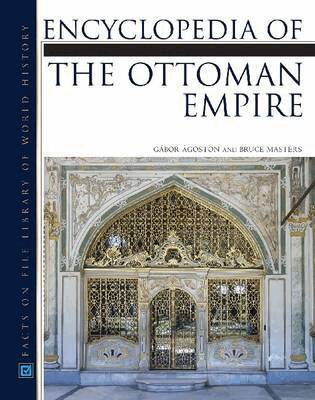
Once stretching from Vienna in the north to Iraq and Yemen in the south, the Ottoman Empire has played an integral role in the history of Eurasia and the Middle East. The dynamics and complexity of the present-day Middle East and Balkans cannot be understood without an examination of the history of the Ottoman Empire that ruled these regions for centuries.""Encyclopedia of the Ottoman Empire"" provides a thorough overview of the history and civilization of the Ottomans, with approximately 450 A-to-Z entries focusing on major events, personalities, institutions, and terms. With signed articles by experts in the field, this comprehensive one-volume resource also includes essential information regarding imperialism and the emerging Balkan, Arab, and Turkish nationalism; the demise of the empire; and Ottoman legacy in the Balkans and the Middle East. Further readings, approximately 80 black-and-white photographs and maps, cross-references, a chronology, glossary, bibliography, and an index complement the text and give readers an in-depth understanding of the broad and fascinating history of the Ottoman Empire.