Gabriel Vahanian – författare
Visar alla böcker från författaren Gabriel Vahanian. Handla med fri frakt och snabb leverans.
14 produkter
14 produkter
Inbunden, Engelska, 2008
501 kr
Skickas inom 11-20 vardagar
Conservative religious figures routinely warn against the dangers of secularization, just as proponents of the modern secular state decry the theocratic tendencies of religion. Both sides assume that the sacred and the secular are diametrically opposed. Gabriel Vahanian rightly calls such misbegotten assumptions into question. The problem lies elsewhere. In the light of the biblical dialectic of holiness and the secular, ""Praise of the Secular"" deftly ""vindicates"" the secular, weaving together philosophy, history, and theology in fine Derridean, yet reinforced, deconstructionist fashion.Vahanian argues that religion, far from being opposed to the secular, finds its fulfillment in the secular world. Armed with a compelling interpretation of Christ's incarnation, he claims that ""we have not grasped John's notion of the word become flesh, even of God as wording, until or unless we realize it must so expand as to demand the worlding of that very word, extending it into secular relevance."" In other words, the holy, if not the sacred, demands its own secularization.In this poetically written and profoundly life-affirming work, Vahanian reinvigorates the secular against the claims of fundamentalism, which makes the relative absolute, and against the ideology of a kind of atheism (""secularism"" in his term), which makes the absolute relative.
Inbunden, Engelska, 2023
375 kr
Skickas inom 5-8 vardagar
Häftad, Engelska, 2023
255 kr
Skickas inom 5-8 vardagar
Inbunden, Engelska, 2023
375 kr
Skickas inom 5-8 vardagar
Häftad, Engelska, 2023
255 kr
Skickas inom 5-8 vardagar
Inbunden, Engelska, 2014
548 kr
Skickas inom 10-15 vardagar
Gabriel Vahanian's final work, Theopoetics of the Word weaves together Christian theology, continental philosophy and cultural studies to present a new theology of language and technology for the 21st century.
Häftad, Engelska, 2014
631 kr
Skickas inom 10-15 vardagar
Gabriel Vahanian's final work, Theopoetics of the Word weaves together Christian theology, continental philosophy and cultural studies to present a new theology of language and technology for the 21st century.
Häftad, Engelska, 2009
330 kr
Skickas inom 5-8 vardagar
Häftad, Engelska, 2009
200 kr
Skickas inom 5-8 vardagar
Häftad, Engelska, 2010
309 kr
Skickas inom 5-8 vardagar
E-bok
PDF, Engelska, 2009536 kr
Läs direkt efter köp
"e;The death of God"e; began, according to Vahanian, the moment Western man started to compromise with the Biblical concept of God transcendent, and to merge the identity of the Godhead with the identity of humankind. From this compromise evolved the belief in the possibility of heaven on earth, in human perfectibility, in the expectation that man, both individually and collectively, can control his termporal fate. Today, as a consequence, Western society not only exalts all possible material comforts, but requires as well easy, guaranteed, status-assuring religious affiliations. The present search for "e;inner security"e; is in direct opposition to the toleration of doubt that tests the strength of genuine religious faith. And Vahanian shows how our spiritual decline is reflected in much of the most important imaginative writing of today.
E-bok
PDF, Engelska, 2009292 kr
Läs direkt efter köp
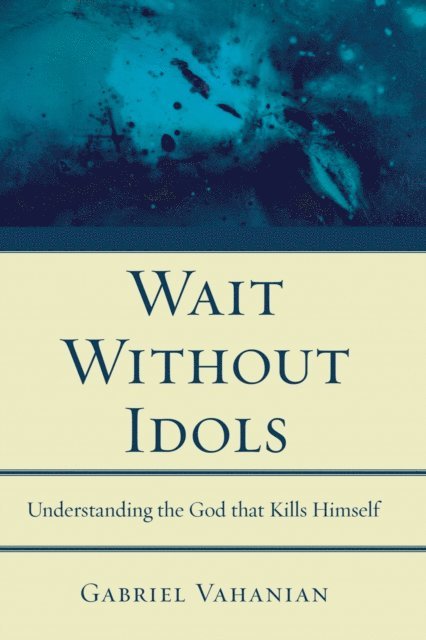
In the aftermath of writing The Death of God, Vahanian had opportunity to advance his discussion. In his introduction to No Other God, he wrote, "e;Taken as nothing less if nothing more than a cultural phenomenon, the death of God signifies the transition from radical monotheism to radical immanentism and marks the birth of secularism as the vector of the new religiosity. It announces the the advent of a new, culturally Christian, paganism, even while theology is busy overlooking its indigence or covering it up with a glorified but amnesic vocabulary....But what I have denounced elsewhere as the charter of the incipient post-Christian idolatry is now proclaimed as the first article of an immanentist religiosity. So called 'Christian atheism' glories precisely in what I deplored when I first used the term 'death of God.' Meanwhile, Christian theology serves only to separate the Church from the world, instead of pointing to the fact that the Church is -- or should be -- what happens when the world hears the Word of God."e; Vahanian, recognizing that God is a word, and that God is not God without the world, ultimately helps readers understand the two poles of language that need to be kept in balance: wording the world and worlding the word. In this light, idolatry of every kind is threatened by new language, both symbolic and iconoclastic, which serves to usher in a new world.
E-bok
PDF, Engelska, 2010487 kr
Läs direkt efter köp
Ephemeral differences notwithstanding, both literature and the Bible are stirred by a common passion for words, all of which are on an equal footing in staging an at once intimate and ultimate passion of the word. Of language and its quest for truth of which each and every word of a dictionary is entrusted, so long as no word per se can lord it over all the other words. Keepers of the word, words cannot keep a secret, bound as they are both to reveal and conceal it at one and the same time. Except for a parrot, language has no mother tongue: it inherits only that which it can translate: the everlasting into the ephemeral, the temporal into the eternal, speaking into writing - into that which happens once and for all. Language is iconic and iconoclastic. It is propitious to God and would-be gods and, conversely, it is equally allergic to idols. Hence the title of this book, borrowed from a line of W.H. Auden's Christmas Oratorio. No sooner is God worshipped than God is turned into an idol. Biblical or not, religious or secular, literature is iconoclastic. Promethean iconoclasm quarrels with God. Ironically less theistic, the paradox of Abrahamic iconoclasm lies in laying bare the duplicity, not so much of God, as of all human all too human conceptions of a God which, falling short of God, becomes an idol that can only be rebuked even by God if not by Abraham, the father of faith. No wonder, Western literature has dealt with the death of God rather than with the living God: its task has consisted in wording a world shaped and left to go adrift by Christian tradition itself gone irrelevant and locked up in a mother tongue no one speaks instead of time and again unleashing and worlding the Word.
E-bok
Engelska, 201932 kr
Läs direkt efter köp
“The most exciting theological book I have read in many years. In some ways, it is a parallel to Karl Barth’s Römerbrief.”—RUDOLF BULTMANN“An unhesitating, unflinching analysis of an age which, Vahanian believes, has no concerns even to deny God…a cultural analysis of the religious, political, artistic, literary and societal movements of our era.”—PAUL RAMSEY“In his preface to The Death of God, Paul Ramsey, Professor of Religion at Princeton university, explains that we are now in the second phase of the period post-mortem Dei—the first phase was anti-Christian, ours is post-Christian…Vahanian’s message has to do with the ‘dishabilitation’ of the Christian tradition, with its replacement by bourgeois religiosity and a theology of ‘immanentism,’ with the desperate effort of Western culture to shake off the ‘crippling shackles’ of a superannuated piety.“The quality of mind which enters into this book is unique and fascinating…Vahanian is a fierce but eloquent prophet of the Lord.”—ROBERT E. FITCH, New York Times Book Review