Gabriela Benza – författare
Visar alla böcker från författaren Gabriela Benza. Handla med fri frakt och snabb leverans.
4 produkter
4 produkter
Häftad, Engelska, 2020
239 kr
Skickas inom 7-10 vardagar
This Element presents the main characteristics of the current social structure in Latin America. It focuses on demographic trends, migration, families, incomes, education, health and housing, and examine the general policy trends for all of these issues. The main questions are: what is the social structure in Latin America like today? What changes have taken place in recent decades, particularly since the turn of the millennium? The authors argue that although in some dimensions there are continuities, including the persistence of problems from the past, they believe that the Latin American social structure, viewed as a whole, experienced significant transformations.
E-bok
Engelska, 2020285 kr
Läs direkt efter köp
This Element presents the main characteristics of the current social structure in Latin America. It focuses on demographic trends, migration, families, incomes, education, health and housing, and examine the general policy trends for all of these issues. The main questions are: what is the social structure in Latin America like today? What changes have taken place in recent decades, particularly since the turn of the millennium? The authors argue that although in some dimensions there are continuities, including the persistence of problems from the past, they believe that the Latin American social structure, viewed as a whole, experienced significant transformations.
E-bok
PDF, Engelska, 2020285 kr
Läs direkt efter köp
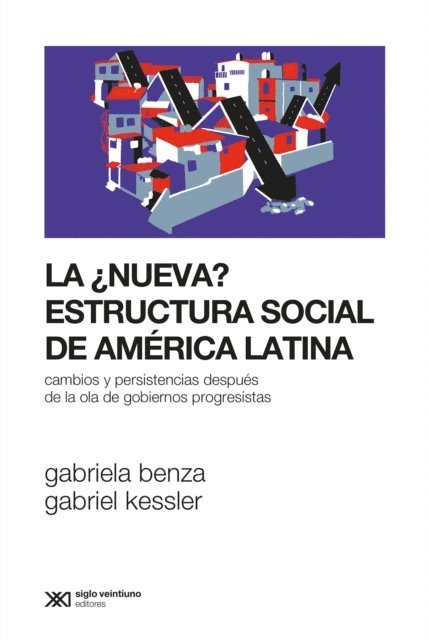
This Element presents the main characteristics of the current social structure in Latin America. It focuses on demographic trends, migration, families, incomes, education, health and housing, and examine the general policy trends for all of these issues. The main questions are: what is the social structure in Latin America like today? What changes have taken place in recent decades, particularly since the turn of the millennium? The authors argue that although in some dimensions there are continuities, including the persistence of problems from the past, they believe that the Latin American social structure, viewed as a whole, experienced significant transformations.
E-bok
Spanska, 2020113 kr
Läs direkt efter köp
Están quienes creen que los gobiernos progresistas de principios del siglo XXI en América Latina representaron un avance socioeconómico indiscutible para masas de personas postergadas por décadas. Otros, por el contrario, están convencidos de que esos gobiernos fueron la concreción de un "populismo" que condenó a la región al atraso, la prebenda y la demagogia.Este libro, necesario y revelador, viene a llenar con datos y análisis los vacíos de esa discusión, y logra cambiar de raíz nuestro sentido común sobre América Latina y su "desigualdad" característica.Al sistematizar la información más actualizada sobre la estructura social de Latinoamérica, los autores recorren las grandes tendencias demográficas (distribución etaria y geográfica, migraciones, mortalidad y fecundidad), la distribución de los ingresos, el trabajo, la educación, la salud y la vivienda en toda la región, y las políticas públicas desarrolladas en cada ámbito. Así demuestran que, aunque los gobiernos posneoliberales efectivamente lograron crear una red de protección básica para los más excluidos, no alteraron las bases estructurales de las inequidades persistentes.Los datos y su análisis, sin embargo, no solo sirven para zanjar una discusión sobre el pasado reciente, sino sobre todo como herramienta para pensar el futuro próximo. Este libro, un panorama matizado y realista sobre el continente, ofrece además una constatación política y cultural inquietante. Mientras los avances y derechos conseguidos actúan como un umbral de bienestar que se defiende con fuerza, son también, escriben los autores, "la piedra de toque de la ofensiva de sectores restauradores que están pugnando por revertirlos".En efecto, los cambios en la estructura social que retrata este libro están en el corazón de los conflictos políticos que ya son visibles en varios países de la región.