Gabriela GonzA!lez – författare
Visar alla böcker från författaren Gabriela GonzA!lez. Handla med fri frakt och snabb leverans.
8 produkter
8 produkter
E-bok
Engelska, 2018495 kr
Läs direkt efter köp
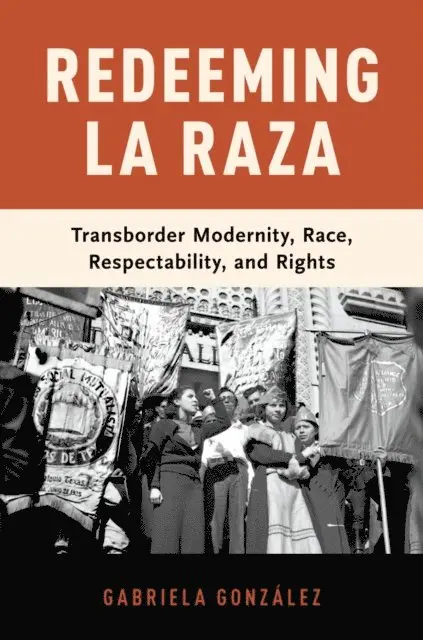
The transborder modernization of Mexico and the American Southwest during the late nineteenth and early twentieth centuries transformed the lives of ethnic Mexicans across the political divide. While industrialization, urbanization, technology, privatization, and wealth concentration benefitted some, many more experienced dislocation, exploitative work relations, and discrimination based on race, gender, and class. The Mexican Revolution brought these issues to the fore within Mexican society, igniting a diaspora to el norte. Within the United States, similar economic and social power dynamics plagued Tejanos and awaited the war refugees. Political activism spearheaded by individuals and organizations such as the Idars, Leonor Villegas'' de Magn?n''s White Cross, the Magonista movement, the Munguias, Emma Tenayuca, and LULAC emerged in the borderlands to address the needs of ethnic Mexicans whose lives were shaped by racism, patriarchy, and poverty. As Gabriela Gonzalez shows in this book, economic modernization relied on social hierarchies that were used to justify economic inequities. Redeeming la raza was about saving ethnic Mexicans in Texas from a social hierarchy premised on false notions of white supremacy and Mexican inferiority. Activists used privileges of class, education, networks, and organizational skills to confront the many injustices that racism bred, but they used different strategies. Thus, the anarcho-syndicalist approach of Mag?nistas stands in contrast to the social and cultural redemption politics of the Idars who used the press to challenge a Jaime Crow world. Also, the family promoted the intellectual, material, and cultural uplift of la raza, working to combat negative stereotypes of ethnic Mexicans. Similar contrasts can be drawn between the labor activism of Emma Tenayuca and the Munguias, whose struggle for rights employed a politics of respectability that encouraged ethnic pride and unity. Finally, maternal feminist approaches and the politics of citizenship serve as reminders that gendered and nationalist rhetoric and practices foment hierarchies within civil and human rights organizations.Redeeming La Raza examines efforts of activists to create a dignified place for ethnic Mexicans in American society by challenging white supremacy and the segregated world it spawned.
Häftad, Engelska, 2018
437 kr
Skickas inom 5-8 vardagar
The transborder modernization of Mexico and the American Southwest during the late nineteenth and early twentieth centuries transformed the lives of ethnic Mexicans across the political divide. While industrialization, urbanization, technology, privatization, and wealth concentration benefitted some, many more experienced dislocation, exploitative work relations, and discrimination based on race, gender, and class. The Mexican Revolution brought these issues to the fore within Mexican society, igniting a diaspora to el norte. Within the United States, similar economic and social power dynamics plagued Tejanos and awaited the war refugees. Political activism spearheaded by individuals and organizations such as the Idars, Leonor Villegas' de Magnón's White Cross, the Magonista movement, the Munguias, Emma Tenayuca, and LULAC emerged in the borderlands to address the needs of ethnic Mexicans whose lives were shaped by racism, patriarchy, and poverty. As Gabriela Gonzalez shows in this book, economic modernization relied on social hierarchies that were used to justify economic inequities. Redeeming la raza was about saving ethnic Mexicans in Texas from a social hierarchy premised on false notions of white supremacy and Mexican inferiority. Activists used privileges of class, education, networks, and organizational skills to confront the many injustices that racism bred, but they used different strategies. Thus, the anarcho-syndicalist approach of Magónistas stands in contrast to the social and cultural redemption politics of the Idars who used the press to challenge a Jaime Crow world. Also, the family promoted the intellectual, material, and cultural uplift of la raza, working to combat negative stereotypes of ethnic Mexicans. Similar contrasts can be drawn between the labor activism of Emma Tenayuca and the Munguias, whose struggle for rights employed a politics of respectability that encouraged ethnic pride and unity. Finally, maternal feminist approaches and the politics of citizenship serve as reminders that gendered and nationalist rhetoric and practices foment hierarchies within civil and human rights organizations.Redeeming La Raza examines efforts of activists to create a dignified place for ethnic Mexicans in American society by challenging white supremacy and the segregated world it spawned.
Inbunden, Engelska, 2018
1 271 kr
Skickas inom 5-8 vardagar
The transborder modernization of Mexico and the American Southwest during the late nineteenth and early twentieth centuries transformed the lives of ethnic Mexicans across the political divide. While industrialization, urbanization, technology, privatization, and wealth concentration benefitted some, many more experienced dislocation, exploitative work relations, and discrimination based on race, gender, and class. The Mexican Revolution brought these issues to the fore within Mexican society, igniting a diaspora to el norte. Within the United States, similar economic and social power dynamics plagued Tejanos and awaited the war refugees. Political activism spearheaded by individuals and organizations such as the Idars, Leonor Villegas' de Magnón's White Cross, the Magonista movement, the Munguias, Emma Tenayuca, and LULAC emerged in the borderlands to address the needs of ethnic Mexicans whose lives were shaped by racism, patriarchy, and poverty. As Gabriela Gonzalez shows in this book, economic modernization relied on social hierarchies that were used to justify economic inequities. Redeeming la raza was about saving ethnic Mexicans in Texas from a social hierarchy premised on false notions of white supremacy and Mexican inferiority. Activists used privileges of class, education, networks, and organizational skills to confront the many injustices that racism bred, but they used different strategies. Thus, the anarcho-syndicalist approach of Magónistas stands in contrast to the social and cultural redemption politics of the Idars who used the press to challenge a Jaime Crow world. Also, the family promoted the intellectual, material, and cultural uplift of la raza, working to combat negative stereotypes of ethnic Mexicans. Similar contrasts can be drawn between the labor activism of Emma Tenayuca and the Munguias, whose struggle for rights employed a politics of respectability that encouraged ethnic pride and unity. Finally, maternal feminist approaches and the politics of citizenship serve as reminders that gendered and nationalist rhetoric and practices foment hierarchies within civil and human rights organizations.Redeeming La Raza examines efforts of activists to create a dignified place for ethnic Mexicans in American society by challenging white supremacy and the segregated world it spawned.
E-bok
PDF, Engelska, 2018482 kr
Läs direkt efter köp
The transborder modernization of Mexico and the American Southwest during the late nineteenth and early twentieth centuries transformed the lives of ethnic Mexicans across the political divide. While industrialization, urbanization, technology, privatization, and wealth concentration benefitted some, many more experienced dislocation, exploitative work relations, and discrimination based on race, gender, and class. The Mexican Revolution brought these issues to the fore within Mexican society, igniting a diaspora to el norte. Within the United States, similar economic and social power dynamics plagued Tejanos and awaited the war refugees. Political activism spearheaded by individuals and organizations such as the Idars, Leonor Villegas'' de Magn?n''s White Cross, the Magonista movement, the Munguias, Emma Tenayuca, and LULAC emerged in the borderlands to address the needs of ethnic Mexicans whose lives were shaped by racism, patriarchy, and poverty. As Gabriela Gonzalez shows in this book, economic modernization relied on social hierarchies that were used to justify economic inequities. Redeeming la raza was about saving ethnic Mexicans in Texas from a social hierarchy premised on false notions of white supremacy and Mexican inferiority. Activists used privileges of class, education, networks, and organizational skills to confront the many injustices that racism bred, but they used different strategies. Thus, the anarcho-syndicalist approach of Mag?nistas stands in contrast to the social and cultural redemption politics of the Idars who used the press to challenge a Jaime Crow world. Also, the family promoted the intellectual, material, and cultural uplift of la raza, working to combat negative stereotypes of ethnic Mexicans. Similar contrasts can be drawn between the labor activism of Emma Tenayuca and the Munguias, whose struggle for rights employed a politics of respectability that encouraged ethnic pride and unity. Finally, maternal feminist approaches and the politics of citizenship serve as reminders that gendered and nationalist rhetoric and practices foment hierarchies within civil and human rights organizations.Redeeming La Raza examines efforts of activists to create a dignified place for ethnic Mexicans in American society by challenging white supremacy and the segregated world it spawned.
E-bok
Engelska, 2023499 kr
Läs direkt efter köp
Häftad, Engelska, 2014
227 kr
Skickas inom 3-6 vardagar
Häftad, Engelska, 2014
260 kr
Skickas inom 3-6 vardagar
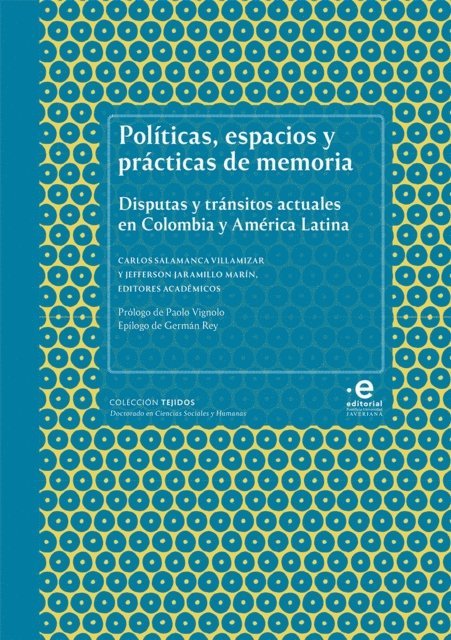
Políticas, espacios y prácticas de memoria
Disputas y tránsitos actuales en Colombia y América Latina
E-bok
Spanska, 201990 kr
Läs direkt efter köp
Después de los procesos de paz que ha vivido Colombia en los últimos años, es necesario preguntarse el papel de las memorias y prácticas comunicativas para crear una verdad histórica desde un punto de vista transdisciplinar, que garantice un espacio a las víctimas y los olvidados.