Gabriele De Anna - Böcker
Visar alla böcker från författaren Gabriele De Anna. Handla med fri frakt och snabb leverans.
6 produkter
6 produkter
2 088 kr
Skickas inom 10-15 vardagar
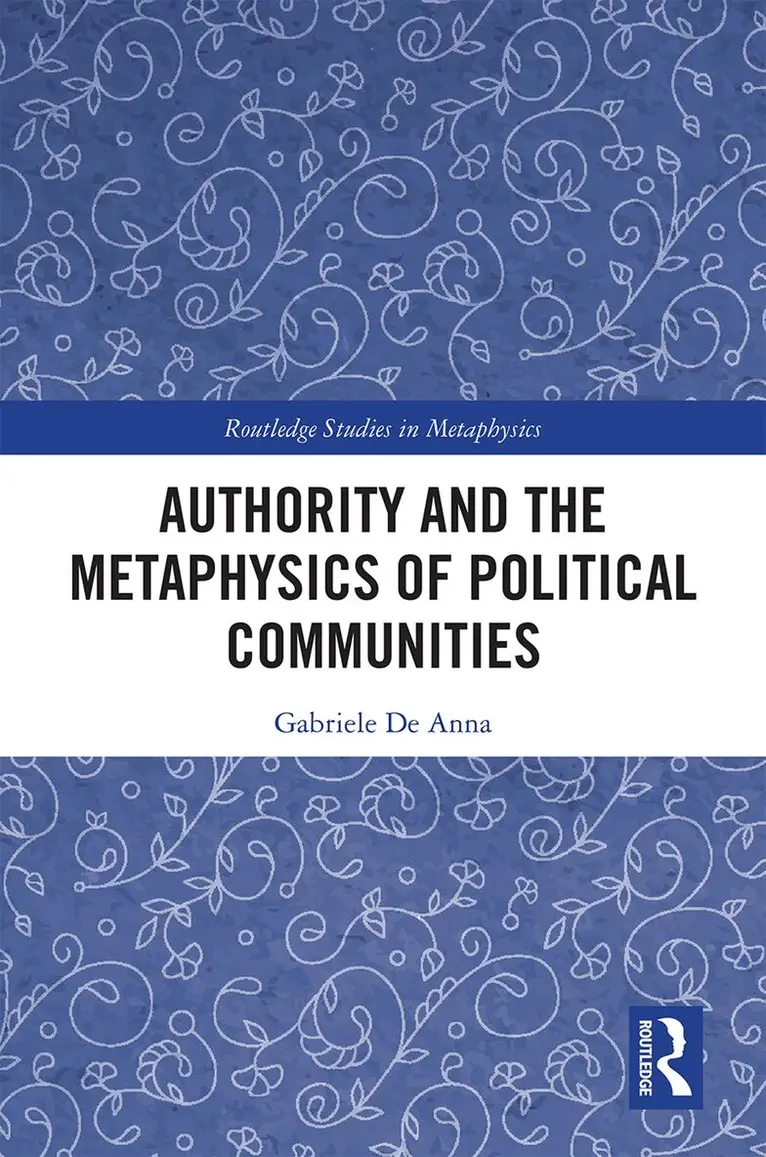
This book explores the metaphysics of political communities. It discusses how and why a plurality of individuals becomes a political unity, what principles or forces keep that unity together, and what threats that unity can be faced with.In Part I, the author justifies the need for the notion of substance in metaphysics in general and in the metaphysics of politics in particular. He spells out a moderately realist theory of substances and of their principles of unity, which supports substantial gradualism. Part II concerns action theory and the nature of practical reason. The author claims that the acknowledgement of reasons by agents is constitutive of action and that normativity depends on the role of the good in the formation of reasons. Finally, in Part III the author addresses the notion of political community. He claims that the principle of unity of a political community is its authority to give members of the community moral reasons for action. This suggests a middle way between liberal individualism and organicism, and the author demonstrates the significance of this view by discussing current political issues such as the role of religion in the public sphere and the political significance of cultural identity.Authority and the Metaphysics of Political Communities will be of interest to researchers and advanced students working in social metaphysics, political philosophy, philosophy of action, and philosophy of the social sciences.
428 kr
Skickas inom 7-10 vardagar
How can the discoveries made in the biological sciences play a role in a discussion on the foundation of ethics? This book responds to this question by examining how evolutionism can explain and justify the existence of ethical normativity and the emergence of particular moral systems. Written by a team of philosophers and scientists, the essays collected in this volume deal with the limits of evolutionary explanations, the justifications of ethics, and methodological issues concerning evolutionary accounts of ethics, among other topics. They offer deep insights into the origin and purpose of human moral capacities and of moral systems.
744 kr
Skickas inom 7-10 vardagar
How can the discoveries made in the biological sciences play a role in a discussion on the foundation of ethics? This book responds to this question by examining how evolutionism can explain and justify the existence of ethical normativity and the emergence of particular moral systems. Written by a team of philosophers and scientists, the essays collected in this volume deal with the limits of evolutionary explanations, the justifications of ethics, and methodological issues concerning evolutionary accounts of ethics, among other topics. They offer deep insights into the origin and purpose of human moral capacities and of moral systems.
1 953 kr
Skickas inom 10-15 vardagar
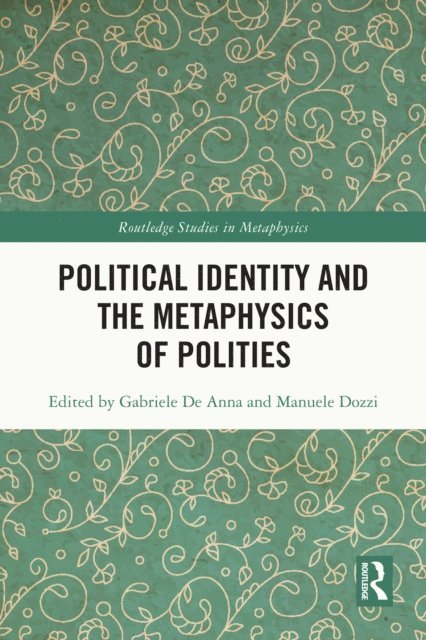
The chapters in this volume clarify the notion of political identity by focusing on the metaphysics of polities. By analysing the notion of political identity, they provide the conceptual resources for a deeper understanding of the theoretical and practical debates on populism, the crisis of sovereignty, the feasibility of a world government, and ethical, religious, and cultural pluralism.What is a political community? Any answer to this question lies at the intersection between three fields: metaphysics, philosophy of action, and political philosophy. The question concerns how and why a plurality of individuals becomes a political unity, what principles or forces keep that unity together, and what threats that unity can encounter. In this volume, the contributors investigate how different metanormative views affect the possible answers to this metaphysical question. They explore the role that the individual identities of agents play in grounding common practices that underpin political life. They investigate the individual identities of agents as the result of the interplay between natural and cultural factors. Finally, they observe the ways in which a political community, as a collection of individuals who hang together in an attempt to reach common purposes, demonstrate a certain metaphysical solidity.Political Identity and the Metaphysics of Polities will appeal to researchers and advanced students working in metaphysics, political philosophy, political theory, and philosophy of action.
576 kr
Skickas inom 10-15 vardagar
The chapters in this volume clarify the notion of political identity by focusing on the metaphysics of polities. By analysing the notion of political identity, they provide the conceptual resources for a deeper understanding of the theoretical and practical debates on populism, the crisis of sovereignty, the feasibility of a world government, and ethical, religious, and cultural pluralism.What is a political community? Any answer to this question lies at the intersection between three fields: metaphysics, philosophy of action, and political philosophy. The question concerns how and why a plurality of individuals becomes a political unity, what principles or forces keep that unity together, and what threats that unity can encounter. In this volume, the contributors investigate how different metanormative views affect the possible answers to this metaphysical question. They explore the role that the individual identities of agents play in grounding common practices that underpin political life. They investigate the individual identities of agents as the result of the interplay between natural and cultural factors. Finally, they observe the ways in which a political community, as a collection of individuals who hang together in an attempt to reach common purposes, demonstrate a certain metaphysical solidity.Political Identity and the Metaphysics of Polities will appeal to researchers and advanced students working in metaphysics, political philosophy, political theory, and philosophy of action.
630 kr
Skickas inom 10-15 vardagar
This book explores the metaphysics of political communities. It discusses how and why a plurality of individuals becomes a political unity, what principles or forces keep that unity together, and what threats that unity can be faced with.In Part I, the author justifies the need for the notion of substance in metaphysics in general and in the metaphysics of politics in particular. He spells out a moderately realist theory of substances and of their principles of unity, which supports substantial gradualism. Part II concerns action theory and the nature of practical reason. The author claims that the acknowledgement of reasons by agents is constitutive of action and that normativity depends on the role of the good in the formation of reasons. Finally, in Part III the author addresses the notion of political community. He claims that the principle of unity of a political community is its authority to give members of the community moral reasons for action. This suggests a middle way between liberal individualism and organicism, and the author demonstrates the significance of this view by discussing current political issues such as the role of religion in the public sphere and the political significance of cultural identity.Authority and the Metaphysics of Political Communities will be of interest to researchers and advanced students working in social metaphysics, political philosophy, philosophy of action, and philosophy of the social sciences.