Gaël Raballand - Böcker
Visar alla böcker från författaren Gaël Raballand. Handla med fri frakt och snabb leverans.
7 produkter
7 produkter
Economics and Politics of Oil in the Caspian Basin
The Redistribution of Oil Revenues in Azerbaijan and Central Asia
Inbunden, Engelska, 2007
2 235 kr
Skickas inom 10-15 vardagar
The Caspian Basin region has boomed since the late 1990s due to new oil discoveries, new pipelines that have diversified countries' transport options and world oil prices that have risen from below $10 in 1998 to $70 in 2006. This book analyzes the experience of the Caspian countries during the oil boom. It is founded on empirical studies, using either macroeconomic tools or an analysis of public budgets, or microeconometric analysis of household survey data or fieldwork in oil-producing regions. Moving from aggregated to disaggregated analysis and, in-keeping with its emphasis on rigorous empirical analysis to the greatest extent possible, several chapters are written by specialists on the Caspian region. Whilst there is an emphasis on the economic consequences of the oil boom, the interdisciplinary aspects of the phenomenon are also recognized. Overall, the analysis is firmly rooted in the region, yet the empirical studies also provide a basis for drawing broader lessons about the effects of an oil boom.
Economics and Politics of Oil in the Caspian Basin
The Redistribution of Oil Revenues in Azerbaijan and Central Asia
Häftad, Engelska, 2012
668 kr
Skickas inom 10-15 vardagar
The Caspian Basin region has boomed since the late 1990s due to new oil discoveries, new pipelines that have diversified countries' transport options and world oil prices that have risen from below $10 in 1998 to $70 in 2006. This book analyzes the experience of the Caspian countries during the oil boom. It is founded on empirical studies, using either macroeconomic tools or an analysis of public budgets, or microeconometric analysis of household survey data or fieldwork in oil-producing regions. Moving from aggregated to disaggregated analysis and, in-keeping with its emphasis on rigorous empirical analysis to the greatest extent possible, several chapters are written by specialists on the Caspian region. Whilst there is an emphasis on the economic consequences of the oil boom, the interdisciplinary aspects of the phenomenon are also recognized. Overall, the analysis is firmly rooted in the region, yet the empirical studies also provide a basis for drawing broader lessons about the effects of an oil boom.
Transport Prices and Costs in Africa
A Review of the Main International Corridors
Häftad, Engelska, 2008
299 kr
Skickas inom 10-15 vardagar
Transport prices for most African landlocked countries range from 15 to 20 percent of import costs. This is approximately two to three times more than in most developed countries. It is well known that weak infrastructure can account for low trade performance. Thus, it becomes necessary to understand what types of regional transport services operate in landlocked African nations and it is critical to identify the regulation disparities and provision anomalies that hurt infrastructure efficiency, even when the physical infrastructure, such as a road transport corridor, exists. ""Transport Prices and Costs in Africa"" analyzes the various reasons for poor transport performance seen widely throughout Africa and provides a compelling case for a number of national and regional reforms that are vital to the effort to address the underlying causes of high transport prices and costs and service unpredictability seen in Africa. The book will greatly help supervisory authorities throughout the region develop and implement a comprehensive transport policy that will facilitate long-term growth.
Rural Road Investment Efficiency
Lessons from Burkina Faso, Cameroon, and Uganda
Häftad, Engelska, 2010
226 kr
Skickas inom 10-15 vardagar
The development aid community has placed a great deal of emphasis on the need for rural mobility in Sub-Saharan Africa (SSA). Thus far, most development partners and governments in SSA have relied on two overarching assumptions when dispensing transport aid - that most households in rural areas in Africa are not connected to markets and therefore need a road passable for a truck, and that roads with high levels of service are crucial in order to achieve high economic impact. Based on data collection from various sources in three SSA countries, Rural Road Investment Efficiency demonstrates that from a cost-benefit perspective, the additional cost of extending an all-weather road two more kilometers to the farmer's door outweigh the benefits in most cases. Rural Road Investment Efficiency seeks to enhance the effectiveness of aid allocated for rural transport in SSA and calls into question the need for full implementation of all benchmarks set forth in the Rural Access Index (RAI) in SSA. This book will be an essential reference for government supervisory authorities and infrastructure experts throughout the region.
281 kr
Skickas inom 10-15 vardagar
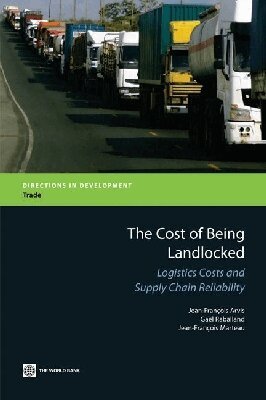
'The Cost of Being Landlocked' proposes a new analytical framework to interpret and model the constraints faced by logistics chains on international trade corridors. The plight of landlocked developing countries (LLDCs) has naturally received special attention for decades, leading to a specific set of development priorities based upon the concept of dependence on the transit state. Therefore, the standard approach used to tackle the cost of being landlocked has been predominantly aimed at developing regional transport infrastructure and ensuring freedom of transit through regional conventions. But without sufficient attention given to the performance of logistics service delivery to traders, the standard approach is unable to address key bottleneck concerns and the factors that contribute to the cost of being landlocked. Consequently, the impact of massive investment on trade corridors could not materialize to its full extent. Based on extensive data collection in several regions of the world, this book argues that although landlocked developing countries do face high logistics costs, these costs are not a result of poor road infrastructure, since transport prices largely depend on trucking market structure and implementation of transit processes. This book suggests that high logistics costs in LLDCs are a result of low logistics reliability and predictability, which stem from rent-seeking and governance issues. 'The Cost of Being Landlocked' will serve as a useful guide for policy makers, supervisory authorities, and development agencies.
Why Does Cargo Spend Weeks in Sub-Saharan African Ports?
Lessons from Six Case Studies
Häftad, Engelska, 2012
294 kr
Skickas inom 10-15 vardagar
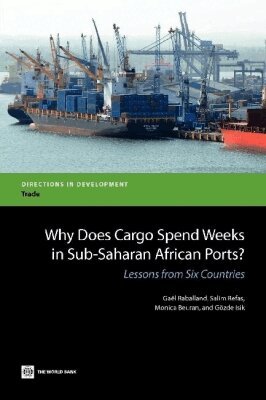
This book argues that long dwell time in Sub-Saharan African (SSA) ports is not exclusively the responsibility of customs as usually believed. The private sector (terminal operator, customs broker, owner of container depots, and even importers) has not necessarily an interest in reducing time spent in ports. The solution to decrease dwell time in these ports relies mainly on the challenging task of breaking the private sector’s collusion and equilibrium between public authorities, logistics operators, and some importers. This book was written in the context of increasing investment by the international community in projects that promote trade facilitation and improvement in logistics in the developing world, including in ports, mainly based on the assumption that in ports, customs (and other controlling agencies) have to be mainly blamed for abnormal delays. However, customs responsibility (especially for months-long delays) may not be as important as usually believed and therefore requires in-depth data collection and analysis which has been lacking so far. The authors disentangle cargo delays in ports with comprehensive data collection in six ports in SSA and firms’ surveys in five countries. Based on this data collection, they find that cargo dwell time in ports in SSA (except Durban) are very long compared to large ports in Asia, Europe, and Latin America. In these ports, there is collusion between controlling agencies, port authorities, private terminal operators, logistics operators (freight forwarders) and large shippers at the expense of consumers. The market structure of the private sector explains the hysteresis of cargo dwell time. Finally, the structure of the SSA economies with few export-oriented producers (and the dominance of traditional import/export traders) reinforces the status quo since they are usually not organized to be competitive worldwide.
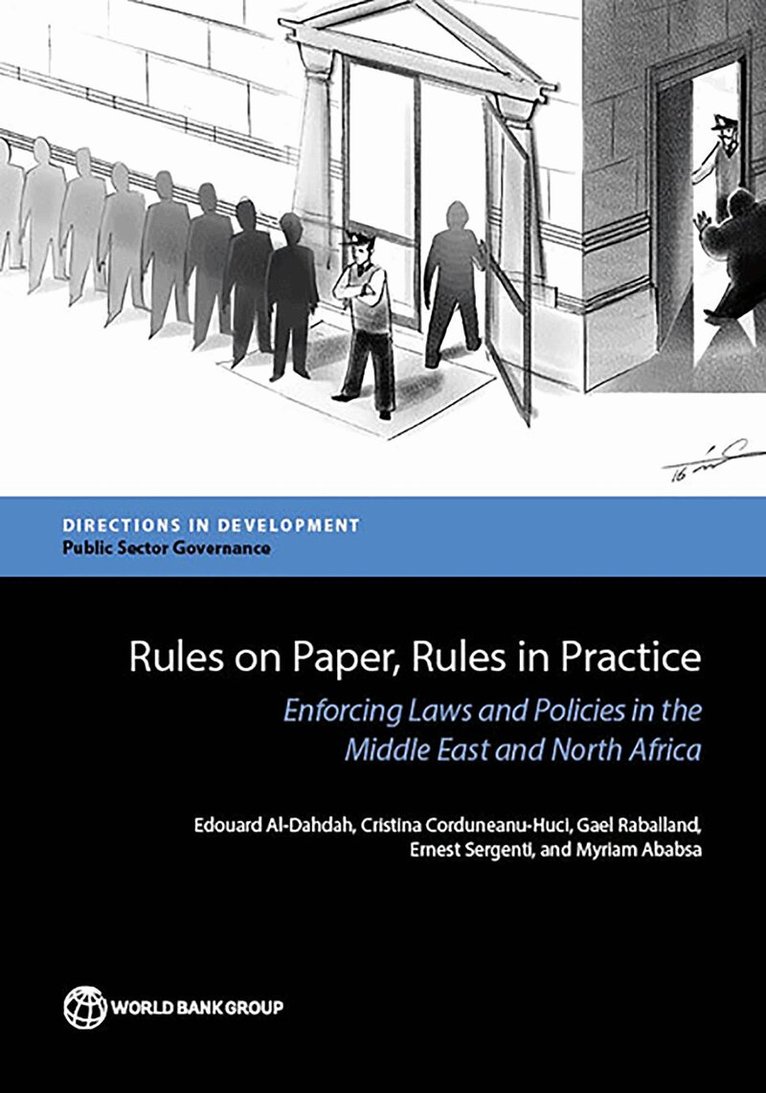
Rules on Paper, Rules in Practice
Enforcing Laws and Policies in the Middle East and North Africa
Häftad, Engelska, 2016
300 kr
Skickas inom 10-15 vardagar
The focus of this book is on a specific outcome of the rule of law: the enforcement of laws and policies, and the determinants of this enforcement. Are there significant and persistent differences in implementation across countries? Why are some laws and policies more systematically enforced than others?