Gage Averill – författare
Visar alla böcker från författaren Gage Averill. Handla med fri frakt och snabb leverans.
6 produkter
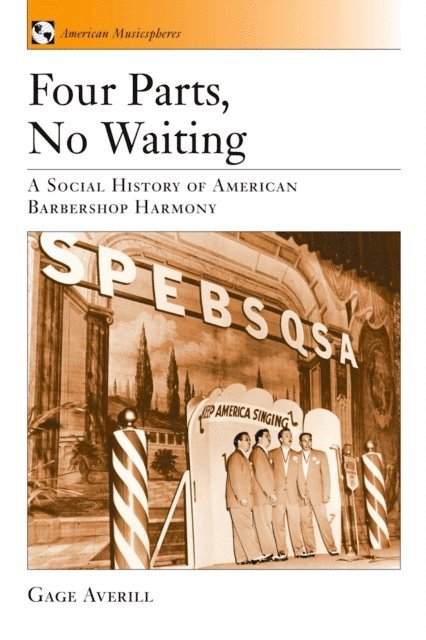
Four Parts, No Waiting
A Social History of American Barbershop Quartet
Av Gage Averill
E-bok, 2003
491 kr
Lägg i varukorg
Four Parts, No Waiting investigates the role that vernacular, barbershop-style close harmony has played in American musical history, in American life, and in the American imagination. Starting with a discussion of the first craze for Austrian four-part close harmony in the 1830s, Averill traces the …
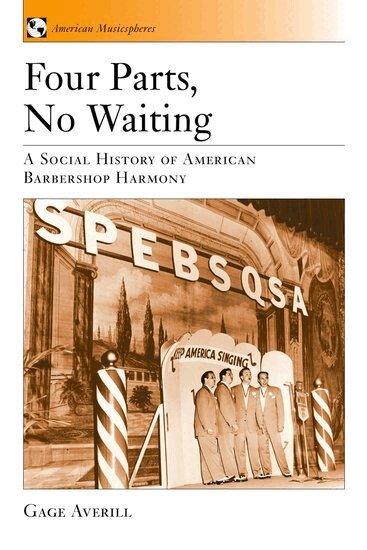
Four Parts, No Waiting
A Social History of American Barbershop Harmony
Av Gage Averill
Inbunden, 2003
1733 kr
Lägg i varukorg
Four Parts, No Waiting investigates the role that vernacular, barbershop-style close harmony has played in American musical history, in American life, and in the American imagination. Starting with a discussion of the first craze for Austrian four-part close harmony in the 1830s, Averill traces the …
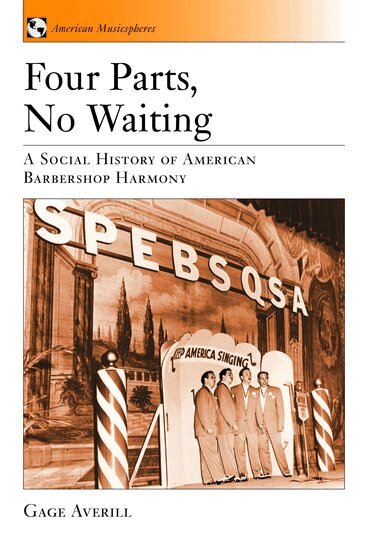
Four Parts, No Waiting
A Social History of American Barbershop Quartet
Av Gage Averill
Häftad, 2010
754 kr
Lägg i varukorg
Four Parts, No Waiting investigates the role that vernacular, barbershop-style close harmony has played in American musical history, in American life, and in the American imagination. Starting with a discussion of the first craze for Austrian four-part close harmony in the 1830s, Averill traces the …
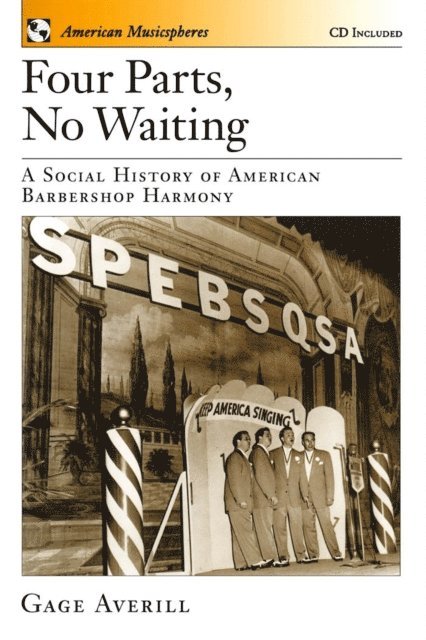
Four Parts, No Waiting
A Social History of American Barbershop Quartet
Av Gage Averill
E-bok, 2003
491 kr
Lägg i varukorg
Four Parts, No Waiting investigates the role that vernacular, barbershop-style close harmony has played in American musical history, in American life, and in the American imagination. Starting with a discussion of the first craze for Austrian four-part close harmony in the 1830s, Averill traces the …
Day for the Hunter, a Day for the Prey
Popular Music and Power in Haiti
Av Gage Averill
Häftad, 1997
714 kr
Lägg i varukorg
The history of Haiti has been marked by oppression at the hands of colonial and dictatorial overlords, but there has also been a history of resistance and sometimes triumph. This study aims to show that Haiti's vibrant and expressive music has been a important element in the struggle, in which …
Day for the Hunter, a Day for the Prey
Popular Music and Power in Haiti
Av Gage Averill
Inbunden, 1997
891 kr
Tillfälligt slut
The history of Haiti has been marked by oppression at the hands of colonial and dictatorial overlords, but there has also been a history of resistance and sometimes triumph. This study aims to show that Haiti's vibrant and expressive music has been a important element in the struggle, in which …