Gaius Plinius Caecilius Secundus – författare
Visar alla böcker från författaren Gaius Plinius Caecilius Secundus. Handla med fri frakt och snabb leverans.
8 produkter
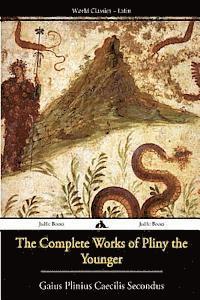
The Complete Works of Pliny the Younger
Av Gaius Plinius Caecilius Secundus
Häftad
240 kr
Lägg i varukorg
Briefe / Epistularum libri decem
Av Gaius Plinius Caecilius Secundus, Helmut Kasten
Inbunden, 2011
546 kr
Lägg i varukorg
Die Briefe des jüngeren Plinius gehören zu den berühmtesten Briefsammlungen der Antike. Die ersten neun Bücher geben ein vielseitiges Bild des Lebens und Treibens der vornehmen Welt unter der Regierung von Kaiser Trajan. Das 10. Buch enthält den Briefwechsel zwischen Plinius als Statthalter von …
Briefe / Epistularum libri decem
Lateinisch - Deutsch
Av Gaius Plinius Caecilius Secundus, Helmut Kasten
E-bok, 2014
696 kr
Lägg i varukorg
Die Briefe des jüngeren Plinius gehören zu den berühmtesten Briefsammlungen der Antike. Die ersten neun Bücher geben ein vielseitiges Bild des Lebens und Treibens der vornehmen Welt unter der Regierung von Kaiser Trajan. Das 10. Buch enthält den Briefwechsel zwischen Plinius als Statthalter von …
Epistularum libri novem. Epistularum ad Traianum liber. Panegyricus.
Av Gaius Plinius Caecilius Secundus, Rudolph Hanslik m. fl.
E-bok, 2012
2132 kr
Lägg i varukorg
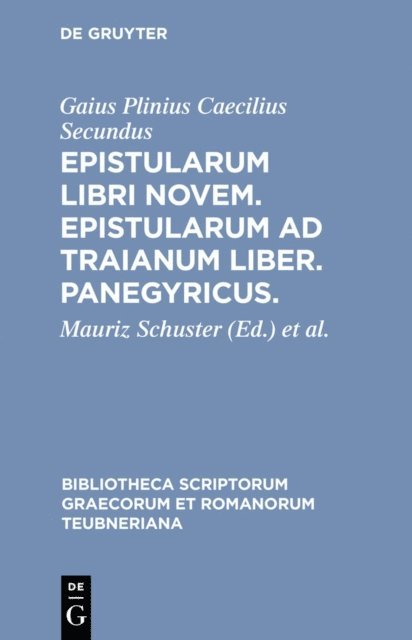
Epistularum Libri Novem. Epistularum AD Traianum Liber. Panegyricus.
Av Gaius Plinius Caecilius Secundus, Mauriz Schuster
Inbunden, 2013
1773 kr
Lägg i varukorg
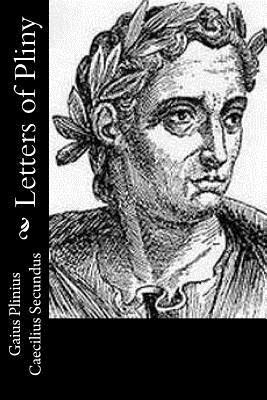
Letters of Pliny
Av Gaius Plinius Caecilius Secundus
Häftad, 2023
327 kr
Lägg i varukorg
The "Letters of Pliny" are a compilation of the younger Pliny's, Gaius Plinius Caecilius Secundus, private letters. Roman author, attorney, and magistrate Pliny flourished in the first century AD. His writings include insightful accounts of a variety of facets of Roman politics, culture, and …
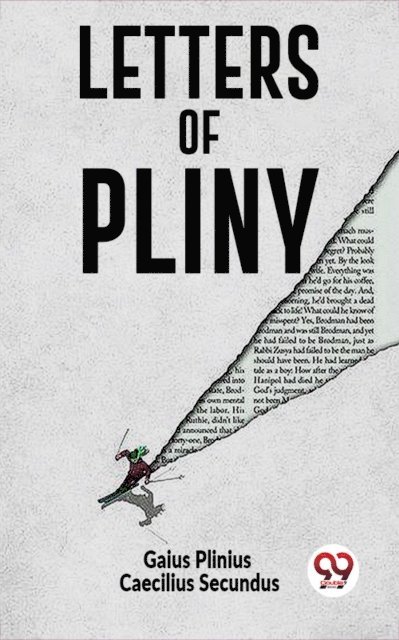
Letters Of Pliny
Av Gaius Plinius Caecilius Secundus
E-bok, 2023
15 kr
Lägg i varukorg
The "Letters of Pliny" are a compilation of the younger Pliny's, Gaius Plinius Caecilius Secundus, private letters. Roman author, attorney, and magistrate Pliny flourished in the first century AD. His writings include insightful accounts of a variety of facets of Roman politics, culture, and …