Galina Yemelianova - Böcker
Visar alla böcker från författaren Galina Yemelianova. Handla med fri frakt och snabb leverans.
4 produkter
4 produkter
2 167 kr
Skickas inom 10-15 vardagar
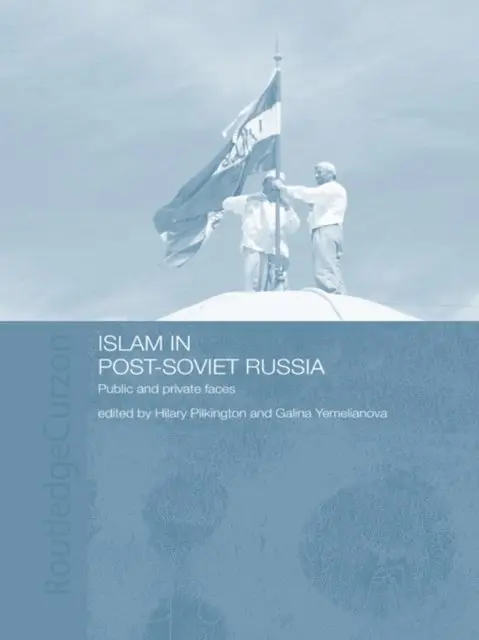
This book, based on extensive original research in the field, analyses the political, social and cultural implications of the rise of Islam in post-Soviet Russia. Examining in particular the situation in Tatarstan and Dagestan, where there are large Muslim populations, the authors chart the long history of Muslim and orthodox Christian co-existence in Russia, discuss recent moves towards greater autonomy and the assertion of ethnic-religious identities which underlie such moves, and consider the actual practice of Islam at the local level, showing the differences between "official" and "unofficial" Islam, how ceremonies and rituals are actually observed (or not), how Islam is transmitted from one generation to the next, the role of Islamic thought, including that of radical sects, and Islamic views of men and women's different roles. Overall, the book demonstrates how far Islam in Russia has been extensively influenced by the Soviet and Russian multi-ethnic context.
668 kr
Skickas inom 10-15 vardagar
This book, based on extensive original research in the field, analyses the political, social and cultural implications of the rise of Islam in post-Soviet Russia. Examining in particular the situation in Tatarstan and Dagestan, where there are large Muslim populations, the authors chart the long history of Muslim and orthodox Christian co-existence in Russia, discuss recent moves towards greater autonomy and the assertion of ethnic-religious identities which underlie such moves, and consider the actual practice of Islam at the local level, showing the differences between "official" and "unofficial" Islam, how ceremonies and rituals are actually observed (or not), how Islam is transmitted from one generation to the next, the role of Islamic thought, including that of radical sects, and Islamic views of men and women's different roles. Overall, the book demonstrates how far Islam in Russia has been extensively influenced by the Soviet and Russian multi-ethnic context.
1 289 kr
Skickas inom 10-15 vardagar
Studies of the Caucasus in the West have been dominated by issues of security and ethnic conflict based on Eurocentric theoretical paradigms. By contrast, this volume offers contributions from researchers working within a range of disciplines, including history, social anthropology, sociology and cultural studies as well as international relations and security studies. Some of the contributions demonstrate in-depth knowledge of the region from ‘inside’, while others explore the issues within a wider Eurasian and global perspective. The volume examines the politically-defined division of the region into the North and South Caucasus, the evolution of national identity and citizenship, and the role of the NGOs in the development of civil society in the post-Soviet period. Its content demonstrates the advantages of an area studies inter-disciplinary approach to the study of the region and the importance of collaboration between Western and local researchers. It highlights the importance of the Caucasus as a geographical, political and civilisational entity and examines the historical, cultural, political, religious and psychological factors behind the region’s particular susceptibility to territorial and ethno-religious conflict. The book will be of benefit to scholars and students researching the Caucasus, Russia and the post-Soviet space. It will also appeal to policy-makers, NGO activists, journalists and a wider audience interested in this fascinating region.This book was published as a special issue of Europe-Asia Studies.
493 kr
Skickas inom 10-15 vardagar
Studies of the Caucasus in the West have been dominated by issues of security and ethnic conflict based on Eurocentric theoretical paradigms. By contrast, this volume offers contributions from researchers working within a range of disciplines, including history, social anthropology, sociology and cultural studies as well as international relations and security studies. Some of the contributions demonstrate in-depth knowledge of the region from ‘inside’, while others explore the issues within a wider Eurasian and global perspective. The volume examines the politically-defined division of the region into the North and South Caucasus, the evolution of national identity and citizenship, and the role of the NGOs in the development of civil society in the post-Soviet period. Its content demonstrates the advantages of an area studies inter-disciplinary approach to the study of the region and the importance of collaboration between Western and local researchers. It highlights the importance of the Caucasus as a geographical, political and civilisational entity and examines the historical, cultural, political, religious and psychological factors behind the region’s particular susceptibility to territorial and ethno-religious conflict. The book will be of benefit to scholars and students researching the Caucasus, Russia and the post-Soviet space. It will also appeal to policy-makers, NGO activists, journalists and a wider audience interested in this fascinating region.This book was published as a special issue of Europe-Asia Studies.